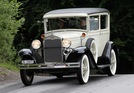
Why changing a wheel used to be less problematic after all


Thirty or forty years ago (and many more decades before that), tire damage was commonplace. The roads were worse, stones, nails or screws drilled through the black rubber. And so the tire lost its air and a spare tire was needed. However, in most cars - there were exceptions - this was in the bottom of the trunk.

So the luggage had to be unloaded first, often on dusty roads and in unsuitable places, as shown in the 50-year-old pictures of a BMW 503. The on-board tools were unpacked, the car jacked up, four or five bolts loosened and the wheel changed. And that's it. An experienced driver could do this in five minutes, not including unloading and loading the luggage. So it wasn't that bad.
The more modern cars became, the bigger their wheels became. To avoid having to rely on a huge spare wheel, folding wheels were invented that could be inflated using a compressor connected to the on-board electrical system. Of course, this was a compromise that was only suitable for short distances, especially as the maximum speed was usually limited to 80 km/h (or similar). And later, the spare wheel was dispensed with completely and drivers were given chemicals and compressed air so that the tire could be "repaired" on the spot. The fact that this often did not work fills entire Internet forums. Today, a flat tire often ends with the car either having to be towed away or at least the breakdown service being called out. Thank goodness tire damage is also much rarer today, otherwise vehicle manufacturers would have long since been forced to reintroduce "proper" spare wheels, which incidentally can usually still be stowed under the luggage.