Long live the difference!


End of the season? Not a chance! After a few intense weeks filled with photo shoots, travel, and lots of adventures, I don’t feel like summer is over and things are about to calm down. The rather spontaneous idea of driving a car I’d bought at an auction from England to Switzerland under my own power led to my fourth trip to England this year. You’ll be able to read about how it all turned out here soon.

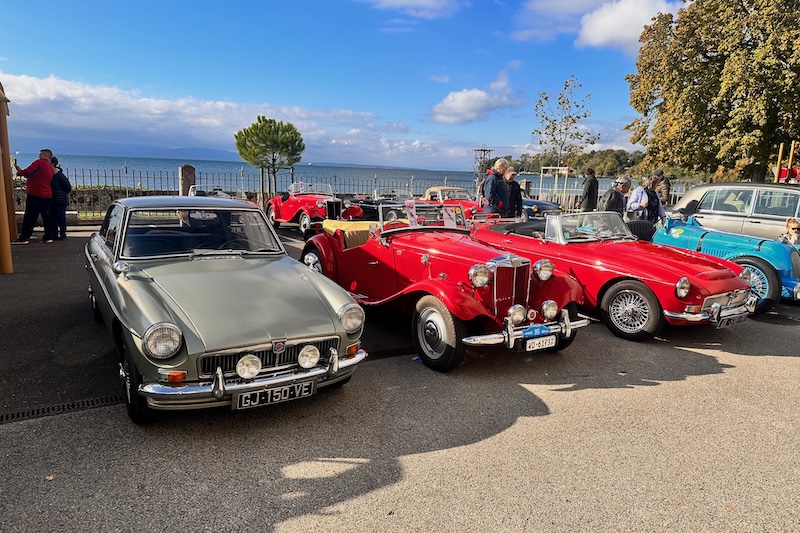
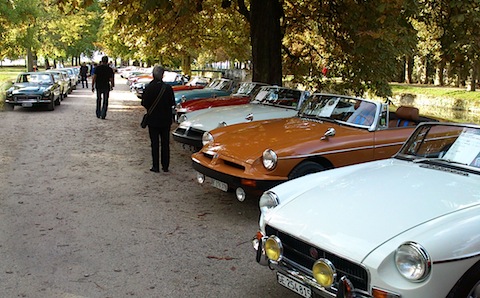
Then I was back once again with the Amis de la Romandie at the British Classic Car Meeting in the picturesque little town of Saint-Prex—not quite England, but almost, and the report is coming soon! The most important insight: “Les Romands” are simply cut from a different cloth than we German-speaking Swiss. And here at Zwischengas, we report far too little on what feels like the other 50 percent of the Swiss classic car scene—mind you, even though French-speaking Switzerland makes up only about a quarter of the country. The scene on the other side of the famous “Röstigraben”—the language divide between German and French—is extremely active and diverse. And while bratwurst and beer are the culinary highlights where we’re from, “chez les Romands” it’s all about the apéro.
In Saint-Prex, hosted by the British Automobile Society, that meant plenty of white wine, cheese, meat pâté, and Vin Mousseux. Or Gugelhupf with bacon and even more Champagne at a friend’s house. All this was accompanied by friendly conversation in a mix of French from our side and German from our French-speaking classic car friends. In moments like these, it becomes clear once again that our small country is a cultural melting pot that brings together the French-speaking and German-speaking worlds—and, importantly, fuses them together.

Anyone wondering why Swiss automotive topics feel different from German or Austrian ones will find the answer not only in the fact that we Swiss haven’t managed to establish a significant automotive industry. It is primarily the French influence. And that’s easy to explain: The automobile clearly made its way into Switzerland from west to east via our minority, the Romands. In the early days of the automobile, when the “Concordat of the Cantons” first regulated automobile traffic, half of all cars in Switzerland were found in a single city: Geneva, the country’s westernmost city. Later, the annual new car models also poured into the country via Geneva, at the Geneva Motor Show. In addition, most of the major brands had their Swiss headquarters in Geneva.

Anyone who wants to understand the Swiss character—which is also evident in the way the country treats historic automobiles—should be aware of this. Talking and writing about automobiles in this country has always been a matter of proficiency in French—and a willingness to accept the two cultural influences that the country unites within itself.
Today, the Motor Show is a thing of the past, and apart from Mazda and Honda (at least), no major importer is based in Geneva anymore. The Swiss automotive world has become more German. This makes it all the more wonderful that our Romands are throwing themselves into classic cars with even greater enthusiasm—not as a minority, but as a wonderful alternative. True to the motto: “Vive la différence!”—long live the difference!