Electric Duck


Actually, I wanted to write about Lapalisse. About 1,200 kilometers there and back, the three of us, in a 1953 DeSoto. And what can I say: The big guy didn't make a single peep. Highway, country roads, curves in pitch-black night, plus lap after lap of slow-moving traffic through Lapalisse in the staged vacation traffic jam—it handled it all without a peep. And it even brought us back, quite comfortably and very, very relaxed. Enough material for a blog post, I thought.
But then I opened my laptop, and a headline jumped out at me that turned everything upside down: Citroën is bringing back the 2CV! For now, as a concept car, unveiled on the eve of the Paris Auto Show; starting in 2028, it'll be a production model. The 2CV is celebrating its resurrection—electric, of course. And it draws heavily on the original, the car that was introduced in 1948 as a set of wheels for France's rural population.

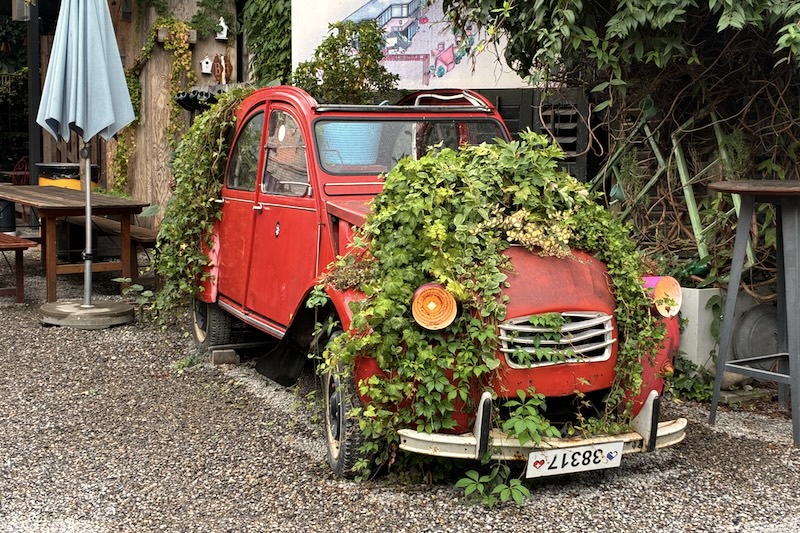
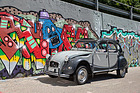
That fits like a glove. After all, the “Embouteillage de Lapalisse” is intended for cars up to about 1965, and of course there were plenty of 2CVs among them. I myself was a passionate 2CV driver in the '90s—and immediately, those rattling corrugated-metal models or boxy 2CVs caught my eye again, moving so differently from anything else on four wheels.
.jpg)
The inertia dampers at the ends of the rear control arms are clearly visible here.
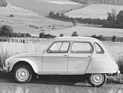
The 2CVs from the 1950s and 1960s bounce merrily after every bump in the road. No wonder: The front control arms are fitted only with friction dampers designed to tame body movements, while the front and rear wheels have inertia dampers that prevent the wheels from bouncing. The result: No other car moves even remotely like a 2CV. And then there's that sound! The crackling of the air-cooled two-cylinder engine and the whirring of the fans are one-of-a-kind.

The radio is reminiscent of the old “Radioën,” which was offered as a removable option for the 2CV.
So now for the electric 2CV. One thing is clear: it will likely drive like a modern electric car—quiet and unspectacular. It's unlikely to be a technical revolution on par with the original from 1948. But this small, affordable electric car seems to fulfill one very important criterion: it's not boring. While many manufacturers try to convince us that they've struck gold with a flood of more or less successful electric SUVs, the new 2CV stands out. At 3.76 meters long and with a target weight of around one metric ton, it's almost dainty by today's standards.

That leaves the question of price—and that's where things get exciting. Citroën is aiming for a starting price of under EUR 15,000, before subsidies. This hasn't been officially confirmed yet, and a lot of water will flow down the Seine between now and 2028. But if the French can pull this off, we'd finally have a car for everyone that has character again. Just like the 2CV once did.