Underdog or Supersport?

When a company faces serious financial challenges, terms like “strategic realignment,” “vision model,” and “design identity” come up. At least, that’s how Porsche CEO Michael Leiters framed it when discussing “Sports Car Manufacturer ’35”—a realignment aimed at lifting margins, which had recently shrunk significantly, back into the double-digit range.

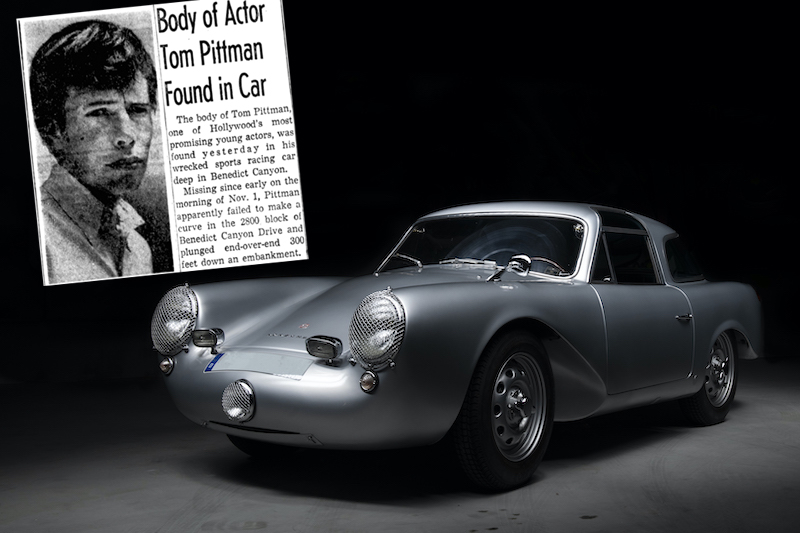
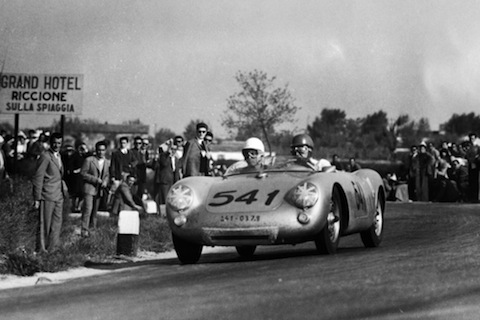
The “Mission S” concept is intended to be a mid-engine super sports car platform positioned above the 911. Not as a limited-edition model like the Carrera GT or 918 Spyder, but “as a permanent, versatile, additional offering.” The inspiration: the 1953 Porsche 550 Spyder. The small car in which James Dean was killed, which achieved world fame at Le Mans and the Targa Florio because it succeeded as an underdog.

Wait a minute. An underdog as a supercar? Yes, indeed. To quote: “As the brand’s first supercar, the 550 Spyder is still regarded today as defining the company’s identity.” That’s quite a balancing act, so let’s quote the rest of the statement: “Inside, the focus is on purism, driver-oriented ergonomics, and a forward-looking symbiosis of analog and digital controls.”

Okay, tradition plus innovation—that sounds like Porsche’s core values, even if the 550 was never labeled a supercar. But is that really necessary? A Porsche doesn’t have to be as flashy as a Bugatti, as rugged as a Lamborghini, or as ostentatious as a Ferrari. A Porsche has to be a Porsche. Timeless, authentic, understated, reliable, fast. That’s what today’s customers and tomorrow’s fans want. Exclusivity isn’t created by yet another model series, but by treating us to something special every now and then. That’s the art of it.