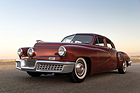
It's all plastic! Tudor Rose—cheap toys from back in the day!


Is it an admission of one’s own failure when you have to admit yet again that you’ve given in? Probably so. But deep down, you’re still happy when a rare piece is added to your collection—especially when you weren’t even looking for it.
For collectors, auction sites are like the supermarket for an alcoholic: you know you should avoid them, yet you keep ending up there anyway. The search terms are clear—anything with “old,” “vintage,” “used,” or “antique,” plus the categories “model building” and “model trains.” Most of the time, I can restrain myself and simply save interesting items to “Watch List.” That way, at least I have them all in one place and feel like I’ve collected a little something without spending any money.
Recently, though, I was amazed: An auction on Ricardo ended without a single bid. Up for auction was a Jaguar XK140 in roughly 1:20 scale, complete with its original packaging. It was made by Tudor Rose—a brand that hardly anyone knows anymore.
That’s when I gave in. After the auction ended, I sent the seller a message and bought the model via “Suggest a Price.” I was fair enough to offer him the starting price—exactly the amount he’d set to open the auction.

The box and contents are in amazing condition for a relatively inexpensive toy—I often call these “grandparents’ toys,” the kind you only brought out when the grandchildren were visiting
Plastic Roses
Behind Tudor Rose stood Rosedale Associated Manufacturers. The company was headquartered in London, but production took place primarily in Treforest, Wales, where plastic had been processed since 1936—just like Mettoy, which built its Corgi Toys in Swansea, Wales. After the war, a factory was added in Cinderford on the edge of the Forest of Dean. At first, they produced combs, buttons, and hair accessories; from the early 1950s onward, toys became the main business: first hollow vehicles made of hard plastic, later softer models made of polyethylene. The lineup included a friction-powered Routemaster bus, trucks, VW buses, classic cars such as the Ford Model T and the Morris “Bullnose,” trains, dolls, and space-themed toys. A crane truck is even on display today at the Victoria and Albert Museum in London.

A catalog page from 1956 – © brightontoymuseum.co.uk
The toys were sold cheaply and in large quantities at Woolworths—by the late 1960s, about three-quarters of production went to this department store chain, but this dependence came back to haunt them, because in the early 1970s, the British crown colony of Hong Kong flooded the toy market with similar products at significantly lower prices, and from then on, the discount department store filled its shelves with goods from the Far East: In 1975, the company went into receivership, and by the time Mettoy bought it in 1978, it had already stopped manufacturing toys. What remains are lightweight, often faded plastic cars that occasionally turn up at flea markets. But they’re rarely found in their original packaging.

Front-mounted motor, the flywheel is made of zamak! And yes, there’s a crack, but given the overall condition, it’s acceptable
A front-wheel-drive Jaguar
Kids aren’t quite so picky. The fact that the Tudor Rose Jaguar—which likely came out around the same time as the full-size original—has its flywheel motor mounted on the front axle probably didn’t bother anyone. After all, the motor is up front in the real thing too, right? The reason was likely simply a matter of space.
It’s a stroke of luck that the box has survived along with this rather cheap plastic car. But I can’t expose either the box or the model to the sun: polyethylene isn’t UV-resistant, the plasticizer evaporates, the first cracks are starting to show, and red has never been a particularly lightfast color—the front of the Jaag has faded. For me, it’s still a nice find that gets a place of honor. And the “Wish List”? It keeps growing.