Too much nostalgia?


Imagine you're buying a new car and there's a lever on the steering wheel that lets you adjust the ignition timing. Or there's a pull cord for the choke under the steering wheel. If you forget to pull the choke when starting the engine, the engine won't run smoothly and the car will act erratically when pulling away. But with just the right amount of choke, the car behaves as docile as a lamb. But this choke pull isn't connected to a carburetor or the fuel mixture; it's purely electronic. A sensor measures how far the choke is pulled, and the onboard electronics control how smoothly the engine runs. In the case of an electric car, it could even influence the running characteristics of the electric motors. All just so you feel like you're driving a car from the 1960s (or, in the case of pre-ignition or post-ignition, even a pre-war car).

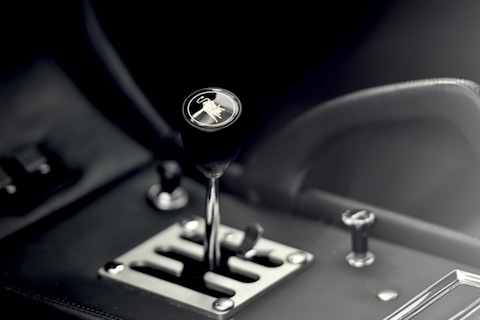
Absurd, don't you think? Nobody would buy that? Well, Ferrari has just announced the 12Cilindri Manuale. The classic gearshift gate on the center console is back. The whole thing is described as a technical masterpiece. There's even a clutch pedal on board. But the beautifully presented mechanism doesn't control a classic transmission; instead, it sends signals to the eight-speed dual-clutch transmission (DCT). If the driver prefers, they can still have their Ferrari shift gears automatically and not use the clutch pedal.
And Ferrari isn't the first sports car manufacturer looking to bring back the simulated manual transmission for traditionalist drivers. Koenigsegg offers a similar system, and Porsche now plans to offer manual shifting on the Taycan as well. Manual shifting (without a clutch pedal) has been available for some time now in the Hyundai Ioniq 5 N, which features paddle shifters. And the idea isn't all that new, by the way, since Audi already allowed manual selection of individual gear ratios with its continuously variable Multitronic (CVT) transmission.
It's worth noting that such systems, even if they remind you of a PlayStation or Xbox, can certainly have their appeal. Having more control over the technology simply makes you feel closer to the car—probably even if it's all just simulated. But isn't all this a bit too much nostalgia? The extreme version would probably be a hand crank at the front of the car to start the engine—with simulated resistance and the engine starting only when there's enough momentum.
But what will people think of these cars in 20 or 30 years, when they're supposed to buy them as classic or modern classic cars? Will the added complexity created by such simulated mechanisms increase maintenance and upkeep costs and deter potential future buyers? And does it really make sense to design a product (or rather, its operation) to be inferior and suboptimal just to indulge in nostalgia?
Let's be clear: we love manual transmissions, but we mean “real” manual transmissions, where the clutch still disengages the engine from the transmission and requires a mechanically transmitted press of the pedal. No matter how perfect it is, a simulated system is, at the end of the day, probably just nostalgia for nostalgia's sake. But let's see how potential buyers of these cars react.