Where would you prefer the motor to be?

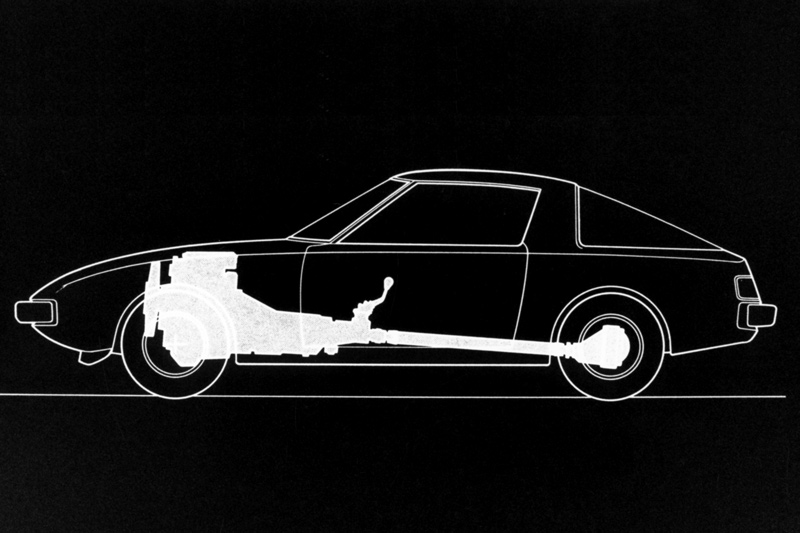
In the good old days, when cars almost invariably only had one engine, the question always arose as to where it should best be installed. In the 1950s and early 1960s, there were usually only two possible answers: at the front in front of the passengers (as in most American cars) or at the very back in the rear (as in the VW Beetle). When the advantages of the engine mounted centrally between the axles were recognized in motor racing, the mid-engine slowly became more important for road vehicles as well.
However, while the front and rear engines had advantages in terms of space utilization - after all, these vehicles still offered a usable trunk either at the front or rear, and the space between the axles was not taken up by the technology - the mid-engine often took up more space. More than two people could only be accommodated with major compromises, and the trunk volume was also reduced. As a result, the mid-engined car remained something for sporty drivers who enjoyed driving dynamics more than transport capacity.
And this perhaps explains why mid-engined cars only make up eleven percent of my personal car history. This category includes the Lotus Elise, the Honda NSX and the Ferrari 308 GTS. However, the proportion of rear-engined cars is even lower: seven percent. In addition to two Porsche 911s, I owned two Fiat 850 Spiders and an Alpine-Renault A110 1600 S many years ago.
All the rest, i.e. 83 percent of the many vehicles that have accompanied me during my 47 years of driving, have been equipped with a front engine (sometimes also front-mid engine). This certainly has to do with the fact that many of these cars had to do their duty as everyday cars, transporting a whole family and also having to be prepared for a move (many estate cars).
Looking back, I can well understand why Enzo Ferrari preferred the front engine for road vehicles. The everyday compromises with the mid-engine are considerable. However, Ferrari also did this because he was afraid that many of his customers would have been overwhelmed by the mid-engine driving physics. These fears can of course be alleviated today with modern control technology (ABS, ESP, ASP, PASM, etc.). And when it comes to pure driving pleasure, a car whose main mass lies between the axles is almost unbeatable.
Even the compromises are no longer that great, depending on the car, as some modern mid-engined cars manage to provide a trunk at the front as well as the rear. No wonder the Alpine A110 or Porsche Boxster/Cayman are popular today and are even used in everyday life.
And in the future? Perhaps there will be another (not entirely new) variant: Namely that of wheel hub engines, which can be mounted as required, but are neither between the axles nor in front of them...