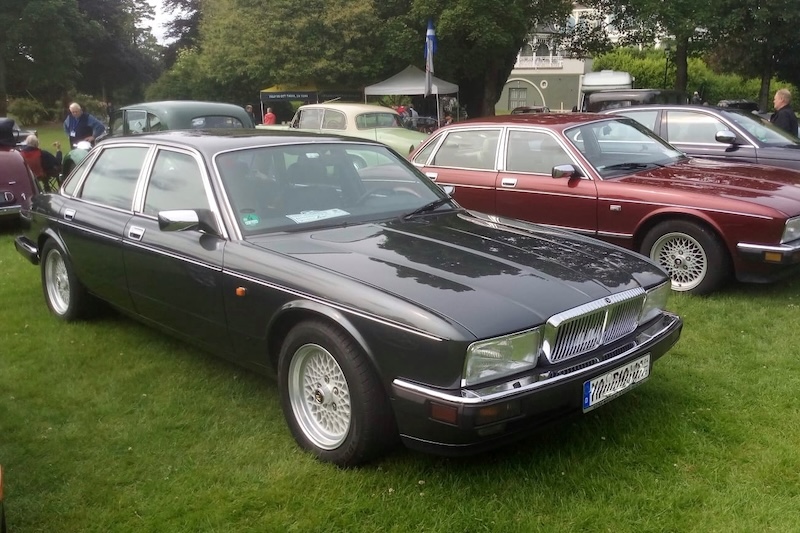
Today they no longer drink tea

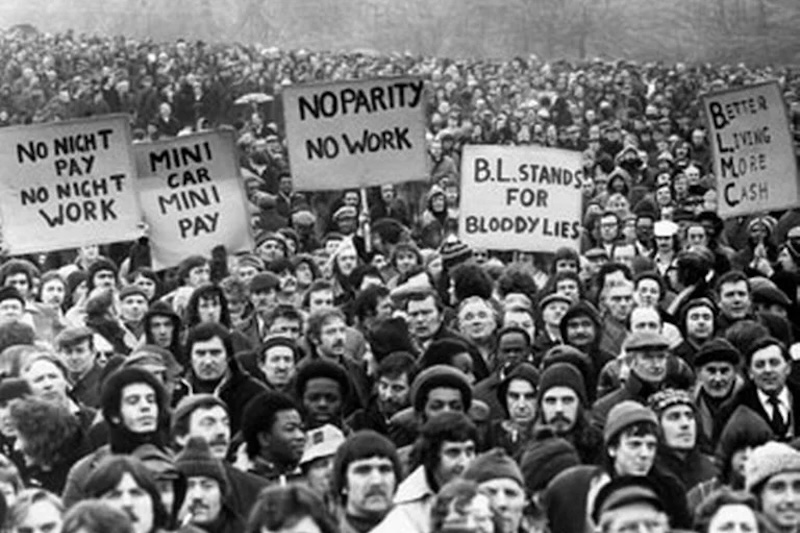
In October 1962, 6,000 workers, virtually the entire workforce, went on strike at Jaguar because a worker had been summarily dismissed after assaulting a foreman. There was also criticism that 20 workers were to be transferred from the Mk 10 production line to the Mk 2 production line in order to increase the production rate there.
In May 1963, it was reported that 16,000 workers in the British car industry were on strike because of a strike at Pressed Steel, BMC's bodywork supplier. And 750 workers in material monitoring and quality control, again at Jaguar, were also on strike. But that was not all: 6000 workers also went on strike at Rootes (Humber, Hillman, Sunbeam) because questions about wage increases had not been answered...
The series could be continued indefinitely and the already very high strike cadence intensified in the 1970s. Almost every day between 1970 and 1980, there were strikes somewhere in the British car industry. And even when the labor peace, which had been tenaciously negotiated between union representatives and management, was being celebrated for a short time at a plant, the unionists would bring a supplier to a standstill. This had the effect of bringing work to a standstill at several manufacturers, even if they were actually prepared to work. This not only undermined confidence in the British automotive industry, but also cost it a lot of money that could have been better invested in product development - or in efficiency. However, it was precisely those measures that should have led to an increase in efficiency that were opposed by the workforce. If an outdated, unprofitable plant was to be closed, the entire workforce showed solidarity with the colleagues affected. What's more, even product improvements were blocked in this way. The choke cable with a round button, for example on the ADO16, was to be replaced by a new solution that was more impact-resistant. The workers demanded that if this was changed, the entire production time of each station on the assembly line would have to be renegotiated. BL then abandoned the safer choke train for the time being because it was clear where this would lead: To even more time for the workers and even less productivity. A vicious circle.
The perpetrators of the "attacks" on the British car plants at the time were drinking tea. Some of them probably also drank a little "extra", it must be assumed. A workshop in Switzerland found a whisky bottle welded into the sill of a new Sunbeam Stiletto after a customer complaint - an acquaintance of the author - about rumbling noises!
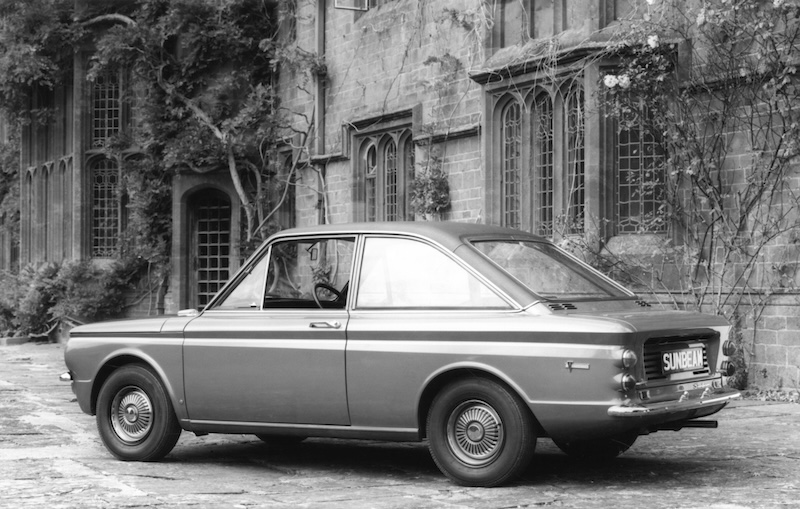
Rumbling in the sill of a new Sunbeam Stiletto for Switzerland at the end of the 1960s led to a whisky bottle welded into it: mischief or protest - depending on your point of view - by a worker at Linwood, Rootes' factory in Scotland. Back in the early 1960s, unrest at the British Light Steel Pressings plant in Acton, also a Rootes factory, had led to mass strikes and ultimately the dismissal of 8,000 workers. From then on, Rootes' workforce showed little loyalty.
But the "troublemakers" and "troublemakers" came from their own ranks, such as the notorious labor leader and trade unionist "Red-Robbo" Derek Robinson. As a member of the British Communists, he worked as an organizer and shop steward for the trade union at car manufacturer British Leyland in the 1970s and was jointly responsible for around 500 strikes and walk-outs. The British press gave him the name "Red Robby". For some, he was the enemy par excellence, for others a fighter and role model, as his face was well known and he remained unmolested throughout his life. Derek Robinson died at the age of 90 in 2017.
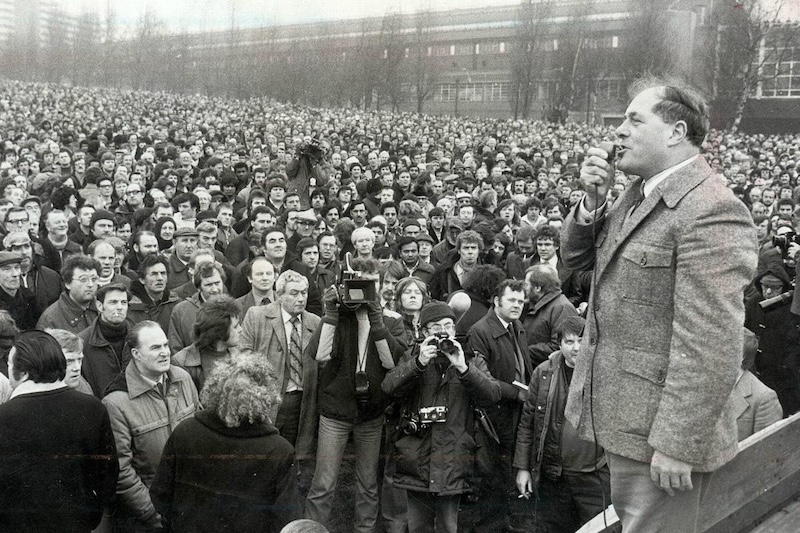
Derek Robinson was made redundant by British Leyland in 1979 - like 18,000 other employees that year
The strikes of the 1960s and 1970s in the UK are now history. The Thatcher government ultimately succeeded in breaking the power of the trade unions. The scare surrounding British cars - or their quality - has slowly subsided. However, the mass manufacturers have disappeared. And the teacups in British car factories today usually really only contain - tea! Empty whisky bottles are also disposed of properly in the UK today, or even better: not even taken to work.

However, car factories in the UK are still not immune to attacks, as JLR (or as we die-hards prefer to see it: Jaguar AND Land-Rover) recently had to painfully learn.
A cyberattack (welcome to the digital, networked world) paralyzed the plants in Solihull, Halewood and Merseyside at the end of August. Together with the suppliers, around 33,000 workers were blocked for around a month as a result. In addition, smaller suppliers in particular experienced liquidity bottlenecks, with the result that the British government now has to provide advances of 2 billion pounds - repayable within five years.
It is still unclear where the attacks are coming from and the perpetrators will probably remain unidentified. Whether money has been paid is also unknown at present. And we also don't know whether the hackers are drinking tea... In the past, Harrods, the British Co-op and Marks & Spencer have already had to contend with such attacks.