Wait a minute—something's happening at the Swiss Museum of Transport!


The Swiss Museum of Transport has an extensive automobile collection. However, many of these items rarely make it into the exhibitions. Since the opening of the current Road Traffic Hall in 2009, probably not even half of all the cars in the collection have been on display. Given the imposing dimensions of certain pre-war cars, the storage system—the shelf lift—is sometimes simply overwhelmed.
There are other reasons why not everything can be displayed, as most of the items are donations. They were gifted to the Swiss Museum of Transport, the multifaceted museum of technology and mobility on the shores of Lake Lucerne near Lucerne. As a result, there is no systematic collection; rather, chance plays a role in determining exactly what is stored under white covers in the storage rooms.

Cars in the Swiss Museum of Transport's off-site storage facility—even the Lamborghini Miura was once a gift. In the mid-1970s, the Swiss Museum of Transport was allowed to select one of five examples from importer Karl Foitek, paid for by a donor.
Some of the cars were at the end of their useful lives—at a point where, based on cost-benefit analysis, they would have been scrapped—when they entered the collection, which comprises between 12,000 and 15,000 objects —which ranges from a golden tie pin from the former Swissair to a mountain locomotive, a submarine, or a four-engine passenger jet. Every type of material is represented, and each presents storage requirements that are sometimes diametrically opposed—no easy feat, and given the sheer volume, a task that, in principle, cannot be accomplished with the available budgets. And museum objects age, too. Some of them age far more rapidly than they would if they were cherished and cared for by an owner.

Traction Avant “A.” The car from the very first production run in the spring of 1934 suffered corrosion damage to the water pump long ago due to improper storage. It was a gift from Citroën Suisse SA to mark its 50th anniversary in Switzerland.
There are numerous cars that were handed over to the Haus am See in roadworthy condition, but maintaining that condition proved impossible due to a lack of resources of all kinds—money and manpower. There are plenty of examples—from Lincoln to Rolls-Royce to Renault or Hispano-Suiza. The cars were brought to the museum and taken out of service here. However, this was not a proper decommissioning; in some cases, they were simply parked aside. I remember how the heirs of a donor reacted when, after years in the collection, they saw his Alvis Graber again—not in the museum. The car was in absolutely terrible condition; the battery—which hadn't been removed—had leaked, and the side sills were as crumbly as puff pastry because the car had been parked for years in a damp underground garage. In addition, improper handling had damaged the radiator grille.

A very rare, small 1939 Tatra 97 and the 1966 Corvette C2. In this case, it was the donor's intention that the car should NO LONGER be driven, as she associated it inextricably with her late husband and could not imagine anyone else behind the wheel. I drove the car's final kilometers under its own power during its transfer from Lake Constance to the Swiss Museum of Transport.
It was a problem of insufficient funding—and perhaps also a lack of interest—on the part of the museum's leadership at the time—the most-visited museum in Switzerland—to find suitable storage facilities and staff with the necessary expertise. Mind you, this was long before the current leadership took over. But these are issues that need to be addressed and resolved.
There are other examples of cars from the collection having suffered because they were stored in a damp underground garage belonging to a Swiss federal agency. Other objects were housed in a private warehouse, where they were covered in bird droppings. The storage conditions also led to damage during transport: The Graber Rolls-Royce was removed from its storage compartment with such brute force that the strap—which had been carelessly looped around the tie rod instead of the axle—bent the tie rod, causing the poor car's wheels to point in different directions afterward. A well-known collector and operator of his own museum in northwestern Switzerland then straightened them out while the car was on loan.
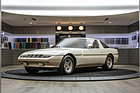
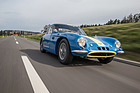
Now, the reason for this blog—which is certainly peppered with plenty of personal memories (I had the pleasure of planning and setting up the current storage facilities for the Swiss Museum of Transport)—is the museum's appeal for donations to restore the 1978 Monteverdi Sierra (picture at the very top). The car entered the collection as early as 1987, but it wasn't particularly cherished. It was driven even less—no wonder, since it wasn't really an old car back then.
Now the Swiss Museum of Transport is raising money to restore the Sierra in question. However, reading the description in the latest issue of the museum's magazine raises some fundamental questions when it states: “Without restoration, there is a risk of a gradual loss of original material.” Are those in charge aware that it is primarily the restoration process itself that leads to the loss of original material? If the brakes are to work again, certain components will have to be replaced.
So now the car is being handed over to a specialist shop where it is to be “restored.” In some respects, this will amount to a rebuild and is not necessarily conducive to preserving the original substance. In this regard, those in charge would do well to take a look at Michael Collier's book: *The Archaeological Automobile*. In it, the founder of the renowned Revs Institute in Florida, USA, describes the connection between loss of substance and renewal work—that is, restoration.
The whole undertaking is open to fundamental questioning. What insights, for example, can be gleaned from the running Monteverdi Sierra? It's well known how a mid-range American car from the 1970s—not even a particularly good one—drives. There are plenty of examples that could be drawn upon if needed.
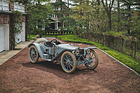
Automotive archaeology that yielded significant insights, on the other hand, was the recommissioning of the Dufaux race car. Here, there were unanswered questions that could only be resolved through firsthand “experience.” Furthermore, as part of an accompanying book project, in-depth knowledge—such as the early history of the car, its technology, and its handling—was gained through the necessary research. There are still plenty of examples like this in the Swiss Museum of Transport's collection.

The Dufaux race car at the 2024 Lucerne-Basel Run on the Hauenstein. The restoration was accompanied by extensive research and revealed the true year of manufacture and the actual purpose of Switzerland's oldest race car—one of the earliest items in the Swiss Museum of Transport's collection.
So now the plan is to restore the Monteverdi Sierra to running condition. While some may view this as a mistake, the intention is a positive sign that the Swiss Museum of Transport is indeed paying attention to its collection, which is sometimes perceived as somewhat neglected. Anyone wishing to donate to the Sierra's restoration can find the link HERE.