Trojan Horses

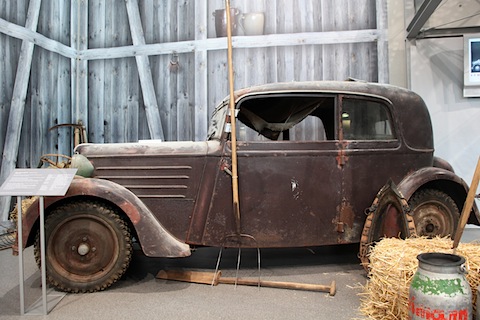
“All that glitters is not gold,” as the saying goes. And that applies just as much to classic cars in concours condition—ultimately, the highest level of luster one can imagine. Now, we don't want to raise the familiar question of “glitz or patina” here—a question that has often been answered differently in recent years than it was 25 years ago. Nor do we fail to recognize that some restoration is necessary and that, as a result, a new shine is practically a given. Rather, this is about Trojan horses, about more appearance than substance, about genuine packaging and false contents.

For example, in a vehicle description from a recent concours, we read: “In 2009, the original engine and transaxle were removed and preserved for conservation purposes, while operational units were installed for driving—to protect the vehicle's serial number integrity while simultaneously enabling the car's use.” Now, no one would want to forbid anyone from driving their classic car with an engine of their choice. In the case of a race car that's still active, this may even be unavoidable. But we haven't heard of a “replica concours” yet. And if cars without their original heart and brain are to be judged, why not just replace everything? Body, chassis, suspension?

Automotive cultural heritage is only such if it preserves its culture. If an engine breaks down beyond repair, you have to replace it with an original engine—goodbye, matching numbers! But if the engine still exists, why would you try to fool a jury with a replacement engine? To preserve the matching numbers—to have that “insurance policy,” so to speak, sitting in the garage? As an owner, you have to decide: Do you want concours quality or an everyday classic car? You can't have both.

Let's take this to its logical conclusion: A Mille Miglia participant doesn't want to take any risks and has his vehicle completely rebuilt. In the event of a total loss, the original is safely at home. And if you think that's a fantasy—it's actually been known to happen. To “preserve” cultural heritage. But unfortunately, that's not how it works. Either we move cultural heritage around or we don't. After all, you wouldn't hang the Mona Lisa in the basement and show it to paying visitors. Only originals tell stories—even with a scratch from the Mille Miglia.