1926 … what else happened that year?

Anniversaries are part of our culture of remembrance. On a milestone birthday—or one that's more or less a milestone—we take a moment to reflect on how things were, how it all began, and what it meant back then. Or where it led. Why it was able to become a success. Or why it was bound to end in tragedy. Of course, it's mainly the major events that are celebrated. And the more time passes, the more the smaller occasions fade into the whirlwind of history, which continues to be written. That's why it's worth taking a closer look and doing some research.

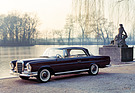
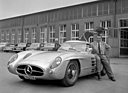
Mercedes-Benz will celebrate its 100th anniversary in 2026. That was when Benz and Daimler merged, though by then both companies no longer had anything in common with their founding fathers. Nevertheless, the merger was a milestone in the automotive world, and it was celebrated in grand style 50 years ago: In 1976, there was a three-volume commemorative publication and a grand celebration in Stuttgart. This year there will be another celebration, even though the current mood is probably less conducive to it. But that's another story.

A lot more happened 100 years ago, though, and these weren't all trivial matters. For example, on April 28, John Parry-Thomas set a speed record at Pendine Sands that stood for a year: He raced along the beach in a modified Higham Special named “Babs” at the equivalent of nearly 275 km/h—and lost his life the following year during his next record attempt. But much more happened in 1926. Much more.

On October 1, the first centrally controlled traffic lights were installed in Berlin, at that time still using the red-white-green sequence. In Frankfurt, HAFRABA was founded with the goal of building a highway exclusively for cars from Hamburg via Frankfurt to Basel—the concept of the autobahn, which didn't become a reality along this route until 1962. With its “Art and Color Section,” GM established its first styling office—today we would call it a design department. Harley Earl, the man who invented the tail fins in the late 1940s, took over as head of the department.

In 1926,Henry Ford introduced the eight-hour workday and the five-day workweek; Horchwerke unveiled the first German inline-eight-cylinder engine, designed by Paul Daimler ; and Maserati entered its first model, the Tipo 26, into competition. A young man won the first German Grand Prix at Berlin's Avus: the name Rudolf Caracciola would be seen and heard often in the years to come. And in Versailles, the Tracta automobile company was founded , which relied on front-wheel drive—even before the Traction Avant—but had to shut down after just nine years and 230 cars. Did you know all that? We've learned a lot.

_RM.jpg)