Small Miracles


Back then, I didn't really pay much attention to model trains. Wiking was clearly the market leader in the early 1980s. Whenever I pressed my nose against the store windows, there was hardly anything else to buy.
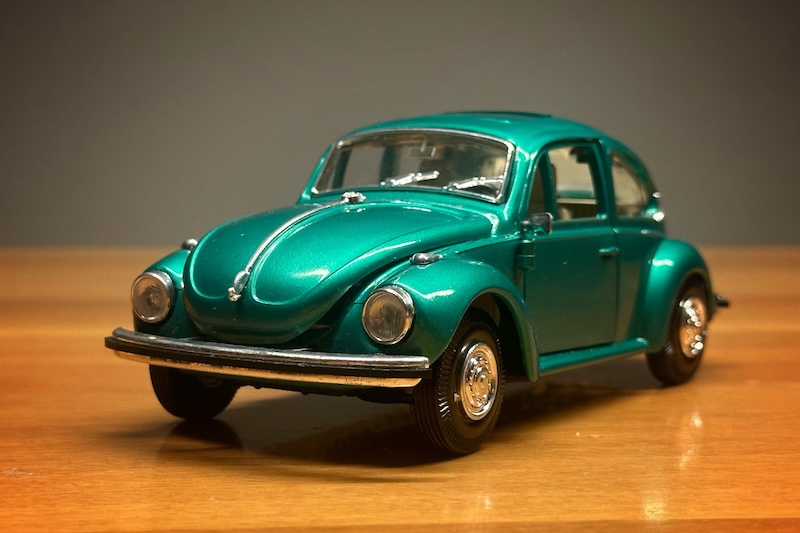
As my colleague Gerhard Schütz's blog makes very clear, money was a highly prized, sacred commodity that had to be invested with the utmost wisdom. It was exactly the same for me. I found it extremely hard to pay the same price for a small plastic car as for a die-cast model from Matchbox or Corgi Toys. Besides, even back then, I believed that “more” was better. And more weight in my hand was definitely better than those lightweight models at exorbitant prices.
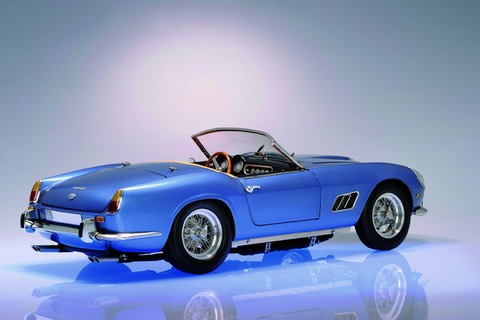
But then, during my teenage years, a lot changed on the model car front. The classic manufacturers went under: Dinky, Corgi, and Matchbox went bankrupt, and even before that, there was hardly anything of interest left in their model ranges, which were being produced ever more cheaply. In their place, other manufacturers entered the scene, and with them a new kind of store: the model car specialty shop. It was there that I first encountered the reasonably priced Mercedes 170V models from the Portuguese manufacturer Vitesse. They even came with stick-on side mirrors. And a small revolution was taking place at the model train store.

In 1987, Herpa introduced a 1:87 scale model of the Ferrari Testarossa with an opening engine compartment. I was blown away and just as torn, because this tiny model was really expensive—around 9 marks, probably more than 10 CHF—and didn't at all match my sense of value, the ratio of price to sheer size you got for it.

But there wasn't much time to think it over back then, because the next big announcement from the company based in Dietenhofen—near the toy capital of Nuremberg—which had first made its mark in 1978 with an Opel Ascona station wagon, followed immediately: With the Ferrari F40, unveiled at the Nuremberg Toy Fair in the spring of 1989, not only the hood but also the front end could be lifted up. By that point, Herpa had already sold well over a quarter of a million Testarossa models. Back then, Herpa was producing around 30,000 model cars—per day!

Well, it took a while before I finally got to enjoy these true highlights of late-1980s model-making. As is often the case with my smaller models, they were just bonus finds. And every time I pick one of them up again, I'm reminded of the excitement such a tiny model could spark back then. Today, new models—especially in the Hot Wheels 1:64 scale—are released almost weekly—and they, too, are often absolutely fantastic—but I lost track of them long ago.
By the way: What the digital world wouldn't reveal to me while preparing this little blog post, I was able to piece together from our collection of scanned magazines—essentially from an analog source. AMS Issue 20 from 1988 provided background information that neither artificial intelligence nor an in-depth web search could offer me. It's worth taking some time to browse through it!