Three cheers for the yellow cars!

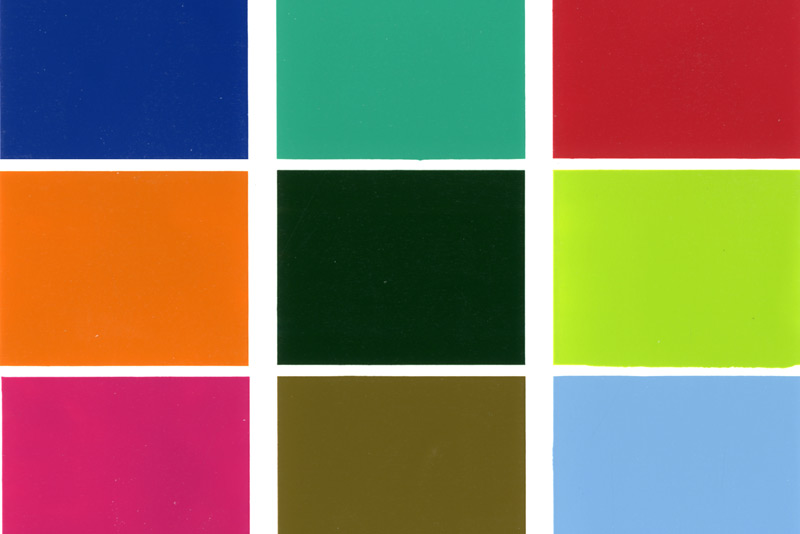
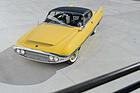
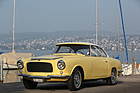
When was the last time you saw a yellow car, aside from the mail truck? Exactly. Renault recently made a small statement with its electric “5,” but other than that? Yet it’s the color that would make a car stand out. Today, most cars are dressed in mourning or blend into the gray everyday landscape with gray paint, perhaps slightly brightened by a touch of silver. It used to be different.

In the ’60s and ’70s, there was the 2CV yellow, for example. The hippie wave swept up the 2CV, and rebellious lemon yellow was a perfect fit—especially in Switzerland, where a Citroën is a “lemon.” But even the elegant DS looked great in a delicate yellow. And let’s not forget the iconic Miura yellow. The up-and-coming Lamborghini wanted to set itself apart from the traditional Ferrari red. So Maserati couldn’t be outdone with its Ghilbli—uh, sorry, Ghibli—in yellow. In “Desert Wind” yellow.

In the 1950s, there were two major waves of yellow in France: Michelin yellow competed with Kodak yellow. And Panhard showcased a crisp lemon yellow. In the ’40s and ’30s, there wasn’t much going on color-wise. In contrast, in the ’20s, the swallowtail yellow of Elisabeth Junek’s Bugatti 32 and 35 often outshone the blue of her competitors.

How about a new color offensive? Is eternal black really the best of the best? Are we once again fearing the “yellow peril,” as during the Cold War? Admittedly, this threat is no conspiracy theory in today’s auto market. But even the Chinese offensive is reaching us mostly in camouflage colors. Perhaps there should have been a regulation put in place early on stipulating that Chinese cars could only be exported to Europe in yellow. That way, we wouldn’t have slept through the “yellow peril” and wouldn’t now have to turn green with envy at the prices at which electric cars are being dumped on the market...