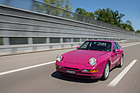
50 Years of Porsche's Transaxle


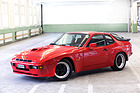
The Porsche 924 was introduced in late 1975 and went into production in 1976. This laid the foundation for two decades of transaxle sports cars at Porsche.
As a reminder, here is an excerpt from what Automobil Revue wrote on the occasion of the unveiling in November 1975:
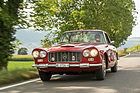
“In the anniversary year marking the 100th birthday of Ferdinand Porsche, a significant milestone is being set in the stronghold of the rear-engine and air-cooled design: With the launch of the new Porsche 924, the Zuffenhausen-based sports car manufacturer is committing—for the first time since its founding in 1948—not only to water cooling but also to the front-engine layout. Another distinctive feature of the new 924 is the “transaxle” design—previously used by only a few manufacturers (e.g., Lancia, Pontiac, Ferrari, Alfa Romeo).”
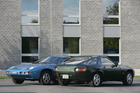
As is well known, the 924 was followed by the 928 in 1977.
It was not only the technical architecture—with a water-cooled engine up front and the transmission and drive axle at the rear—that the two model series had in common, but also a complete departure from the 911.
In terms of design, the two front-engine models represented a major step into the future and, at the same time, a sign that Porsche was capable of more than just creating new variations on the 911 theme.
The original plan was for the transaxle series to replace the 911, but customers saw it differently. While the 911 has survived to this day, the transaxle design disappeared in 1995.

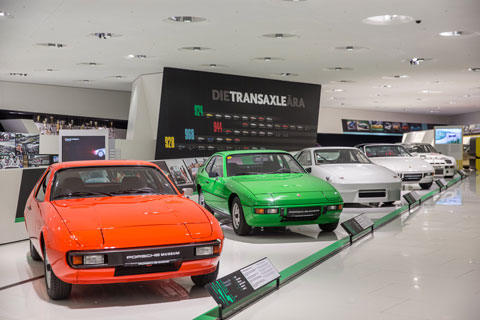
In 2026, Porsche is now celebrating this transaxle era with an anniversary event. Members of the press were once again given the opportunity to drive various models from the 924/944/968 and 928 series. I myself attended the “Swiss Day” and made the event even more enjoyable by driving a modern Boxster there and back. I was able to drive about 200 km in the four cars provided, all fueled with eFuel (a very early frog-green 1976 Porsche 924, an early red Porsche 944, a speed-yellow 1994 Porsche 968 CS, and a blue 1991 Porsche 928 GTS).
This wasn't just a trip 50 years into the past, but also an opportunity to compare cars from different eras. A 968 feels quite different from the early 924. While the 924 never gives you the impression that you're driving a truly modern car, the 968 is much closer to today's Boxster. Shift travel like that in the Porsche 924 would hardly be acceptable today, and a four-speed transmission certainly wouldn't be. The 968 CS, however, already featured a six-speed transmission and power steering.
What was truly surprising, though, was how well the 924—with just 125 PS—was able to keep up with the pack of four cars. Although it had only about a third of the power of the 928 GTS, the 924 was hard to shake off on the winding roads around Stuttgart. A low weight simply makes up for some power deficits, at least on public roads.
Looking back, one wonders what would have happened if Porsche had truly phased out the 911 and focused instead on the transaxle series. The Porsche world, in any case, would look very different today. And instead of 400,000, there would likely be significantly more transaxle models in production today.
P.S.: My thanks go to Porsche Switzerland and the staff at the Porsche Museum in Stuttgart, who made this an unforgettable day.
P.S.2: Of course, we'll be publishing detailed test drive reports on some of these models in the coming days and weeks; if you don't want to wait, you can already find many articles about Porsche's transaxle models on the brand's website .