




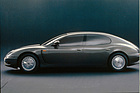



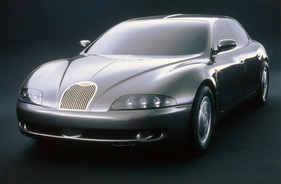
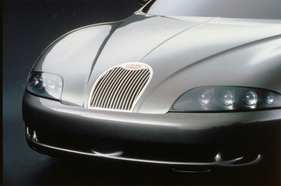
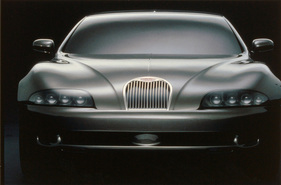
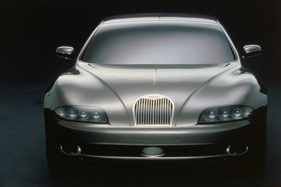


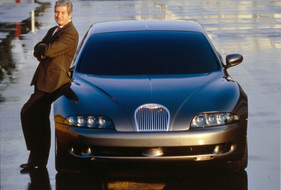
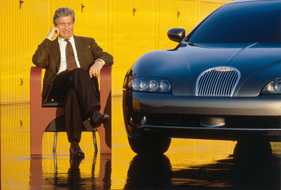


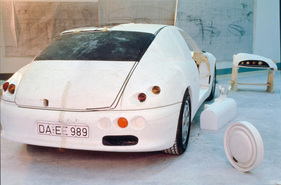
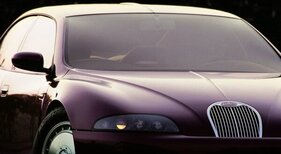
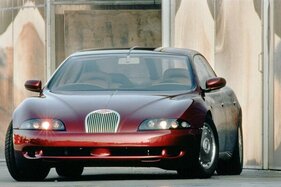
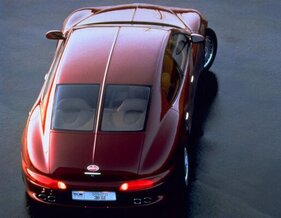
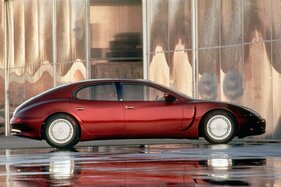
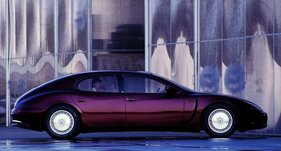
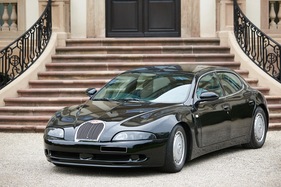

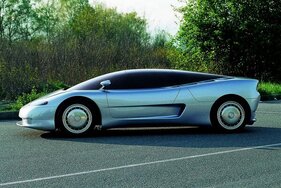
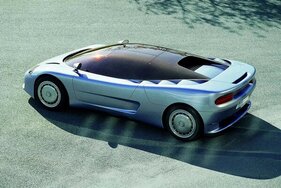
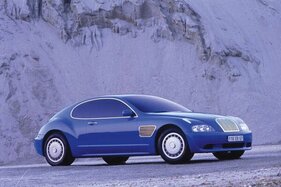

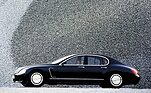
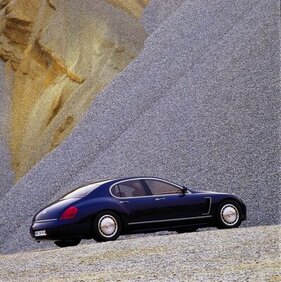




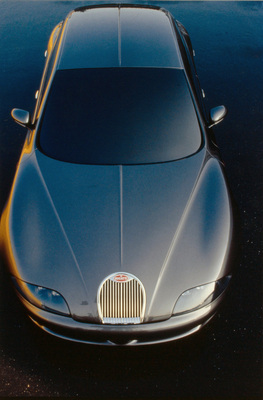
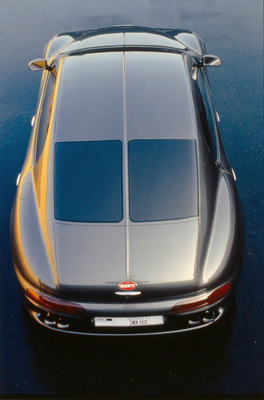
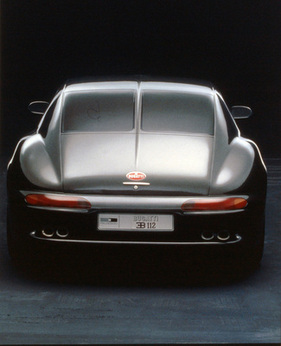
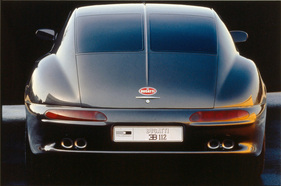
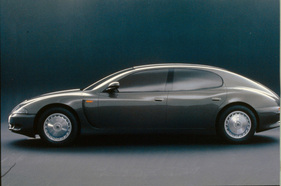
Four-door luxury sedans with a sporty character have been around for almost as long as the automobile, but most attempts to create superlatives have failed. Romano Artioli set out in the early nineties to change this and establish the ultimate four-door. He almost succeeded.
Predecessors from different eras
Although Ettore Bugatti primarily caused a sensation with his fast and competitive sports cars, the rich and powerful of this world were still his favorite customers. In the late 1920s, he developed the Type 41 for them, known today primarily as the Bugatti Royale. Ettore's car failed commercially with only seven units built, but he was able to use the monumental 12.7-liter inline eight-cylinder engine in his express train design for the SNCF. And there were also some four-door versions of the "volume model" Type 57.

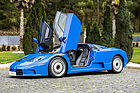
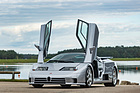
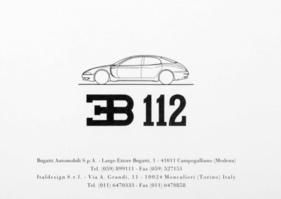
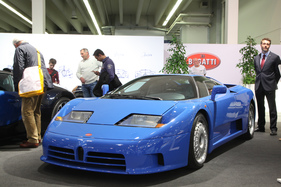
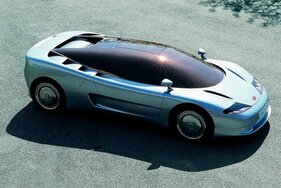
Many, many years later, Giorgetto Giugiaro's company ItalDesign presented the Bugatti ID 90 at the 63rd Turin Motor Show at the end of April 1990. Although it was not a saloon but a state-of-the-art mid-engined sports car, Giugiaro's design won the trust of Romano Artioli, the owner of Bugatti Automobili. For the EB110, Artioli had designs made by Marcello Gandini and Giorgetto Giugiaro in 1989, followed a little later by another by Paolo Martin, a sign for the latter that Artioli was probably not entirely satisfied with the work of his two colleagues. The relationship with Gandini ended in discord - the architect of the Fabbricca Blu, Giampaolo Benedini, revised Gandini's idea. However, the relationship between Giugiaro and Artioli remained intact despite the rejected design, the ID90.
Artioli bought the Bugatti brand in 1987, founded the company Bugatti Automobili S.p.A. and began building a factory in 1988. The address alone sounded like real bel canto: Bugatti Automobili S.p.A. - Largo Ettore Bugatti, 1 - 41011 Campogalliano/Modena. The first customer vehicles were delivered in the fall of 1992.

After the EB110 sports car, however, Artioli wanted to go one step further and offer a luxury four-seater that radiated the spirit of Ettore Bugatti. Artioli calculated that up to 400 cars a year could be sold. The factory was enlarged again especially for this purpose. What's more, it was hoped that the saloon would create a certain cross-subsidy to the EB110, which was intended to attract buyers as a super sports car, but was primarily seen as an image carrier rather than a source of money for Bugatti.
Collaboration with Giugiaro
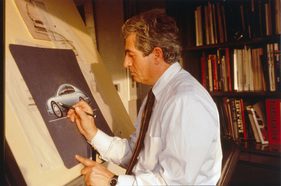
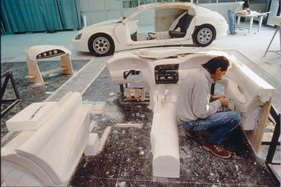
From 30 designs submitted for the new saloon, Romano Artioli and his team selected what they considered to be the most daring and decisive concept, as Clauspeter Becker noted for "ams" in 1993. It is important to bear in mind the circumstances of the time; after all, we are still almost 20 years before the presentation of the first Porsche Panamera of the Porsche 970 type in the early 1990s. No other car had ever looked like this Bugatti before. This may explain the enthusiasm of certain members of the press.

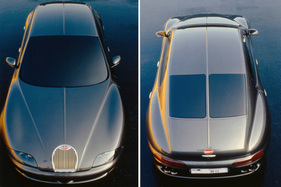
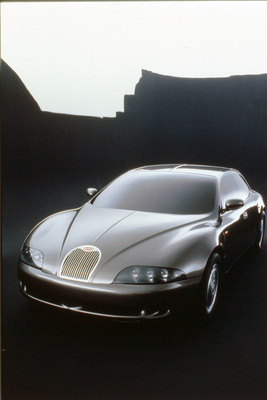
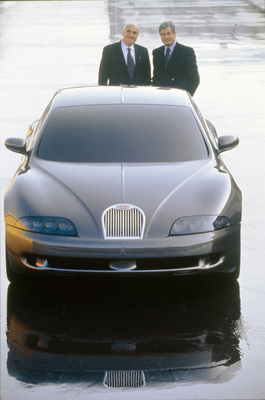
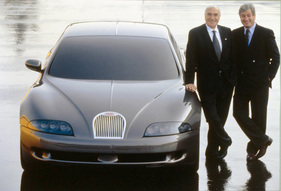
Giugiaro had created a "masterpiece of post-modern car architecture", continued Becker in his report in spring 1993. And the EB112 was a sheer delight along its entire length and made the heart beat faster in the face of unexpected beauty.
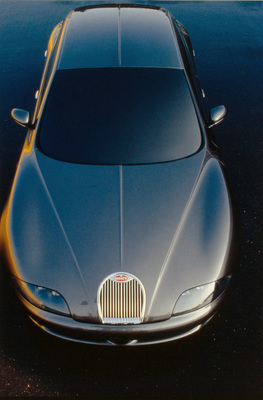
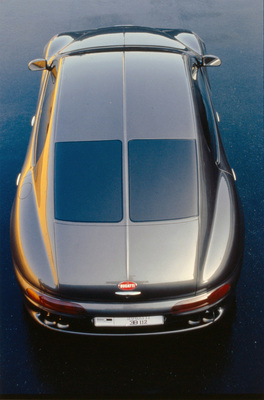
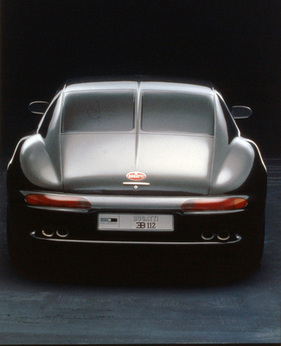
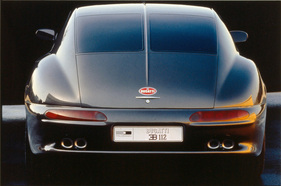
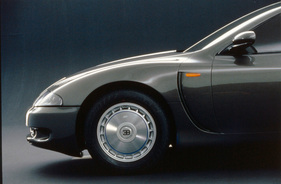
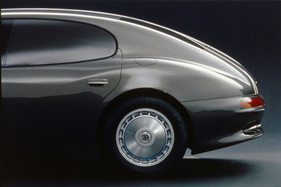
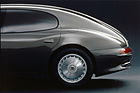
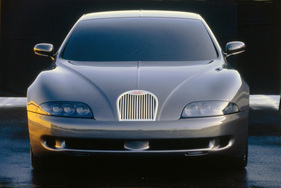
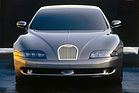
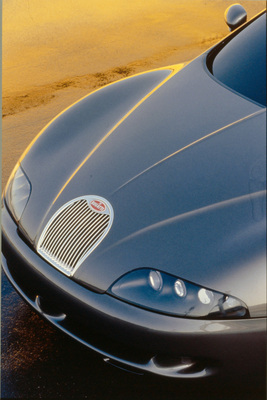
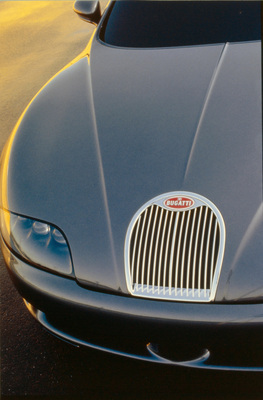
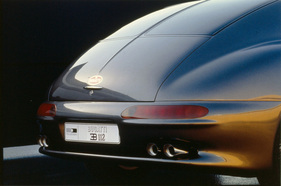
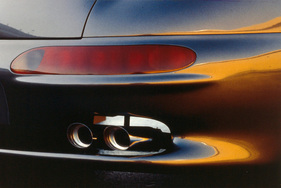
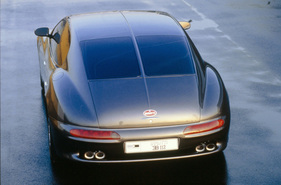
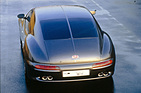
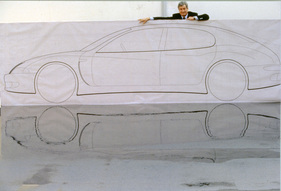
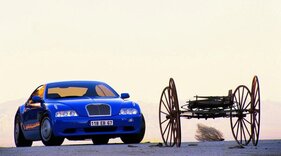
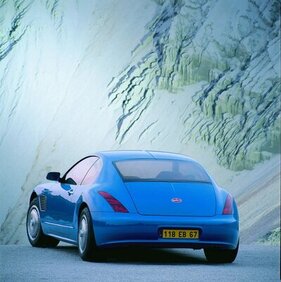
Indeed, Giugiaro and his team had skillfully blended elements from Bugatti's history with modern ingredients such as ellipsoid headlights and integrated bumpers, without forgetting aerodynamics. Compromises were also made for the sake of aesthetics, for example a spoiler lip at the rear was dispensed with and an attempt was made to make up for this with the air flow on the underbody. What is surprising is the lack of a tailgate, but mountain bikes and the like were not yet part of the leisure spectrum of the intended target group of the super-rich at the beginning of the 1990s, at most golf bags.

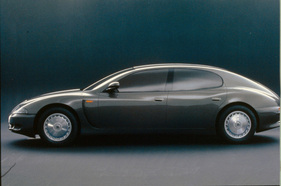
The result was a 5.07 meter long and 1.96 meter wide saloon that was 1.405 meters flat. The side windows were frameless and the rear had the aforementioned conventional trunk lid, which gave access to a luggage compartment with a volume of 365 liters, which could be optimally utilized with tailor-made suitcases. Incidentally, only one such set was ever produced, although it is doubtful whether it was made for the launch of the EB112.
Aluminum and carbon fibre
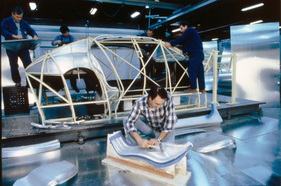
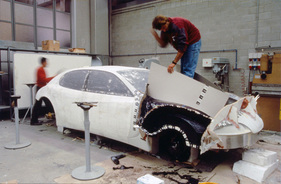
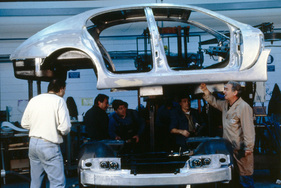
Although the Bugatti EB112 was roughly the same size as a Mercedes-Benz S-Class from the W140 series, it weighed just 1830 kg with a full tank, which was easily 400 kg less than the saloon from Stuttgart with a comparable engine. In order to achieve this weight despite the high level of luxury on board, all-wheel drive and a powerful twelve-cylinder engine, the engineers at Bugatti, or rather the partners at the French armaments and aircraft manufacturer Aerospatiale, formed the chassis in carbon fiber composite material, as in the EB 110, and had an aluminium body hammered over it. The chassis was in two parts and was held together in front of the bulkhead by elastic joints to improve noise comfort.

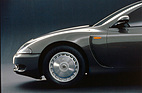
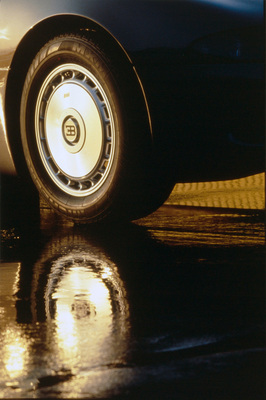
The independent wheel suspensions with double wishbones at the front and rear - with a push-rod system at the front and internal spring-damper units - were largely adopted from the EB110, while the Bugatti Royale-style wheels were supplied by BBS.
A reversed EB110
While the engine of the Bugatti EB110 is located in front of the rear axle, in the EB112 it was positioned between the front axle and the occupants as a kind of front-mid engine. And the twelve-cylinder engine was so heavily modified for use in the luxury saloon that Bugatti was rumored to now have two different twelve-cylinder engines, just like Ferrari. However, this was not entirely correct, as the basic dimensions for bearings, cylinder spacing and the essential design features of the naturally aspirated V12 were the same.
However, the displacement increased from around 3500 to 5995 cubic centimetres by enlarging the stroke from 56.6 to 86 mm and increasing the bore from 81 to 86 millimetres. As with the smaller engine, the cylinder block was made of an aluminum alloy, while the two cylinder heads were made of the alloy RR 350 Cu. Titanium screw connections held the parts together. As with the EB110, the four overhead camshafts were chain-driven and controlled three intake and two exhaust valves per cylinder.

Even without a turbocharger, which was dispensed with in favor of harmonious power delivery, the six-liter V12 (60-degree angle) produced 460 hp at 6300 rpm and delivered a maximum torque of 590 Nm to the crankshaft at 3000 rpm. An electronic multipoint injection system ensured careful fuel distribution, while one ignition coil per cylinder ensured optimum combustion. A biodegradable lubricant from ELF was used in the dry sump lubrication system. Four three-way catalytic converters with heated lambda sensors were to ensure clean air behind the EB112.

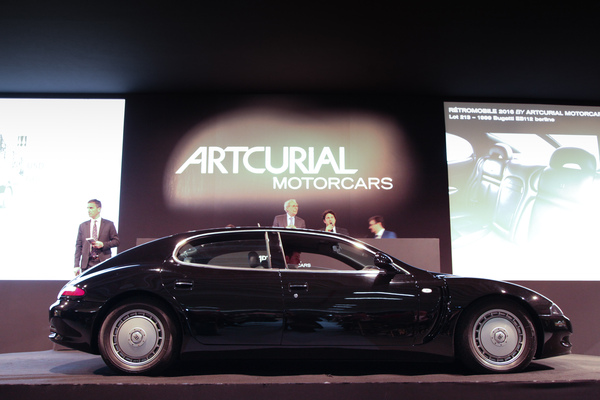
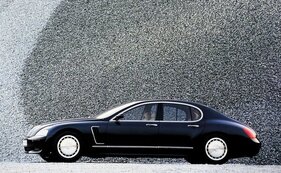
This new engine was coupled with a five-speed gearbox, although a six-speed gearbox was also mentioned at the time. Chassis number 39003, as shown in the picture above, was fitted with one of these, although it is not entirely clear whether this was included in a parts bundle from which this car, together with another, was created after the liquidation, or whether a suitable gearbox was subsequently configured for the EB112, which was completed in 1999.
Well, the gears of the first prototype were changed by hand using a gearshift scheme that was rotated by 180 degrees. The company did not want to use an automatic transmission of the type used at the time because of the torque converter effects; an automated manual gearbox like that used in Formula 1 would have been desirable but not yet suitable for series production or compatible with the comfort requirements.
Power was distributed to the four wheels via permanent all-wheel drive and three Torsen differentials, with 38% going to the front wheels and 62% to the rear wheels.

17-inch wheels were still sufficient at the time, with Michelin Pilot CS 255/55-17 tires fitted. Ventilated disc brakes all round, Bosch/Bugatti ABS - a similar system was in preparation for the EB110, but could no longer be fitted - and Servotronic all-round ball steering completed the package.

Comfort, especially at the rear
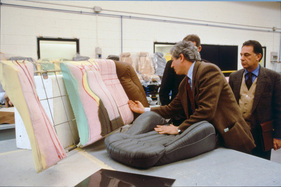
Giugiaro designed the EB112 with the rear passengers in mind. Accordingly, they were given the best seats in the Bugatti. Those sitting in the rear benefited more from the 3.1 meter wheelbase than the driver in the front row. They were able to enjoy the music via a Nakamichi stereo system and adjust the temperature to their own requirements via the air conditioning system, which could be regulated separately at the front and rear.
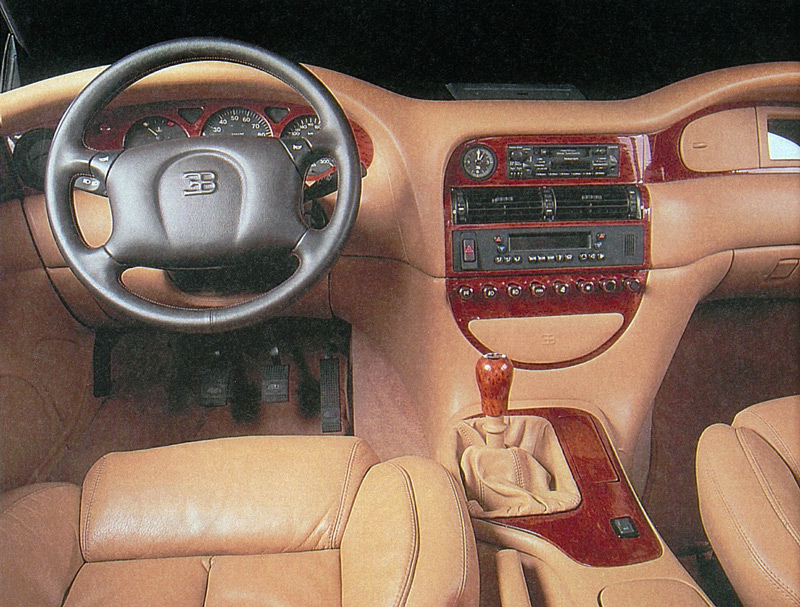
The finest leather and armchairs from Poltrona Frau combined with wooden accents to create a cozy ambience. Even small LCD screens were provided to follow stock market prices and news.

Presentation in Geneva
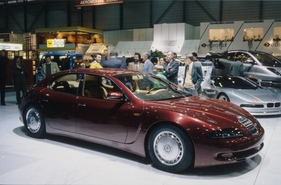
The Bugatti EB 112 was officially unveiled in a Bordeaux red livery at the Geneva Motor Show in March 1993. "auto motor und sport" reported:
"The consequences of the global sales crisis weighed on people's minds like fog on the water. But still and yet: here and there, lights flashed, reviving the dream of a better car world.
For example, the EB 112 study presented by Bugatti at the Geneva Motor Show rose like a phoenix from the ashes. With its reminiscences of the legendary Bugatti 57 SC Atlantic from 1938, the four-door saloon designed by Giugiaro clearly struck a chord with the public - a delight all round.
The gentle, hump-like curve of the rear end, the pronounced rib between the split rear windows and the gently sloping hood revive the myth of a company that has long since entered the history books of motoring history with its sports saloons. However, if the dream car with the six-liter V12 engine and carbon fiber chassis goes into series production, it is likely to remain a dream for most visitors with a price tag of around 400,000 marks."

From today's perspective, 400,000 German marks, or the equivalent of around EUR 205,000, doesn't seem like a lot, but at the time Bugatti would have been around twice as expensive as the next best alternatives. Nevertheless, there was talk of 30 interested parties who had already ordered a saloon and paid a deposit.
A sports car for the whole family
Meanwhile, the Bugatti EB112, whose prototype for Geneva had just been completed at the last minute, had not yet been fully developed, although Bugatti tried to make it clear in a letter to Automobil Revue on March 25, 1993 that the EB112 shown in Geneva was not a study but the definitive model. Mauro Forghieri, who had worked at Ferrari from 1970 to 1987 and at Lamborghini from 1987, was appointed chief engineer in order to make progress in refining the car, as the first customer vehicles were to be delivered in 1995 at the latest.

In an interview, the talented engineer explained:
"I consider the EB 110 to be a Bugatti because it is built by Bugatti, while the EB112 is also a typical Bugatti in spirit. This is another reason for me to be involved in the development of this particular car. What's more, an all-wheel-drive sports sedan is exactly what I want from a modern high-performance car. Four-wheel drive not only means more safety, but also a more refined, more precise way of driving. The essence of fast driving is fast driving in complete safety, not a perpetual battle with an oversteering, overpowered car."
It is unclear how far Clauspeter Becker was allowed to sit behind the wheel for "ams" at the time, and if at all, but he only briefly commented on driving impressions: "Even if the springs and dampers of the four-seater are tuned a little softer, in the depth of the supporting carbon fibers, the EB 112 should remain two things: a Bugatti and a sports car. It already demonstrates this disposition in its first precocious sample: its 1750 kilograms follow very delicately and with great precision through tight bends. The EB 112 enriches the world with a work of art and a four-door Gran Turismo."

But imagine that today: A not-too-heavy front mid-engined sedan with a six-liter, twelve-cylinder naturally aspirated engine and manual transmission! And with Bugatti ingredients. That would seem to be a valid equivalent to DM 400,000, wouldn't it? After all, it would have given you what was certainly the fastest saloon in the world, with a 0 to 100 km/h sprint time of around 4.3 to 5 seconds and a top speed of around 300 km/h.
Premature end
Well, it wasn't meant to be. But it was not due to the technology or the controversial design of the Bugatti EB112. The company simply ran out of money after announcing the acquisition of Lotus Cars in August 1993.
The recession in North America and Europe limited the demand for luxury products, but the costs of the factory with over 200 employees were high. This led to the bankruptcy and liquidation of Bugatti Automobili before an EB112 could even be delivered.
Three cars?
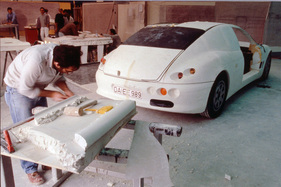
At the time the bankruptcy administration took over, just three Bugatti EB 112s had been built in parts. Chassis 39001 was the salon prototype that went to Giorgetto Giugiaro.
Chassis 39002 and 39003, two unfinished cars, went to Gildo Pallanca Pastor, a car-loving businessman from Monaco, together with spare parts. He had the two cars completed by his Monaco Racing Team, which took some time.
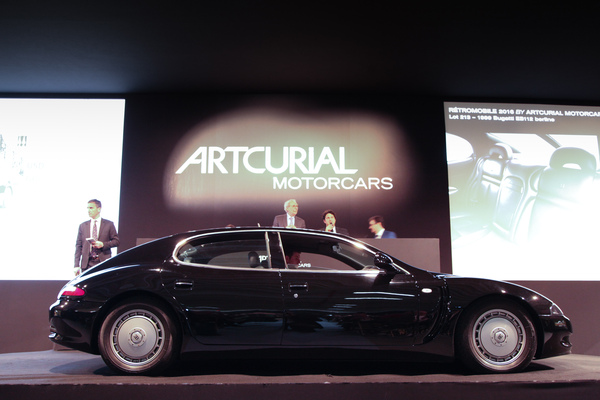
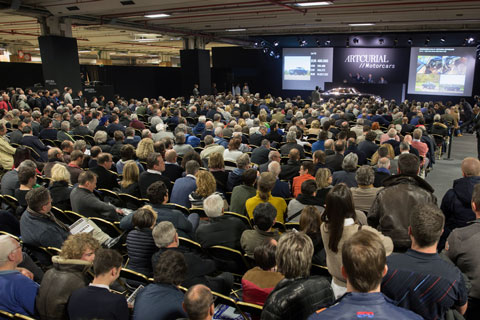
Chassis ZA9CC030ERCD39003 was offered by Artcurial in February 2016; the highest bid was listed at EUR 1.9 million, but the black car could not be sold at the auction itself. It is not known whether it subsequently found a new owner. What is certain is that this car will be put up for auction again on April 25, 2026 . This time, RM Sotheby's will take care of it at the Monaco Historique auction.
Chassis 39002 found new hands around five years later, with 3900 kilometers on the clock. It is also unclear whether the technical specifications of chassis 2 and 3 corresponded exactly to the prototype. In any case, the Artcurial car appears to have largely corresponded to the factory specifications, apart from the aforementioned 6-speed gearbox and radio equipment including navigation from Alpine.
Not the last saloon attempt
In 1998, Volkswagen was able to purchase the Bugatti brand. The takeover was celebrated with a concept car built by Giugiaro's ItalDesign. The Bugatti EB118 adopted many design elements from the EB112, but had a W18 engine with a displacement of 6.3 liters and 555 PS under the hood. In contrast to the EB112, however, the EB118 only had two doors and the interior was designed in Art Deco style. Giugiaro had not ruled out a shorter front-engined coupé as early as 1993.

The two-door coupé made its debut at the Paris Motor Show, but was also shown in Geneva and Tokyo in 1999.

In the same year, the next prototype appeared under the name EB218. This four-door model could be seen as a reinterpretation of the EB112, but it was around 30 cm longer and also featured modified light units and bumpers. The engine was once again the 18-cylinder with a displacement of 6.3 liters and 72 valves, coupled to a five-speed automatic transmission.
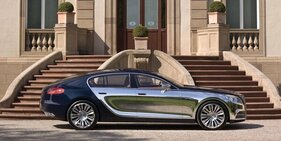
Subsequently, however, Bugatti focused on mid-engined sports cars and it was not until 2009 that the next four-door concept car was presented, the 16 C Galibier. As the name suggested, there was now an eight-liter W16 engine under the front hood. All-wheel drive and an eight-speed automatic transmission ensured contact with the road.

There was repeated talk of series production of the Galibier, which was certainly worth millions, but this never happened. In principle, the EB112 remained the most-produced Bugatti saloon of modern times - one in the factory in Campogalliano and two in Monaco.

Today, four-door cars from sports car manufacturers are no longer an exception, but even seasoned saloons such as a Bentley Flying Spur of the latest generation exceed the performance figures of an EB112, as does its top speed. However, it was not saloons that became the big business for luxury brands and sports car manufacturers, but SUVs. Whether Lamborghini Urus, Ferrari Purosangue or Bentley Bentayga, the trend towards off-road luxury saloons has made them socially acceptable. Nevertheless, they are no substitute for the aura of the Bugatti EB112 super saloon.