Which makes driving a classic car increasingly tedious ...

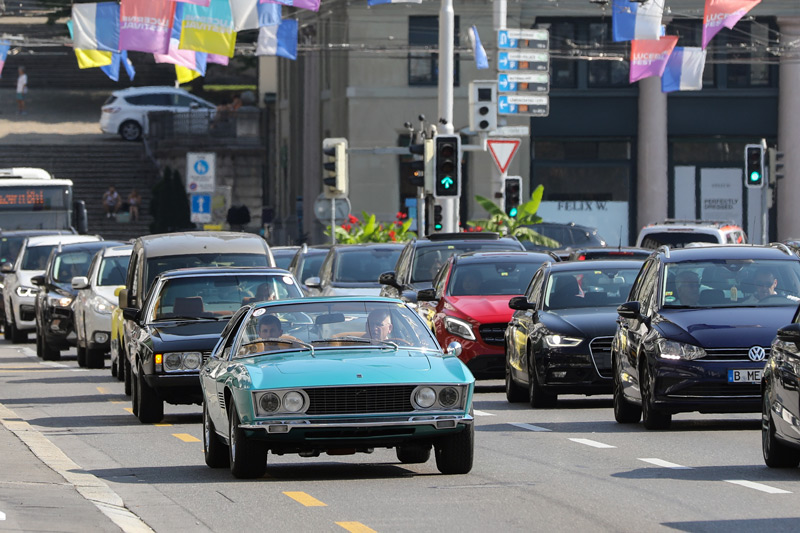
There are more and more cars on our roads. Although this also increases the chance that some of these vehicles will mature into classics in the next 20 to 30 years, in the short term this increasing traffic is more likely to create problems for existing classic and vintage cars. They are facing more and more traffic jams. Column traffic, stop-and-go traffic and long waits on blocked roads typically put the old car in a stronger position than modern vehicles.
Whether modern assistance systems also lead to traffic jams (and hand organ effects on highways) has probably never been investigated. But it is conceivable.
And now artificial traffic jams are also being produced, for example recently in Graubünden. This is done to control traffic and make bypass routes less attractive. In many cities, it has long been common practice to slow down traffic or create traffic jams. It is hoped that this will have a learning and rethinking effect on road users. Speeds are reduced, traffic lights are programmed for frequent stops or one-way traffic lanes are set up to force heavy traffic in certain directions and create traffic jams. The increasingly popular "bicycle highways" also reduce the traffic space for cars and cause additional traffic jams. And the ever faster and more numerous bicycles (and electrified scooters and similar means of transport) do not necessarily make maneuvering in the old car in urban areas any easier.
Regardless of why there are traffic jams, as already mentioned, they are definitely a problem for old cars, which can heat up more quickly and whose clutches are less able to cope with the stresses of slow driving and stop-and-go. What's more, the seemingly ever-changing speed limits soon make it impossible to keep up in an old car without the appropriate assistance systems.
Yes, driving through cities and conurbations was much easier with today's gracefully aged cars ...
Or what do you think, dear reader? Just write it in the comments box below. We are curious ...