On the back roads through automotive history (1): Panhard-Maserati

It's true: the most beautiful, interesting and sometimes weirdest discoveries are always made on the back roads. This also applies to the byways of automobile history. This series is intended to bring together surprising facts from earlier times about technology, design and life with the car .
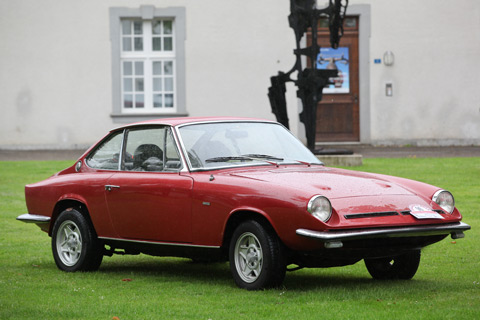
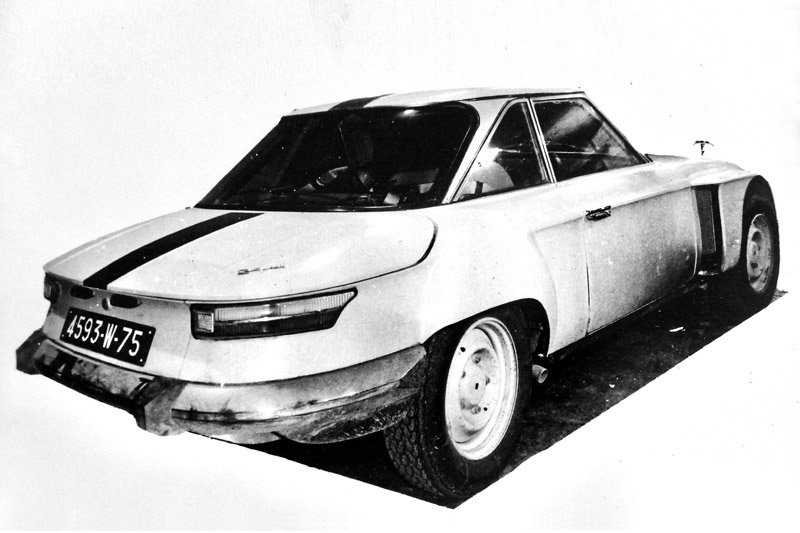
At first glance, it looks quite harmless: a Panhard 24, but what's the story behind the side gills?
Panhard, one of the oldest car brands in the world, came under the Citroën umbrella in 1965 before disappearing completely in 1967. This connection was obviously a booster for Citroën's development department, which had never been at a loss for ideas, as the project described here shows.
An exotic combination: Panhard with Maserati engine
Crossing a horse mare with a donkey stallion produces a mule. Crossing a horse stallion with a donkey mare produces a mule. What is the result of crossing a Panhard with a Maserati(motor)? A Panerati or a Mashard? Let's leave that open.
What sounds like a bad joke at the regulars' table was actually built in 1970 in the Citroën development department. The most important development topic was the effect of powerful engines on front-wheel drive. For this purpose, a largely original Panhard 24 body was placed on a newly developed platform chassis of the 2 CV type.
The Maserati V6 engine (240 hp, 4 overhead camshafts, 3 Weber twin carburetors) and the hydraulic suspension as well as the adaptive power steering came from the Citroën-SM range.
The responsible designer Jacques Né wrote about the project:
"I have always said that it is absurd to talk about aerodynamics in a water-cooled car. You force a lot of cooling air into the engine compartment, but don't care how it gets out again. That's why I envisaged two side radiators, each with its own air supply from above through the hood, and the exhaust air escapes to the side behind the front wheels. This solution reduces drag significantly more than the spoilers and wings that are currently in vogue. The car never had any overheating problems, even in summer in traffic jams."
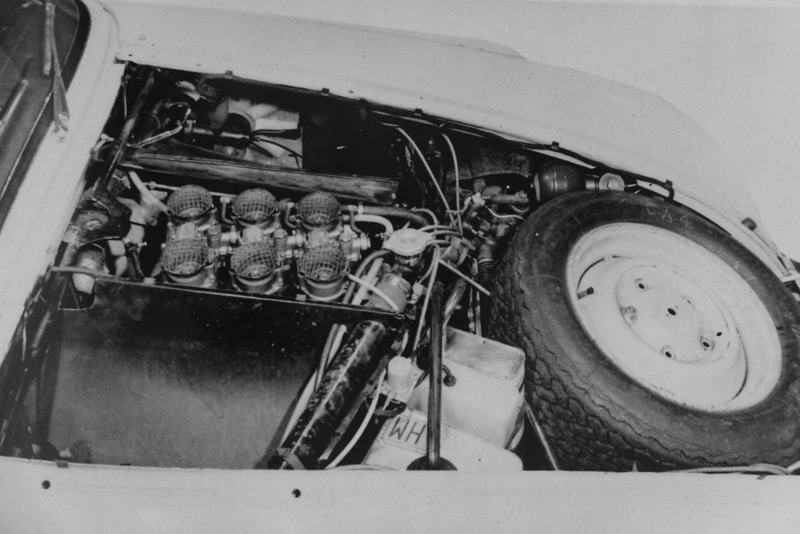
The drive package was compact. Two air guide plates for the side radiators can be seen on the side of the engine. The left one is visible together with the fan.
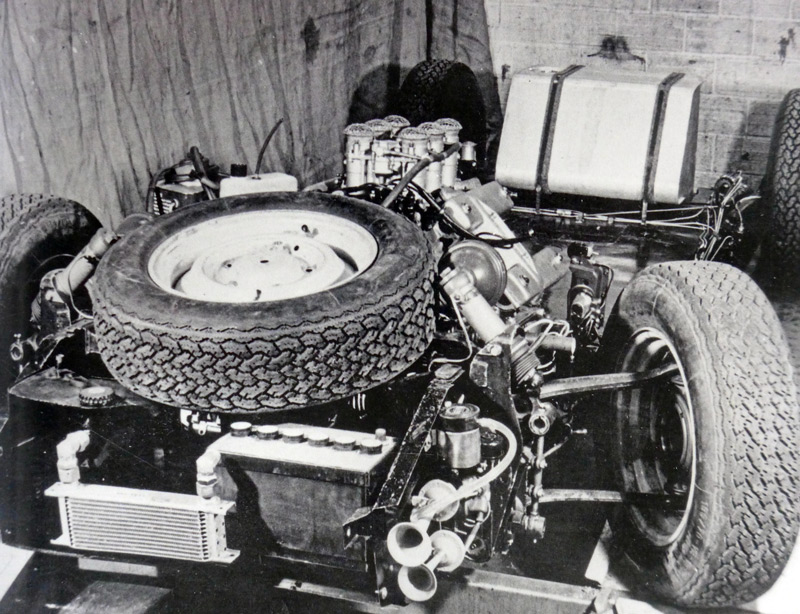
The platform chassis was impressively rational, everything had its logical place. Thanks to the side radiators, there was room for the entire hydraulic system in front of the engine, and even the spare wheel above it. The oil cooler and battery were located in front of it.
The 110-liter tank (the Maserati engine was not exactly a costly one) was located between the rear wheels.
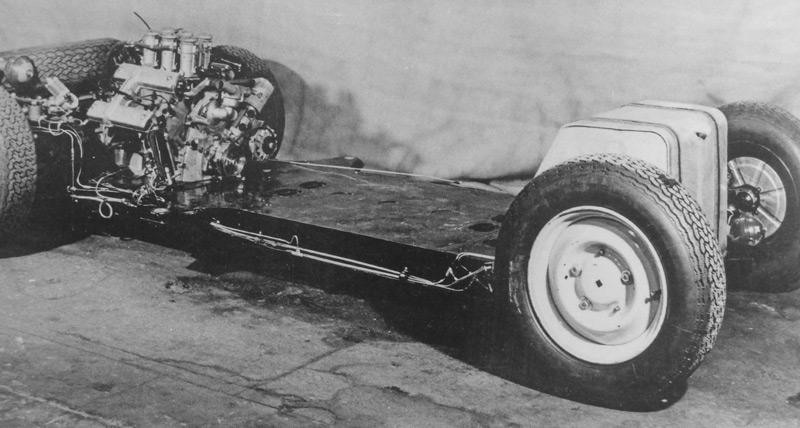
The wheelbase was 2.6 meters.
The interior featured two innovations: The displays and controls were integrated into a control unit that moved with the adjustable steering column. The headrests ended in a kind of roll bar that ran lengthways in rails on the roof. This created a vertical connection between the floor and roof, which also contributed to stability and thus passive safety in the event of a rollover.
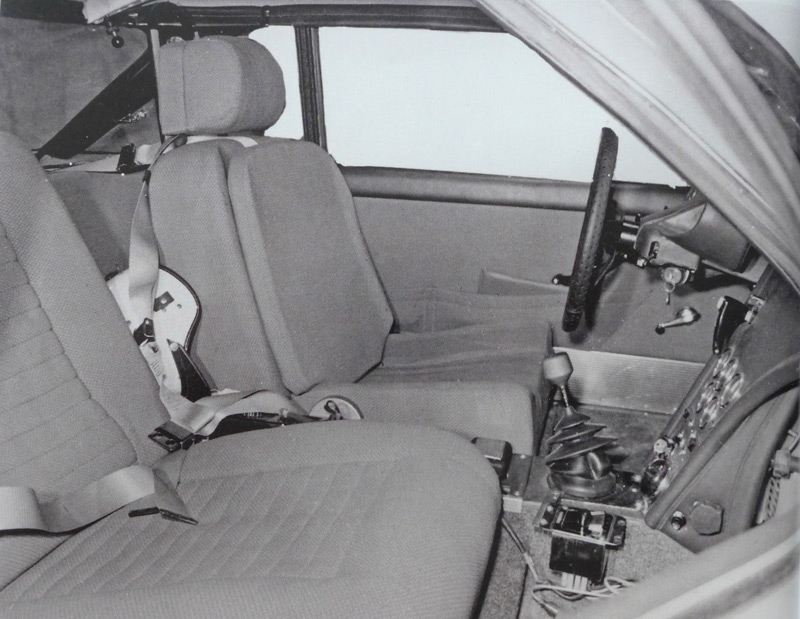
With this car, experiments were carried out on other typical Citroën topics such as the centering of the masses, the flexibility of the suspension, the rolling behavior around the longitudinal axis, the dynamic wheel load change and the position of the chassis.
Even the interior design was rethought.
A little addendum
We dare not think what the result would be if you were to cross a Maserati with an air-cooled Panhard two-cylinder engine...