Alfa Romeo in Brazil - South American samba from northern Italy
On the Sunday before last in March, the Marx Collection in Mezzovico opened a chapter that is little known to many Alfisti: Alfa Romeo and Brazil. Axel Marx and Elisabetta Cozzi spent an afternoon serving up a wide variety of presentations to over 200 people, with lots of interesting facts about the Milanese brand's involvement on the South American continent.

A few weeks ago, Axel Marx (Marx Collection) and Elisabetta Cozzi (Museo Fratelli Cozzi) joined forces and founded "CulturAlfa" ( website). The logo is a design by former Alfa Romeo designer Zbignew Maurer. CulturAlfa aims to spread the rich heritage of the glorious Milanese brand in all its facets.
Who is aware that Alfa Romeo started building trucks in Brazil in 1950 and expanded its range to include cars in 1961? The initiative actually goes back to the American armed forces, which set up a base in Brazil in 1942 in order to be closer to Europe. In the final years of the war, Curtis Wright aircraft engines were initially manufactured under license in Duque de Caxias near Rio de Janeiro. In the late 1940s, the company switched to the (peacetime) production of trucks and concluded a license agreement with the Italian manufacturer Isotta-Fraschini.
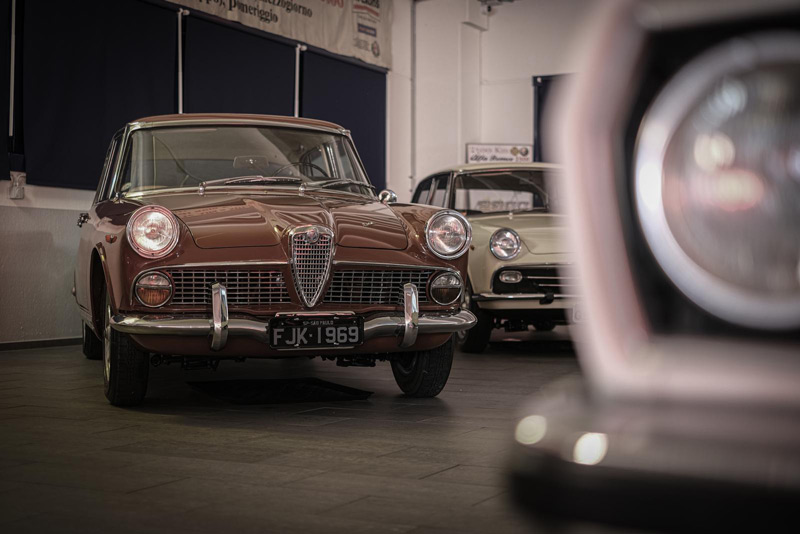
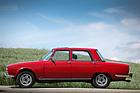
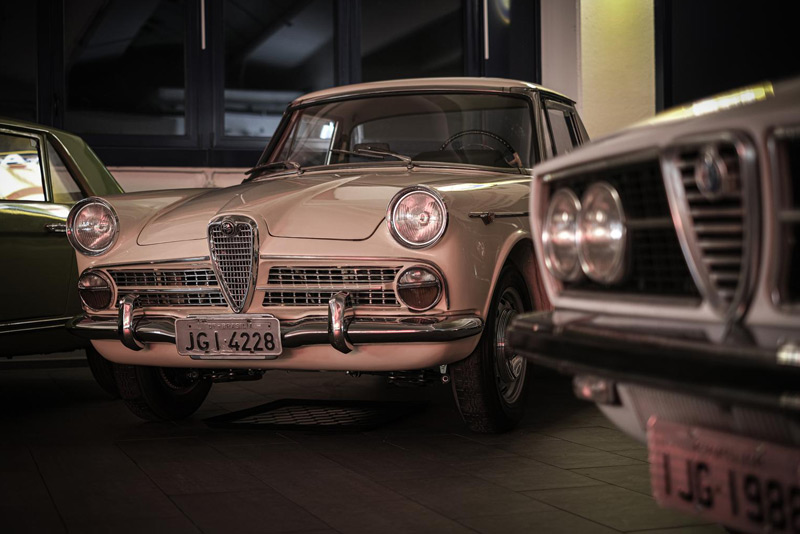
After Isotta-Fraschini went bankrupt, Alfa Romeo stepped in. Trucks were built under the Brazilian label FNM (Fábrica Nacional de Motores) with Alfa Romeo as technology partner. The striking thing: The 6-cylinder diesel engines in Brazil were the exact mirror image of those in Italy...! Production was extended to passenger cars in 1961 on the initiative of head of state Juscelino Kubitschek: the president wanted an adequate, modern car from local production for the inauguration of the new capital Brasilia. The Milan-based company used the 102 model series and from then on the Berlina was not only built in Portello, but also in Brazil (albeit under the FNM label).
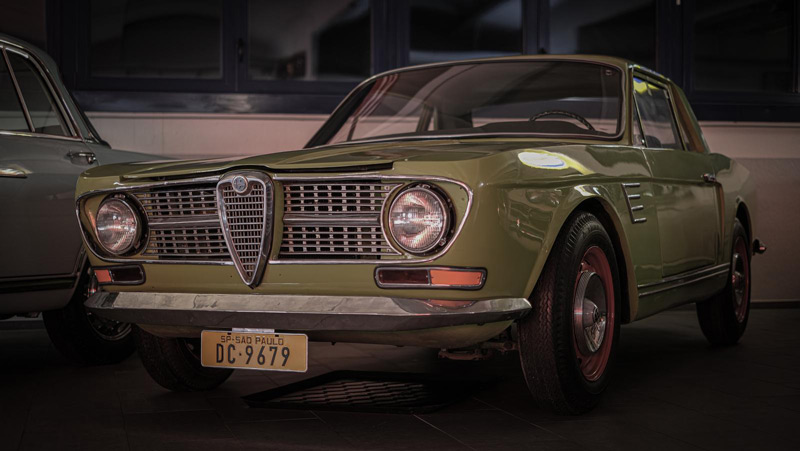
In the mid-1960s, the Brazilians dared to try a design experiment: a few prototypes of the "Onça" sports coupé were created in strong imitation of the Ford Mustang - but the study did not make it into series production.
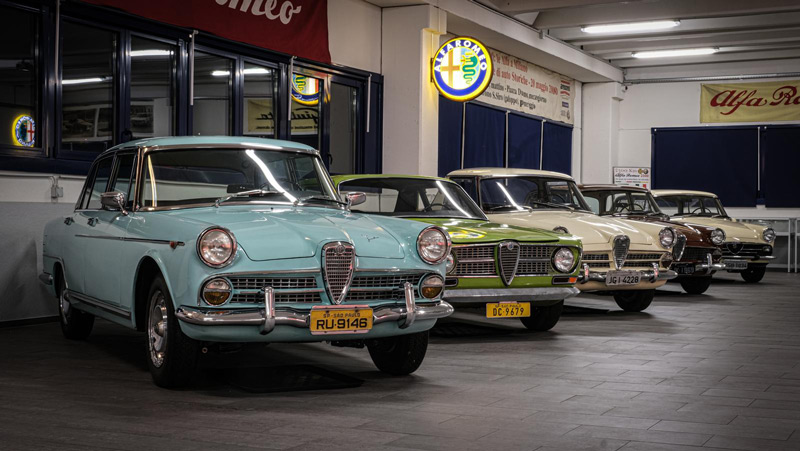
Instead, the FNM logo disappeared completely in 1968 as part of the company takeover by Alfa Romeo. The engines of the Berlina were first bored out to 2150cc and then to 2300cc, before the clearly ageing model was replaced by the "2300" in 1974. The "new" model had strong visual similarities with the Alfetta.
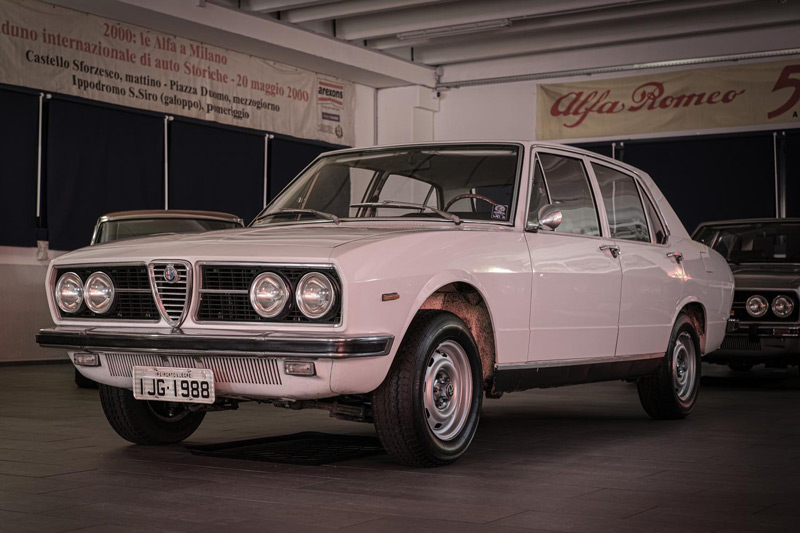
Under the bodywork, however, much remained the same: It was actually the floor assembly of the 102 series, which had a 21cm longer wheelbase and a 41cm longer body compared to the Alfetta. The elaborate transaxle construction of the Alfetta was dispensed with completely.
Rio Grande in Germany
A special story emerged in 1981. The German Alfa Romeo importer was convinced that the Alfa Romeo "2300 Rio" could be sold around 600 times in Germany at a low price of around DM 10,000. A ship loaded with 1300 units of this Alfa Romeo model docked in Bremerhaven. What nobody in Germany had thought of was the fact that in the land of BMW or Audi there was no market for an Alfa Romeo with a rigid axle, a little more ground clearance (those were the days, sic!), a 100-liter petrol tank and an old-fashioned in-line four-cylinder engine with a cast iron block...
Although the importer invited high-volume dealers to a feudal banquet with plenty of alcoholic beverages, he was unable to sell more than a few dozen cars. For months, the Rio models stood in stockpiles at the importer in Frankfurt and in the harbor area of Bremerhaven. Not even the cost price of DM 10,000 was able to attract buyers... And what's more, the importer suddenly no longer even gave a warranty on the Rio models.
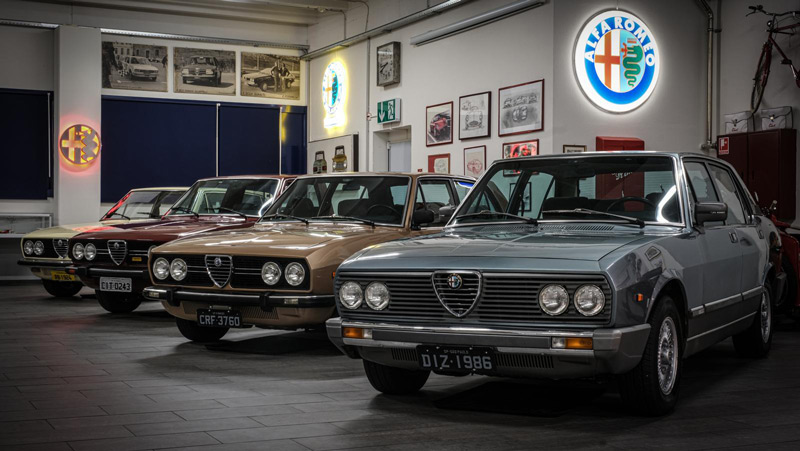
The Alfa Romeo 2300 Rio was produced in Brazil until 1986. After the takeover of Alfa Romeo by Fiat, the FNM brand was integrated into the Fiat Group, and the trucks have been trading under the name Iveco since 1988.