Enchanted by beauty!

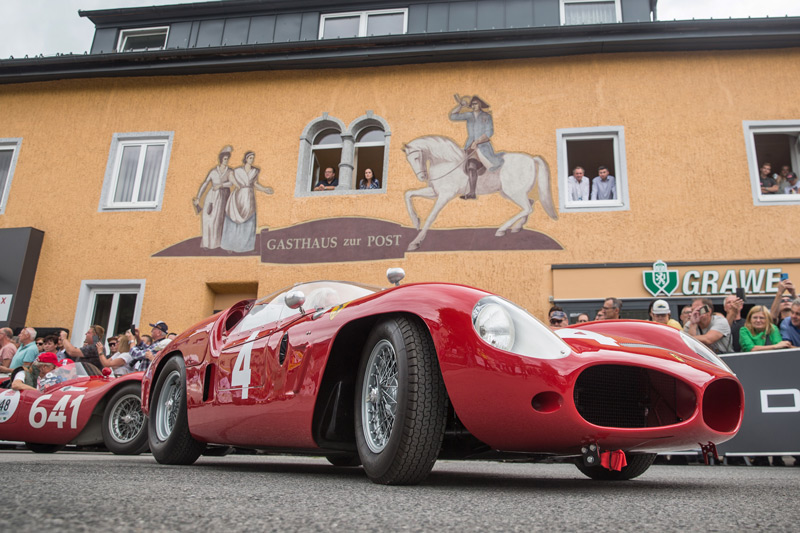
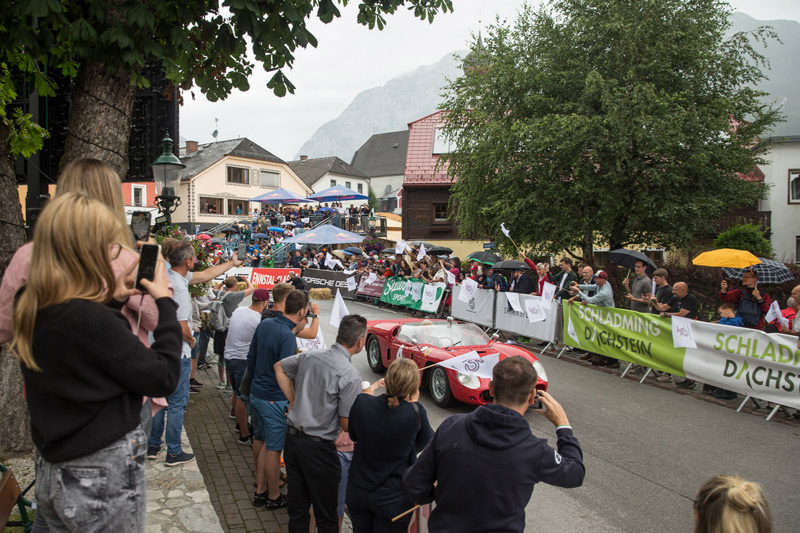
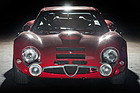
And suddenly it stood in front of me in Styria (at the Ennstal-Classic ) , this incredible Ferrari 246 SP. In 1961, such a 246 SP won the Targa Florio. At the wheel were none other than Count Berghe von Trips and Olivier Gendebien. A car straight out of a picture book, so incredibly beautiful that it almost seems kitschy again.
In Sicily, the Ferraris started as the highlight and absolute favorites at the end of the 50 or so participants. At 30-second intervals, they set off on the 72 km lap over hill and dale. Phil Hill's Ferrari did not come back from the first lap. Trips lined up third in the field behind the two Porsches of Moss and Bonnier. These three broke the track record on the second lap. At the pit stop, Gendebien came into Graf Berghe von Trips' car at short notice instead of Richie Ginther, whose car he was supposed to share with Hill. The Belgian took 30 seconds off Graham Hill in the Porsche. After the switch to Moss, the Stuttgart team tried everything, but the Italians held out. The Ferrari briefly lost the lead to Moss when he switched to Trips again. The two gave each other nothing and broke all track records. In the first half of the last lap, Trips took no less than 17 seconds off the Englishman. The Porsche's gearbox capitulated under Moss' hard work just seven kilometers before the finish. The two following Porsches, the 718 RS 61, were more than 4 minutes behind the victorious Ferrari in the end.
The 246 SP was presented together with the 156 F1 in Maranello on February 13, 1961. Both racing cars featured the distinctive front end that went down in history as the "shark nose". While the F1 had to be powered by a 1.5 liter engine according to the new regulations, the sports car was fitted with a 2.4 liter, but both were V6 engines.
In 1962, the car won the Targa Florio once again with Willy Mairesse, Ricardo Rodriguez and Olivier Gendebien and also won the 1000 km race at the Nürburgring.
It was not until 1963 that the 246SP was replaced by the 250P, which was presented on March 4, 1963. However, its predecessor set the course for further major successes for its successor, which won Le Mans in Sebring and at the Nürburgring and ultimately also brought the World Championship title for sports prototypes to Maranello.
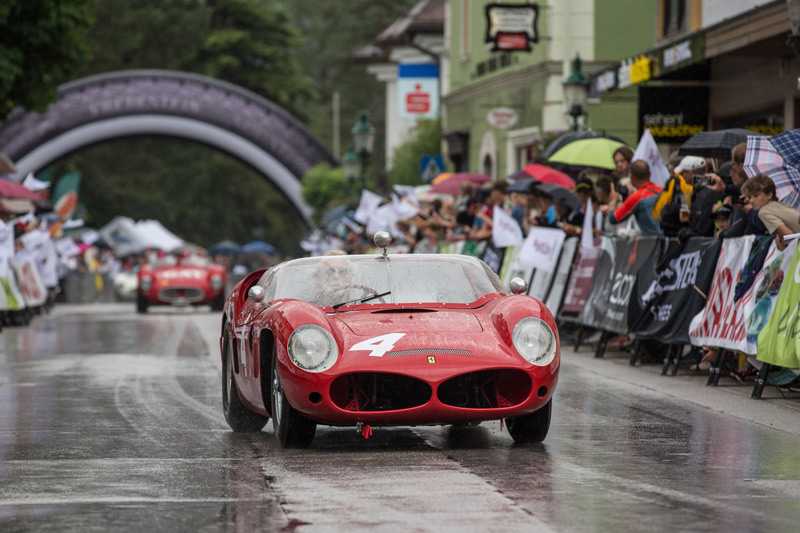
The car in the photos is a faithful replica with a real engine. Personally, I think it's absolutely fantastic when such wonderful cars are rebuilt to preserve them for posterity. Provided, of course, that they stand by them and don't suddenly try to use every trick in the book to turn a pure nothing into a racing classic with a completely dubious history.