A bijou to touch


A good three years ago, my colleague Koch wrote about the Citroën Bijou , quoting a few thoughts from the magazine "auto motor und sport":
"Too much ugliness apparently sells badly in England too. In any case, the British Citroën branch decided to strip the Citroën 2CV of its corrugated iron dress and gave it a good plastic suit. The whole thing, in elegant beige with a white interior, was one of the main attractions in London under the name "Bijou"."
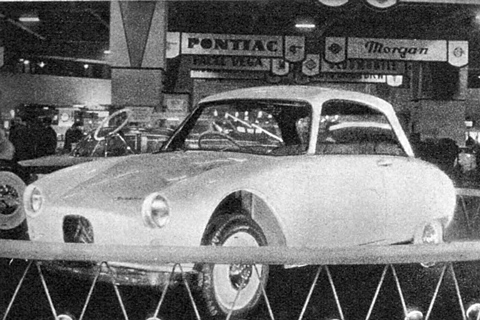
The 2CV-based coupé was first seen at the Earls Court Motor Show in October 1959.
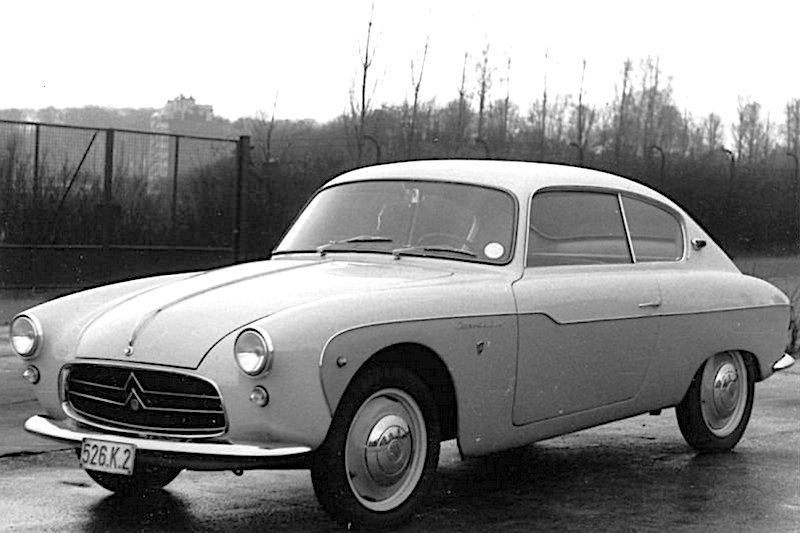
Last weekend at the Bremen Classic Motorshow , I was able to get to know this British-built Citroën Bijou for myself . At the 2CV club stand, a few details about the elegant coupé were also communicated. The design is said to have been created by Peter Kirwan Taylor together with the Citroën design team of Nigel Sommerset-Lecke. Peter Kirwan-Taylor (1930-2014) is known, among other things, for the design of the Lotus Elite, one of the most beautiful small cars of all time. But the Citroën Bijou is also impressive. The plastic body was based on the chassis of the British Citroën 2CV, as it was produced from 1955 to 1959.
From 1959 to 1964, 210 production models and two prototypes were built, of which a good three dozen are still on the road.
With the 12 hp of the air-cooled two-cylinder four-stroke 425 cc engine, the coupé was capable of around 90 km/h. We do not know whether the current owner of number 180, built in 1964, was ever that fast. Overall, however, the Bijou must have been a pretty economical vehicle, so perhaps the owner can comment on this here.
In any case, we were delighted to finally be able to see this plastic car in the original. The original picture from the 1959 London Motor Show shows that there are some differences between the 1959 prototype and the production car.

The caption in the Automobil Revue of October 29, 1959 read : "Citroën 2 PS as an English "Bijou" - The hobby stylist Peter Kirwan-Taylor designed this plastic coupé for Citroën's English assembly plants, which was intended to increase the sales opportunities of the 2 PS in England, where the functional original body was not very popular."