The slowed-down hare


The first catalytic converter vehicles appeared on the roads in Germany in the mid-1980s, with early examples mostly coming directly from the USA - partly for testing purposes - where there was already a little more experience with unleaded gasoline and exhaust aftertreatment with catalytic converters.
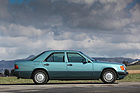
However, tests carried out by Automobil Revue in 1984showed that a Mercedes-Benz 190 E 2.3 or a VW Rabbit GTI used significantly more fuel than the higher-compression European versions without catalytic converters. Above all, however, the power output also dropped. The Mercedes 190E had 115 hp instead of 122 hp, and the Golf/Rabbit only 91 hp instead of 112 hp. The Golf engine had lost significantly more due to a reduction in compression ratio from 10:1 to 8.5:1, which was also immediately reflected in the driving performance. The American Golf took 10.9 seconds to accelerate from 0 to 100 km/h and consumed 10.9 liters per 100 km. All the sportiness was gone, no wonder the Automobil Revue said:
"The introduction of low-octane, unleaded normal gasoline, which makes effective exhaust gas purification by means of catalytic converters possible, is probably not enough in Europe. We want to drive low-emission, yet economical vehicles."
The European car industry responded to this call, as the initially introduced European 95-octane unleaded fuel also allowed higher compression ratios. Although there were also performance losses in Europe, they were more in the five percent range. The rest is history ...