The fastest dentist Tony Brooks (obituary)

Six-time Grand Prix winner Tony Brooks (25.2.1932 to 3.5.2022) has died at the age of 90.
The 1959 World Championship runner-up was the oldest living F1 GP winner after Stirling Moss and also the last living racing hero to win a Grand Prix in the 1950s.
Brooks was the son of a dentist and offered to help his mother find a new car, saying: "I know someone who has a nice little car for you." In the end, a small sports car with a whopping 104 hp arrived on the Brooks' doorstep. The young Tony contested his first races in his mother's Healey Silverstone while still at university.
With the later Frazer-Nash, he became known as a reliable and fast racing driver in his own country. John Riseley-Prichard, one of his former team-mates, then offered him his Formula 2 Connaught for the race at Crystal Palace (London). It was here that he first attracted international attention when he was only beaten by the three F1 racing cars in the F2, which were driven by the likes of Mike Hawthorn, Harry Schell and Roy Salvadori.
The international breakthrough came with victory in the non-championship Formula 1 race in Siracus (Sicily) in 1955. Years later, Brooks said of his commitment: "I don't think they could find anyone more successful. In any case, I had never driven a single meter in a Formula 1 car. When the call came, I just said yes and that was it."
In the absence of Scuderia Ferrari, the favorites at the time included the Maserati team with Luigi Musso, Harry Schell and Luigi Villoresi in their 250F. Because Brook's Alta engine in the Connaught chassis already had quite a few kilometers under its belt, he was asked to drive only the bare minimum during practice. With just 15 laps in an F1, the Englishman started the race, overtook Musso in the lead on lap 11 and took the first victory for an English driver in an English car in a Formula 1 race in Europe.
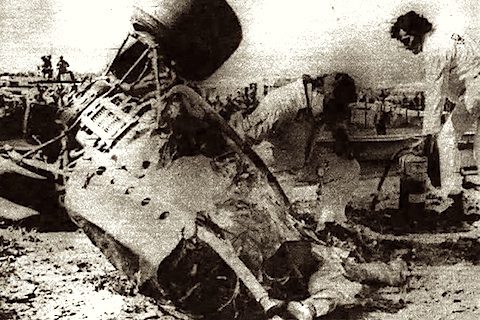
Brooks completed his studies as promised, but had long since become addicted to racing. In 1956, he suffered a serious accident at Silverstone in a BRM plagued by childhood illnesses as a result of a gearbox defect, which led to a broken jaw. Tony Vanderwell's offer to drive one of the Vanwall racing cars came at just the right time for 1957, and Brooks quickly joined the world's top drivers. He came second in Monaco and won at Aintree, in a race in which he had to cede his car to team leader Stirling Moss, whose racing car broke down. But there was another serious accident that year, when he was thrown out of his Aston Martin at Le Mans and was lucky to escape with only hip injuries and severe skin abrasions.
In 1958, team owner Vanderwell's goal in racing was achieved: the Vanwall was the fastest, if not the most reliable car, and Brooks won three Grand Prix in Belgium, Germany and Italy, which was enough for third place in the final World Championship standings. When Vanderwell retired from the sport because he had lost his driver Stuart Lewis-Evans in an accident and had otherwise achieved all his goals as team boss, Tony Brooks came to Ferrari in Italy.
The Englishman thanked the Italians straight away with two GP victories (France and Germany) and second place in the World Championship behind Jack Brabham, but ahead of his rival and close friend Stirling Moss.
Ultimately, however, Brooks felt most at home with his compatriots, but was unable to repeat his earlier successes with the BRM in either 1960 or 1961. He contested his last Grand Prix in the USA in 1961. Brooks: "I actually wanted to retire at the end of 1959, I had seen too many friends die."
In 38 starts in the premier class, he took six victories, three pole positions and three fastest race laps. He led 1206 km or a total of 127 laps in the premier class.
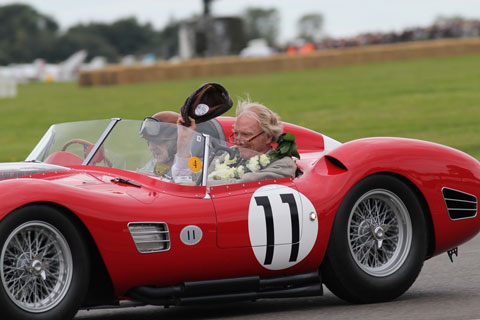
Tony Brooks remained closely associated with racing throughout his life as a restorer of old racing cars and as a guest at numerous events with historic racing cars.
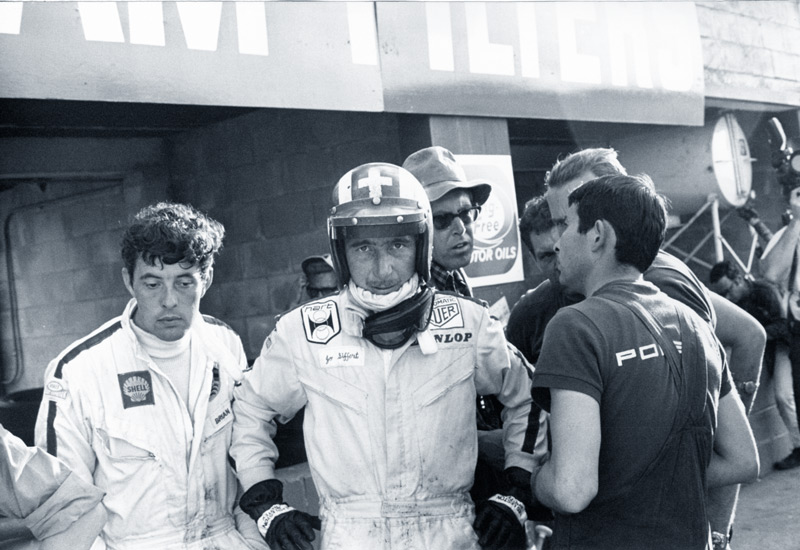
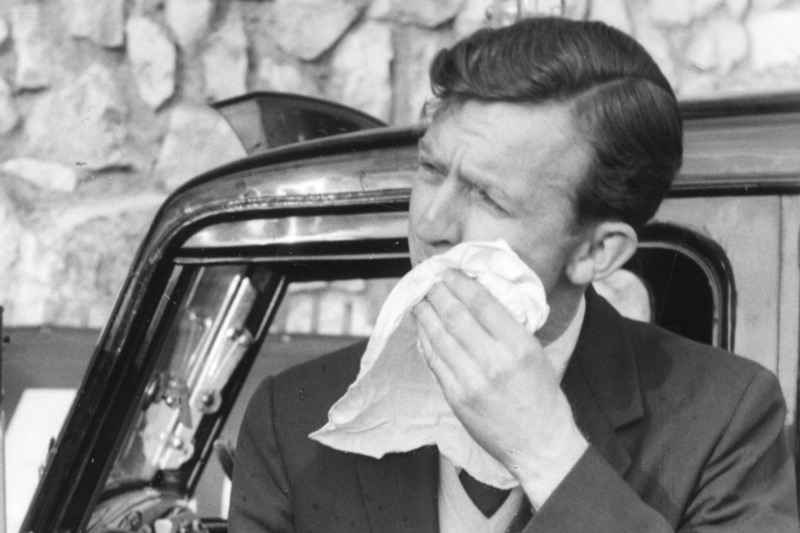
P.S. The picture shows Brooks in 1961 on the occasion of the 30th Monte Carlo Rally, which he contested in an Austin. However, he was not enthusiastic about the maneuvering that the car required on the narrow roads of the Maritime Alps. He preferred to drive a Formula 1, he said at the time.