How big can the wheels actually get?

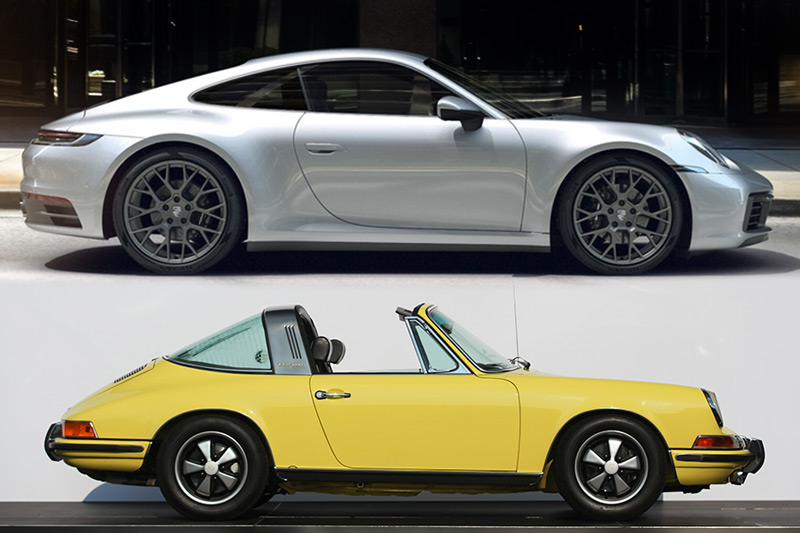
Remember the time when people debated whether 12-inch or 13-inch wheels weren't a bit too small after all? Beetle fans in particular initially had little use for the 13-inch rims of the successor VW Golf. But soon half the car population was equipped with 13-inch wheels. That was in the seventies.
The Porsche has always had somewhat larger wheels; the 1971 911 was usually fitted with 15-inch rims with 185/70 VR 15 tires. In the nineties, 16-inch wheels were standard on the 993, and 17-inch wheels were also available at extra cost.
Nowadays, a Porsche Carrera S is fitted with up to 21-inch rims, and the tires can be as large as 305/30 ZR 21. In 1971, looking at the current Porsche 992, you would have thought you were looking at a caricature, so unusual would the huge wheels have seemed to an observer used to small wheels.
Over the decades, the wheels have become bigger and bigger, and today 22-inch wheels are almost standard on large SUVs. However, if you occasionally stand next to trucks in traffic jams, you will notice that many trucks are content with 18-inch rims.
Over the years, car manufacturers have paved the way for large wheels. Concept vehicles with huge aluminum wheels and ultra-flat tires were on display at the motor shows, and the brochures also liked to show the vehicles with (extra charge) super-wide tires on a correspondingly large wheel set. This is still the case today. The Audi A6 Avant e-tron concept was presented with 23-inch rims!
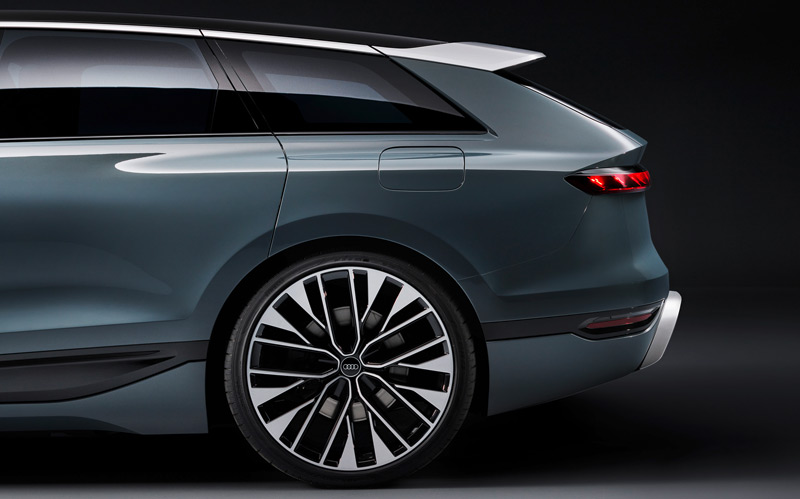
But does all this make sense? Chassis engineers are of the opinion that 18-inch wheels are actually pretty ideal for a medium-sized sports car. Anything larger is of little help to the driving physics and may even be detrimental due to the higher unsprung mass. Of course, large wheels can also accommodate huge brake discs, but even here the optimum seems to be exceeded, unless you have to constantly brake 3.5 tons from 200 km/h to 0.
Such large wheels, as are standard today, would not have been possible 30 years ago, because some drivers would hardly have been able to heave the wheel out of the trunk due to its heavy weight, or to stow such a heavyweight in the trunk after fitting the emergency wheel, if the wheel had found any space at all. In addition, the large wheels also increase the turning circle and react more sensitively to deep standing water.
It is also easy to understand that wide wheels increase rolling resistance.
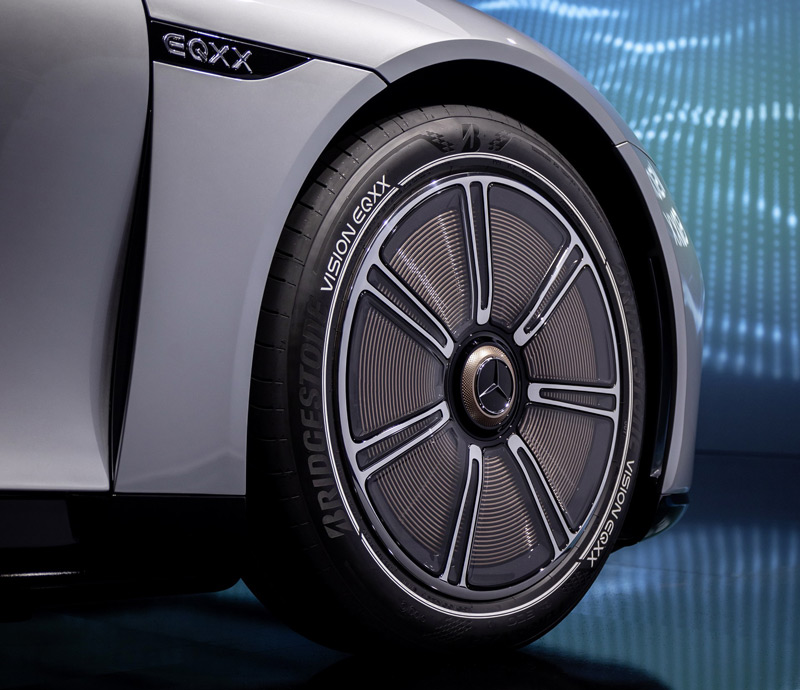
Mercedes-Benz apparently also had to realize this when the wheels for the EQXX electric study were specified. They are "only" 20 inches in size and come with the truly modest tire dimension 185/65 R 20. Perhaps there is still hope ...




_RM.jpg)