Youngtimers catch up (in terms of value)

Classic vintage cars can be good investments, but are usually expensive. Youngtimers, on the other hand, are cheap and hardly something for people who want to invest their money well.
This is more or less the prevailing opinion. But is it true?
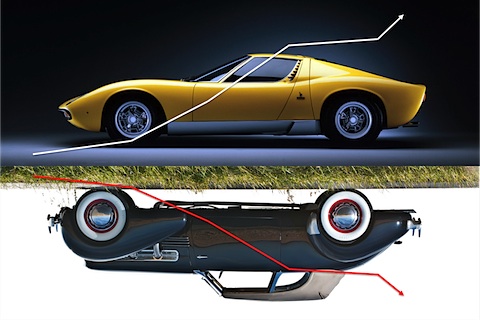
We recently updated the Classic Data ratings for over 5000 vehicle types and compared them with the ratings from five years ago. And lo and behold. On average, it is the younger cars that have (relatively) increased in value the most.
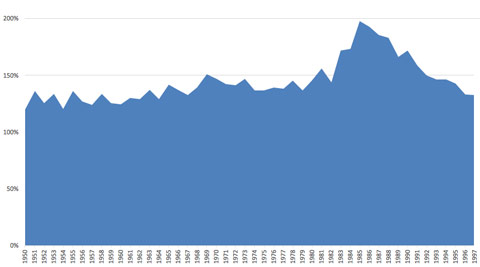
However, these are not only the youngtimers (1989 to 1998), but also young classic cars from around 1985 onwards.
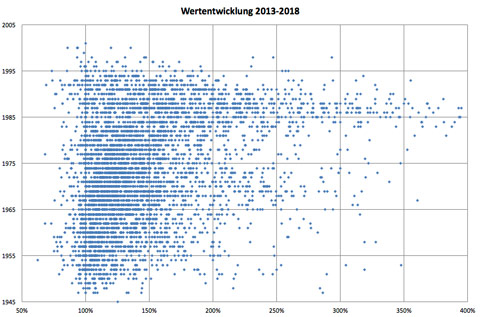
The good performance of younger cars becomes particularly clear when the 5000 or so valuations are plotted individually.
It should also be interesting to see which youngtimer brands are particularly benefiting from this "boom":
| Brand | Increase in value | No. of types |
|---|---|---|
| BMW | 219 % | 47 |
| Audi | 196 % | 48 |
| Opel | 188 % | 60 |
| Lancia | 185 % | 15 |
| VW | 175 % | 30 |
| Porsche | 169 % | 31 |
| Peugeot | 156 % | 15 |
| Alfa Romeo | 155 % | 22 |
| Ford (D) | 154 % | 46 |
| Mercedes-Benz | 152 % | 86 |
| Honda | 140 % | 21 |
| Nissan (with Datsun) | 135 % | 15 |
| Mitsubishi | 132 % | 24 |
| Toyota | 130 % | 26 |
| Citroën | 127 % | 35 |
| Mazda | 123 % | 19 |
| Volvo | 123 % | 13 |
| Fiat | 121 % | 19 |
| Saab | 121 % | 29 |
It should be noted that all brands that contributed fewer than ten models built between 1989 and 1988 have been removed. This means that only the brands with broad vehicle portfolios have been compared. Nevertheless, it is interesting to note that Mercedes-Benz is obviously having a much harder time here than BMW and that Japanese brands are doing surprisingly well.
Incidentally, the frontrunners among the youngtimers when it comes to value growth over the last five years include the Audi 200 Quattro Kat, Opel Kadett E, Mercedes-Benz 190E 2.5-16 Evo, Bugatti EB110, BMW 324 TD Touring, Lancia Delta and Ford Sierra XR4i, to name just a few examples. They all increased by over 300 percent.
It should also be said that these relative value growth comparisons naturally say little about whether money could really have been made with classic cars. Because this also depends heavily on the absolute increase in value. Even a doubling of the value of a car that cost EUR 3000 in 2013 can hardly compensate for the garage, maintenance and insurance costs incurred up to 2018.
The Classic Data valuations on zwischengas.com can be viewed here .