What does a car engine have to do with a mechanical movement?


The art of watchmaking is significantly older than the automobile, but it was not until the beginning of the 20th century that it was possible to miniaturize gear collections to the extent that a watch could be worn on the arm. Things really took off with the First World War, because for pilots the watch, which was cumbersome to take out of their pockets, was not an option; a wristwatch was much more suitable. And they needed the watch to navigate and coordinate their attacks.
A lot has happened since then: the car engine experienced energy crises and "Diesel Gate", the watch industry experienced the quartz crisis in the seventies and eighties, when battery-powered electronic watches almost buried the mechanical movement. But the watch industry recovered and buyers remembered the charms of the mechanical movement.
Even today, precision wonders are still being built from the smallest gear wheels and metal parts. A complete movement can consist of 400 or more parts. This is not far removed from a car engine, which of course also consists of a wide variety of components and easily comprises several hundred parts, as the disassembled Porsche 356 engine photographed here impressively demonstrates. This could be admired yesterday evening at the "Classic Talk" in the Porsche Center Zurich , alongside some mechanical masterpieces from watch brands Blancpain, Rolex and Co, shown by watch specialist Beyer.
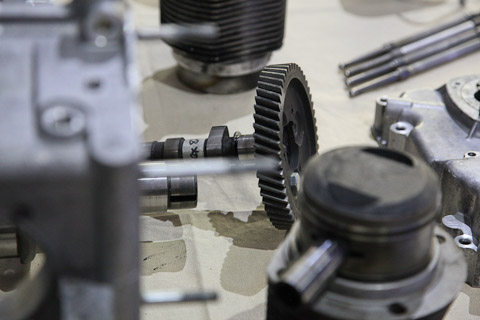
Cars and watches go well together, as you can see from the magnificent chronographs on the wrists of many classic car drivers ...

And there is another parallel between car engines and watches. Both need to be serviced from time to time, even overhauled, and in both cases the work is not cheap.