A look into the (classic/young) car year 2051


In 2051, I will be 89 years old or dead, my son will be able to look back on 55 years of life and the majority of today's Zwischengas readers will be celebrating their 80th to 90th birthday on average. Hopefully a younger readership will have joined them by then.
But what will the world of old cars look like in 30 years' time, when a VW ID3 has just become a classic car and the earliest Tesla Roadsters are already 43 years old? Let's take a look into the crystal ball!
The majority of cars in the year 2051 will be battery-powered, and even before 2030, a veritable e-mobility boom will have set in, encouraged by politicians and favored by the ever cheaper and at the same time more ecological batteries, which will have led to the almost complete replacement of the previously dominant gasoline and diesel vehicles within a few years. Another important factor in this development was that better alternatives to lithium-ion batteries were found, which were not only less dangerous but also easier to degrade, as well as the steadily falling kWh costs. By 2050, the cost per kWh will be significantly less than USD 10, which means that a battery with a range of around 1000 km will still cost around USD 800 to 1000. This is why electric cars could also be offered at significantly lower prices from 2035. The more complex combustion and hybrid cars were simply no longer able to compete on price.
At the same time, the technology for autonomous driving made slow but steady progress, which is why almost all regulatory barriers fell in 2035 and more than three quarters of all cars will be able to drive completely autonomously by 2050.
Accordingly, new markets have emerged and existing ones have changed. Mixed forms of public transport and cab services have emerged, with flying vehicles and rail- or road-based mass transportation with large passenger capacity only on important connecting routes. Driverless vehicles even have a large market share in the logistics sector.
As a result, road connections also had to be restructured. Two-lane freeways have become three-lane transport routes, and a separate lane is set up for non-autonomous vehicles, which can also be used by autonomous vehicles at their own risk. It is important to note that the safety advances in self-driving cars have been steadily reduced, as accidents now only occur in extremely rare cases because all road traffic is now networked.
Hardly anyone owns a modern car anymore; they either have a subscription that guarantees them a car at all times or they hire the means of transportation when they need it.
Road noise has long since ceased to be an issue because, on the one hand, people in 2050 will be much more annoyed by the constant buzzing in the air caused by transport and passenger drones; on the other hand, road transport will of course have become much quieter thanks to electrification and noise-reducing advances in tire and road surface technology.
However, the combustion engine has not died out completely. However, for almost 30 years now, they have been powered almost exclusively by ecologically produced synthetic fuels (during the introductory period they were called e-fuels). Even 150-year-old cars can still be driven thanks to fuel optimization, but old cars are only allowed on major roads and important transport links if they have at least rudimentary sensors and traffic communication equipment on board. However, since such a module can be bought and installed for little money, many old cars are equipped with them.
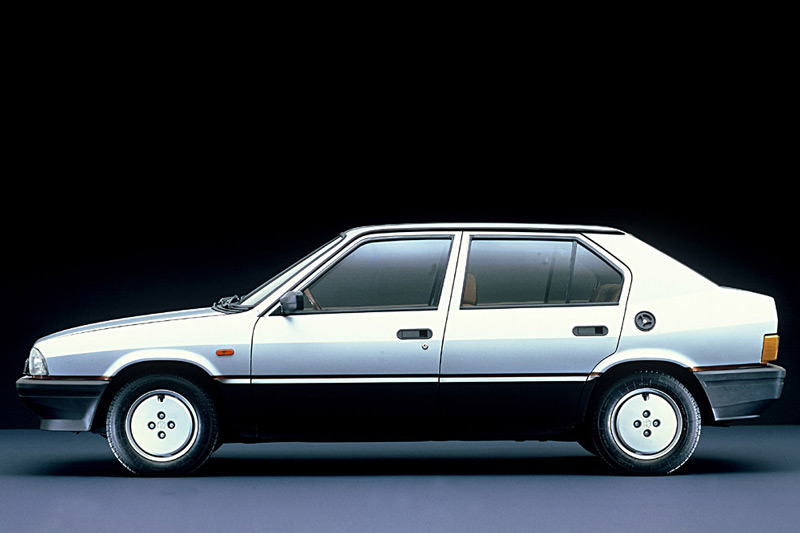
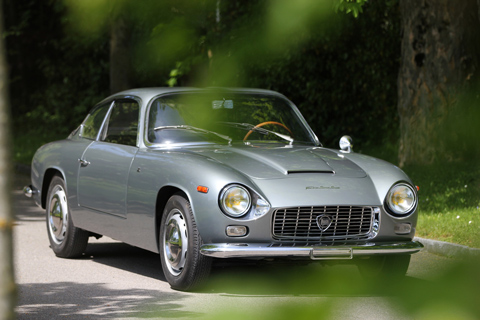
The joy of the old car has not been lost, even though the generations born after 2000 have less and less of a connection to the once omnipresent automotive euphoria. Thanks to Netflix series and Hollywood films, however, some of the following generations have also become enthusiastic about the once dominant combustion cars with tangible and audible technology. Because the supply of new cars that are suitable as affordable classic cars or youngtimers has steadily decreased due to the increasingly complex technology and, so to speak, built-in ageing from the decade onwards, classic car enthusiasts have to largely fall back on cars built before 2000. Only a few cars built later, including expensive sports cars and luxury vehicles, can still be maintained and kept alive. The first generation of lithium-ion electric cars has died out completely - nobody wanted to keep them.
But a lively scene has survived and developed around the cars before that. Programmable and customizable replacement electronic modules replace and simulate defective components from the past, and the mechanics can be maintained with manageable effort. The fact that parking and garage space is very cheap is also conducive to the continued existence of the classic car passion, because hardly anyone still has to keep an everyday car at home.
Huge nineties car gatherings have become established and an Audi TT, a BMW Z3 or a Subaru SVX are the center of interest. Many events with closed roads away from the major traffic flows allow safe and leisurely tours with old cars. New types of events and driving experiences motivate owners of old cars to get their cars out of the garage again and again.
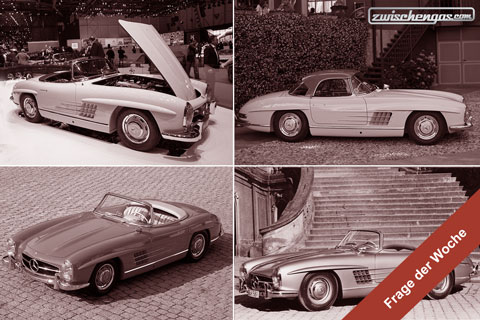
The classic car scene has therefore survived and is at least as important as the fans of mechanical watches, vinyl records, biplane airplanes and steam locomotives put together. However, enthusiasts are concerned about the steadily increasing age of their protégés. It won't be long before the oldest classic cars are 150 or even 200 years old. And even once-popular classics such as an MG TD or a Mercedes-Benz 190 SL are approaching 100 years of age. Although insurance costs will be charged in 2050 depending on the usage situation, they will be reflected in every kilometer driven, while fuel, which is usually bought at electric filling stations or in canisters at DIY stores, will have become cheaper over the decades.
Let us be surprised ...
P.S. As always, feedback in the form of comments is welcome!