Who needs traction

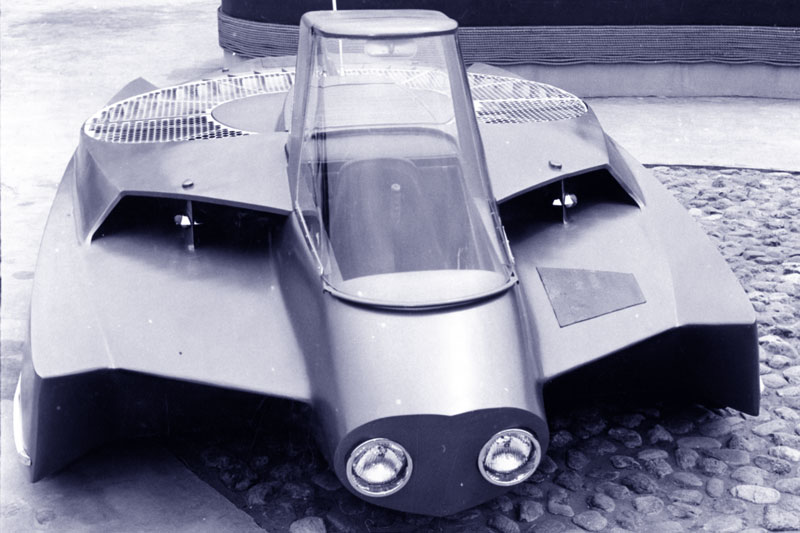
The foundations for hovercrafts were laid back in 1877, when John Isaac Thornycroft applied for a patent in this direction. However, it was to take a while before this transportation technology became established.
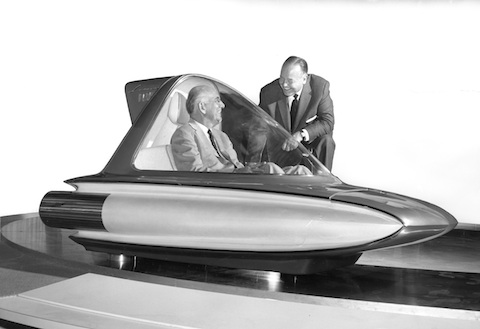
In an automobile review in 1961, the functional principle was explained as follows:
"In principle, air-cushion vehicles consist of a pontoon, under the underside of which large quantities of air are blown until it lifts off the ground. The greater the ground clearance, the greater the engine power required. The vehicles can be moved forward on the air cushion with the least possible resistance, whether by air jets or propellers. Steering is achieved by changing the direction in which the nozzles are blown out."
The early applications were mostly on water, but of course hovercrafts were also suitable for operation on land and even off-road. Military applications in particular attracted investment.
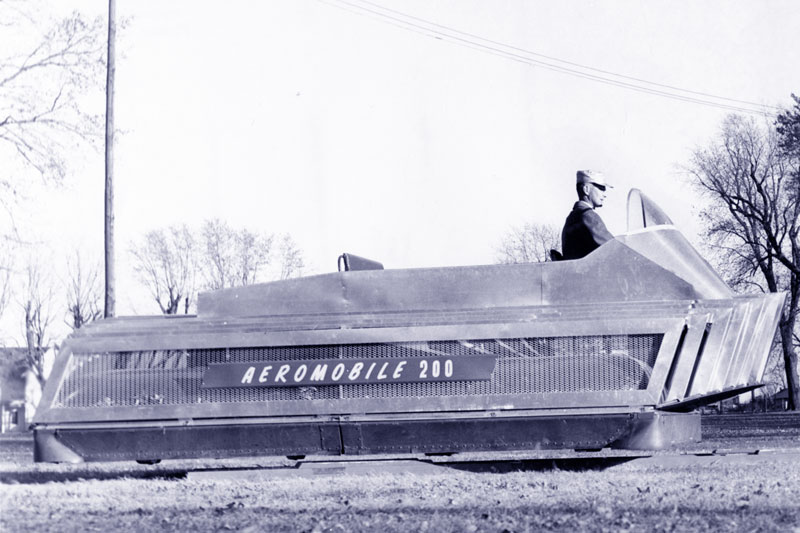
But civilian use also produced interesting vehicles. An American doctor, for example, developed his own "Aeromobile 200". The number 200 stood for the power required to lift the vehicle and push it forward. After all, 60 miles per hour was possible.
The Japanese also took part in the development, and one vehicle even made it to the Tokyo Motor Show (picture above).
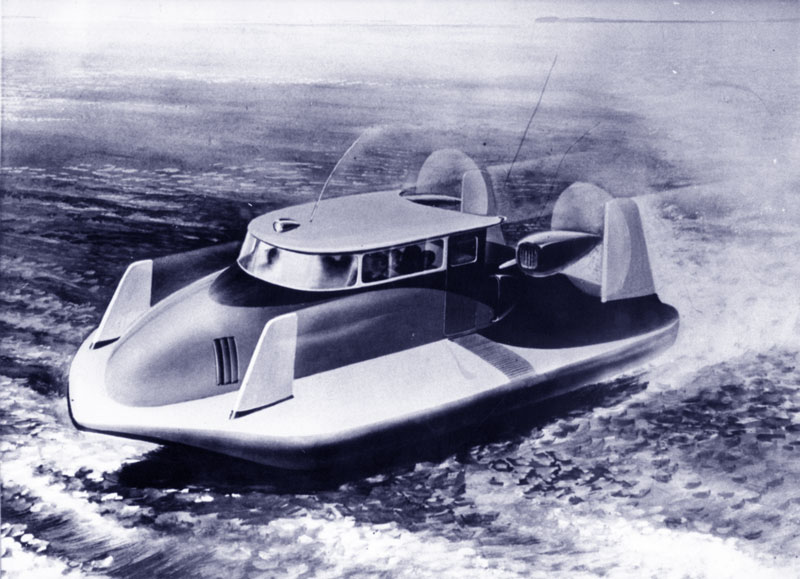
Vickers developed a hovercraft that could transport 24 people over water and land. A short time later, the Hoovercraft took up passenger service, for example from Dover to Calais from 1966.
Air cushion vehicles did not catch on in road transport, as there were probably a few disadvantages. Which shows once again that not everything that is the subject of hype can be put to good use in the long term ...