Why not twin-engine?

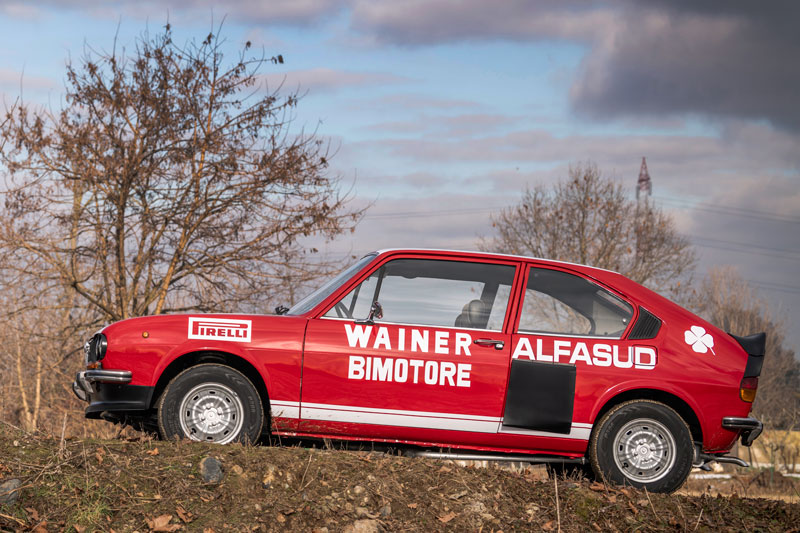
No, there was no twin-engined Alfasud ex works. It was the work of Gianfranco Mantovani (also known as Wainer), who converted a '74 Alfa Romeo Alfasud Ti 1.2 so that it had the same engine in the rear.
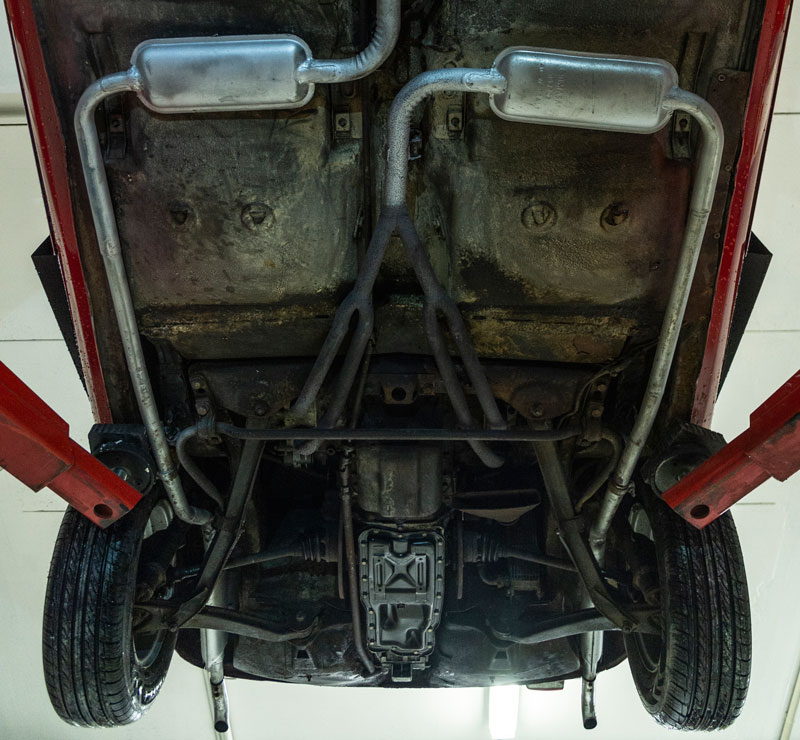
This increased the power output from 79 to 158 hp, which was certainly quite a lot in 1977 when the car was finished. However, the weight also increased and with two gearboxes, driving was certainly not easy, even though there was only one gearshift. While the front clutch obeyed the driver's foot, a hydraulically actuated clutch at the rear separated the engine and transmission.
Whether the whole thing really worked well is questionable. But Wainer was by no means the only engineer to struggle with a twin-engine car.
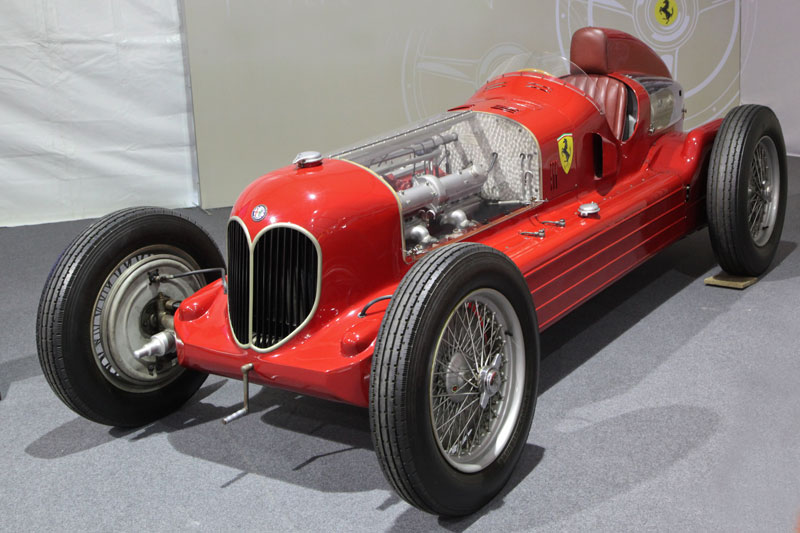
In 1935, there was even a predecessor from Alfa Romeo with two eight-cylinder engines, which was capable of over 320 km/h and still had no chance against the even faster Mercedes. The first Alfa Bimotore even dated back to 1931 and still had two inline six-cylinder engines. (Article in Auto Exklusiv 4/1992).
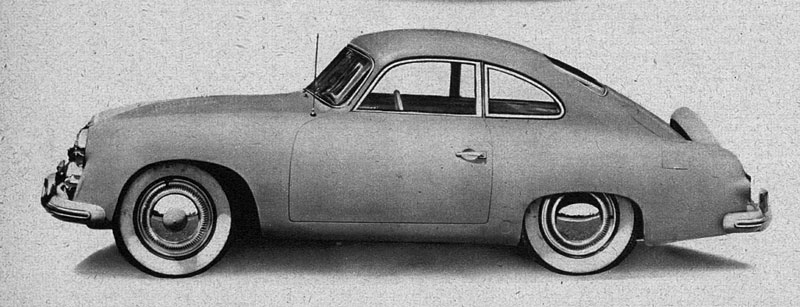
In 1954, an American built a twin-engined Porsche 356, having already experimented with twin-engined racing cars from 1946. Obviously, not even that much effort was needed to accommodate a second four-cylinder engine at the front. (Article in ams 4/1954)
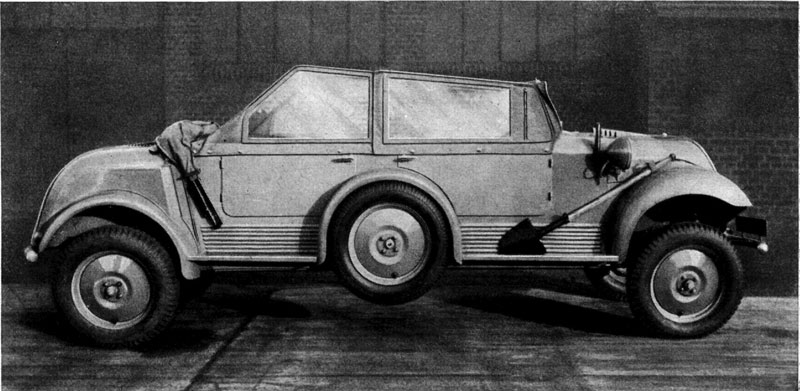
Another example was created during the war years in Germany, where two Tempo front sections were simply combined, resulting in an all-terrain vehicle. (Article in Deutsche Kraftfahrt 5/1941)
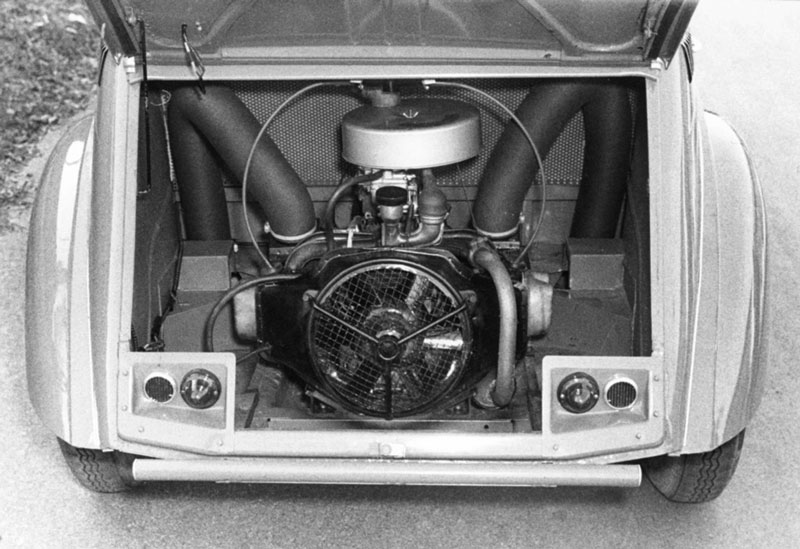
Probably the most famous twin-engined car that even made it into series production was the Citroën 2CV Sahara. Here, too, the same engine was simply installed in the rear as in the front. (e.g. article in ams 19/1961)
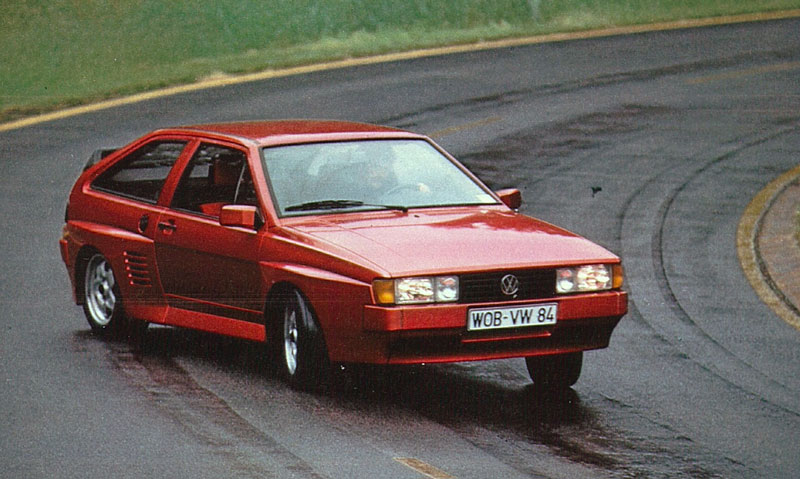
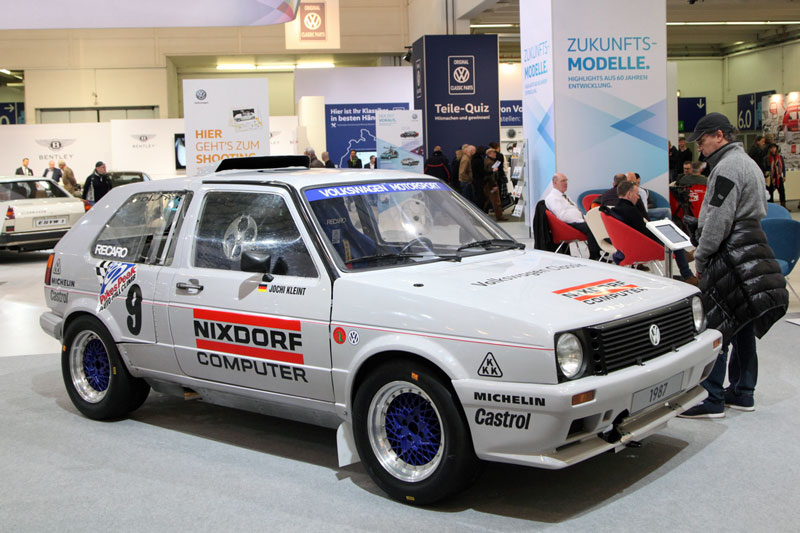
In the 1980s, Volkswagen then brought about a revival of the two-engined car. A VW Jetta with two engines (article in ams 15/1981), a VW Scirocco with twin engines (article in ams 14/1983) and finally, probably the best known of the three, the VW Golf II "Pikes Peak" racing car with over 600 hp from the two combined four-cylinder engines (article in ams 14/1987) were produced in quick succession.
We are sure that our readers will be able to name various other examples of twin-engined cars, and our magazine archive would probably have a few more if you took a little more time.
Incidentally, Auto Motor und Sport has published a more detailed article on the Alfasud Ti Bimotore, which RM/Sotheby's will be auctioning shortly.
P.S. By the way, today multi-engine cars are almost normal, because with hybridization and electrification, as well as the accompanying computer control, cars with two or more engines will soon be available from every manufacturer.