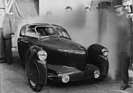
CEMSA F11 - Italian pioneering work with long-term consequences


You have only
3 out of 39
images seen in high resolution


Summary
Today, hardly anyone remembers the CEMSA (Caproni) F11 from the late 1940s. But some famous cars such as the Lancia Flavia, the Alfa Romeo Alfasud or the Citroën GS benefited technically from the Italian mid-range car, which unfortunately never went into production. This report describes the history and technology of this innovative self-supporting car with a water-cooled boxer engine, front-wheel drive and independent suspension all round, and explains its significance for automotive history. The report is illustrated with many historical photos, some of which have never been published before.
This article contains the following chapters
- Unique starting position
- Designed with a wealth of experience
- Water-cooled boxer engine
- Independent suspension all round
- Self-supporting construction
- Attractive interior
- Official presentation at the 1947 Paris Motor Show
- Further development and improvements
- Abrupt end, or not?
- Only a few surviving CEMSA F11
- What could have been
- Further information
Estimated reading time: 12min
Preview (beginning of the article)
In the first few years after the end of the Second World War, most car manufacturers had other problems to deal with than new designs. Production was slowly ramped up again with pre-war models, if this was possible at all. When a newly developed model was presented, the public showed great interest. If the new car also came from a company not previously active in the automotive sector, curiosity was even greater. When the Italian CEMSA F11 was presented in the fall of 1947, the world was almost at its feet, especially as it was an innovative new design that had nothing to fear from comparison.
Continue reading this article for free?
Images of this article