Will the prices of classic cars really fall sharply?


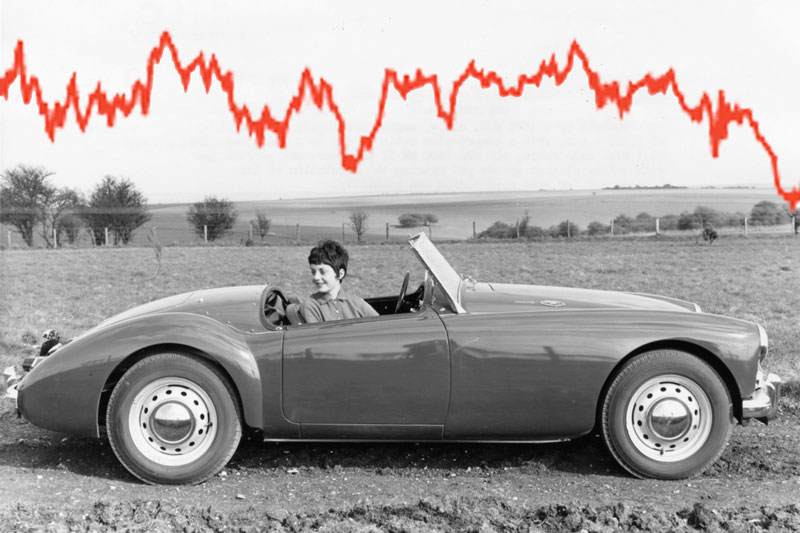
The topic of "classic car prices" is a popular and much-discussed topic on the internet. A YouTube post by a British man not only achieved a considerable number of views, but also attracted over 2000 comments. His thesis in the video is that prices will fall in the future, and significantly so. And he didn't make the video out of self-interest, because after all, he owns a Porsche 964, which has certainly benefited from the increase in value in recent years. He justifies his pessimistic view of the future with four fundamental characteristics of the market, which have to do with the fact that (1) interest rates have been very low in recent years, (2) no capital gains tax has to be paid on the increase in value of old cars, (3) these are not virtual but solid assets and (4) these old cars were only available in limited quantities.
He then addresses the fourth point in particular, explaining that more and more classic cars are coming onto the market and that manufacturers in particular are flooding the market with limited special editions. At the same time, however, there will not necessarily be more buyers in the future and the times of low interest rates may soon be over. Accordingly, he concludes that classic car buyers will be less willing to pay a lot of money for old cars in the future. He adds that very special cars, such as the Ferrari 250 GTO, are really only available in very limited numbers and should be compared to paintings and works of art rather than "assets", making them an exception to the rule.
If you then click through the hundreds of feedbacks/comments, you quickly realize that there are people with completely different ideas, but also those who can gain something from the video's argumentation.
It is clear, and the effects are already being felt today, that people who only buy old cars as investments with the aim of making money are no longer getting their money's worth and are already leaving the scene, at least in part. As a result, the prices of certain models that were particularly popular as "blue chip investments" are currently falling. It is also clear that old cars are hardly increasing in number. New and younger ones may be added, but hardly any new BMW Isetta or Maserati 3500 GTs are being built. The number of potential buyers will perhaps grow less strongly in the future than in the past, but at least for the next 10 to 20 years no enormous shrinkage is to be expected.
Of course, there are risks that are difficult to assess, such as what will happen to interest rates, whether old cars will become unattractive in terms of tax or registration or even be banned from the roads. This is likely to have a much greater impact on prices than the new "classic cars" that are added every year.
Anyone who has a different (or the same) opinion is welcome to express it in the comments section.