Motorsport is and remains dangerous, especially as the cars get older

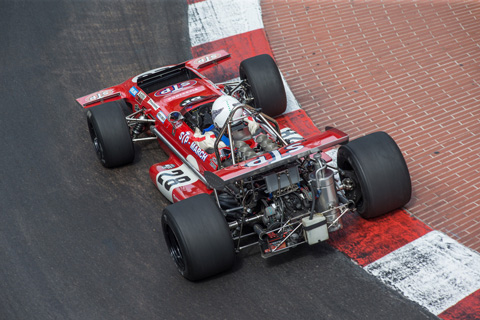
The fact that motorsport is still dangerous and will certainly always remain so was demonstrated once again in the historic F1 in Zandvoort.
The 61-year-old Frenchman David Ferrer, a successful fruit and vegetable trader from Montpelier (southern France), was driving his ex-Chris Amon March 701, of which only 11 were built around 1970, on the first lap of the race in the Arie Luyendijk curve (finish curve) when a suspension break probably caused the car to turn left and it was subsequently knocked back onto the inside of the track by the outer crash barrier, according to an eyewitness.
As was customary at the time, the car broke into three parts. Ferrer didn't stand a chance; he was resuscitated at the scene of the accident and flown to a specialist clinic in Amsterdam. However, he finally succumbed to his injuries just a few days later.
It is clear that historic racing cars are far more dangerous than all current racers. In a pre-war car, even a spin at low speed can be fatal if the car, with its high center of gravity, gets caught on the curbs and tips over. The racing cars from the sixties and seventies with their tubular frame or aluminum chassis never achieve the rigidity and crash safety of a modern carbon fiber monocoque. David Ferrer would certainly have escaped unharmed from any modern racing car in an identical crash.
However, these racing accidents, which are thankfully rare, must also be seen in context and considered in relation to other sports accidents. Many more people die on mountains (178 deaths in Switzerland alone in 2016 and 213 in 2015) than in racing cars. Even when swimming, far more people drown (an average of 65 deaths per year in Switzerland) than die in fatal accidents on the race track.
Anyone who climbs a mountain, goes diving or takes to the air with a paraglider must be aware of the risk that something can always happen that nobody expected. It's the same in a racing car. But anyone who has ever experienced a free fall from an airplane, a ride on a skeleton through the ice channel or the tremendous power of an F1 racing car knows what kind of experiences we are talking about here. The fun is so great that you are happy to take the risk again and again.
So what's with all the criticism that brings racing into the negative headlines after every accident? After all, death lurks in the wings even when swimming, hiking or skiing. And the drivers in the historic racing cars are very aware of the risk ...