From the life of a journeyman mechanic - Ignition distributor problems
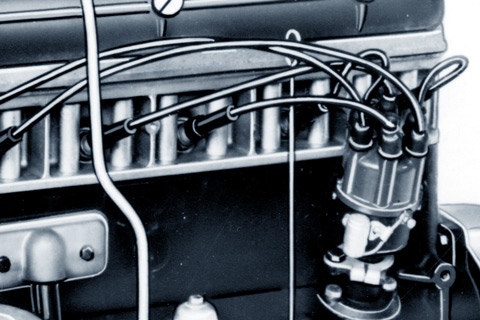
The first inspection was carried out on a new vehicle that had just been delivered. The oil change and lubrication service had already been completed and the mechanic turned his attention to the remaining service work. The distributor cap and distributor rotor were also removed, and it was discovered that part of the guide lug on the rotor had broken off. The part was therefore replaced.
When a test drive was to take place after the work was completed, the engine did not say "Muck" when starting. So the whole thing was checked again. The ignition was found to be OK. A lack of fuel was therefore suspected. With a lack of fuel, the engine should at least start with the carburetor filled. So they checked, but the carburetor was full. But even now the engine would not start, so they turned their attention back to the ignition. The breaker gap was checked and the new rotor was compared with the old one; it was the right one. The wet plugs were cleaned, but that didn't help either.
Now the master mechanic was called in. He made sure that ignition current and fuel were present and had the cylinder head cover removed (it was an engine with an overhead camshaft). But there was nothing to complain about here either, and now the point was reached where one looked at the other without a word.
Suddenly the foreman said: "Give me the old rotor". He set the engine to ignition timing, cylinder 1, and took off the distributor cap. "I see," he just said, took off the new rotor and put the old one back on. He put the distributor cap back on, started the engine and, lo and behold, it ran perfectly.
What had actually happened? The foreman had put the old rotor with the broken off lug back on in such a way that it was not aligned with the groove in the distributor shaft, but with the marking in the distributor housing, and the solution to the puzzle: the distributor drive was offset by one tooth (worm drive). The difference had been compensated for by forcibly turning the rotor, and the engine had survived the transfer run without the rotor coming loose from this position.
So you can see that great things can happen even with new cars.
This text comes from issue 7 of the 1959 edition of the magazine "Krafthand".