The future of yesteryear - Volvo Tundra


In 1979, a Bertone study celebrated its world premiere at the Geneva Motor Show.
Max Stoop described the Volvo Tundra in detail in Automobil Revue:
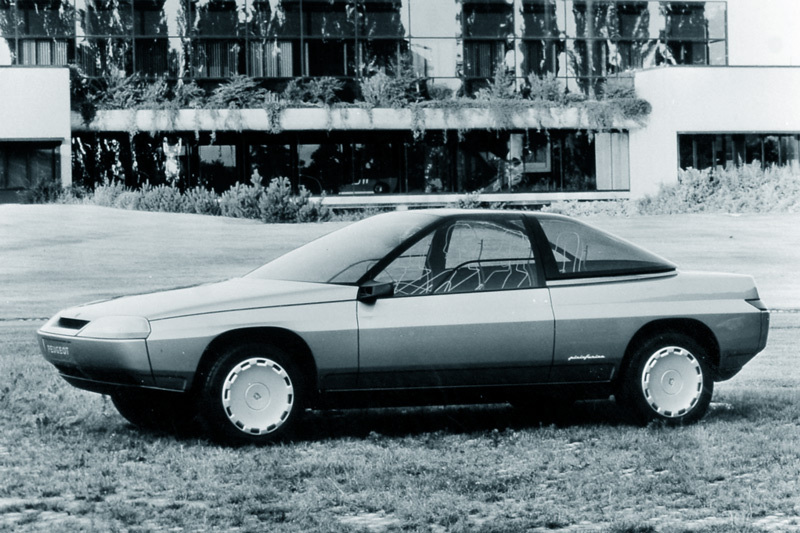
"We already come across a first highlight at the Bertone stand. It is a world first that rightly deserves its name: it is called the "Tundra" and is based on the Dutch Volvo 343; but nothing about the futuristic, but by no means overstretched-looking body is reminiscent of the production car, even if, like the latter, it has two doors and a tailgate.
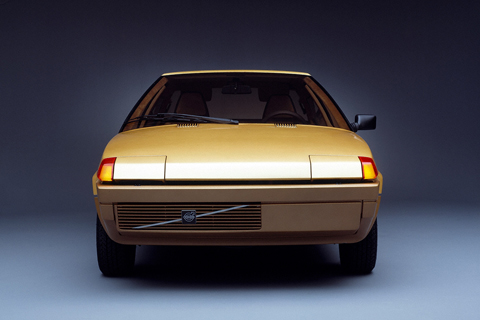
The body is designed in a large, angular style typical of many Bertone creations of recent years, and the all-round generous glazing has almost no blind spots. The headlights are retractable and the asymmetrical radiator grille, whose design documents the car's affiliation with the Swedish brand, is fully integrated into the solid bumper - comparable to the Fiat Ritmo. Chrome is completely absent on the Tundra. The roofline is remarkably innovative, having been drawn further down above the rear side windows than at the doors, which enlivens the division of the surfaces.

The interior is trimmed in suede and the dashboard is fitted with digital instruments, the centerpiece of which is a wide scale that immediately graphically displays deviations in mean operating values such as temperatures, oil pressure, etc.
The Tundra is lower and shorter, but wider than the Volvo 343. The track widths and wheel dimensions have been increased. The rims designed by Bertone are 6x14 instead of 5x13. The Tundra is a serious, realistic study. "
At the same show, the Bertone Lancia Stratos Sibilo was also on display, which certainly showed similar styling features in parts, but was much more extreme in its entirety.
Incidentally, the Volvo Tundra was designed by Marcello Gandini . The apparently too extreme lines did not meet with an open door at Volvo to the extent that the car would have been put into production in a similar form.
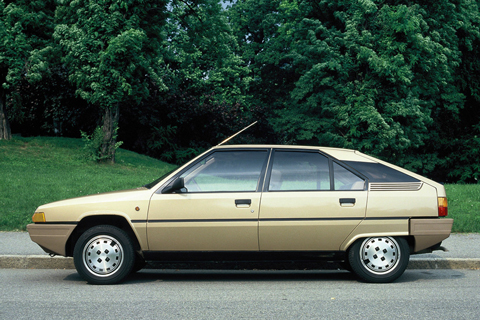
However, Bertone succeeded in convincing another company of the line, namely Citroën. In June 1982, the BX was presented under the Eiffel Tower and the relationship with the Volvo Tundra concept car and the Reliant FW11 from 1978 was obvious.
As a BX, the car eventually went on to produce over 2.3 million units, so perhaps it would also have been successful as a Volvo ?