Do you recognize the five differences? Rebirth of the Motor Revue

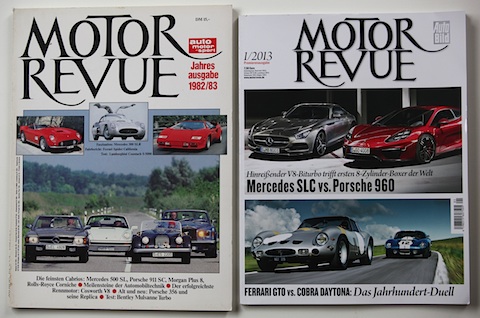
I was amazed when I read the announcement of Motor Revue the other day. And of course I was eager to get my hands on the first issue, so I went to a number of magazine stands until I finally held issue 1/2013 in my hands.
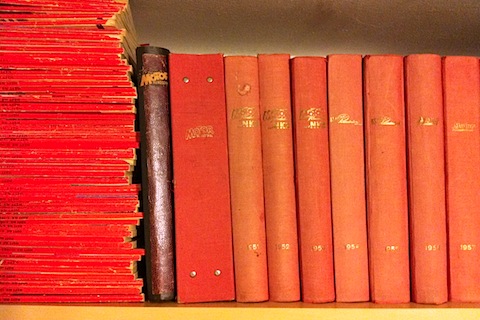
Let's look back. The first Motor Revue was published in 1951. After that, a well-written issue appeared quarterly, reporting on current trends as well as past vehicles, covering motorsport as well as technology and lifestyle. The doyens of German-language automotive writing wrote articles, including Fritz B. Busch, Paul Simsa, Manfred Jantke, Reinhard Seiffert, Paul Frère and others.
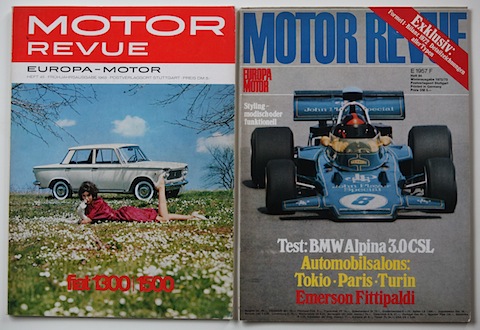
At some point, the "Auto Motor und Sport" logo was emblazoned on the "R", the publication frequency changed to annual and finally, in 1993, the last issue appeared and the magazine was discontinued.
But now it's back. And Motor Revue is once again reporting on cars of the future, the present and the past. People are at the center of many articles, be it the most casual racing drivers of all time ...

... or Strietzel Stuck, who climbs mountain passes in his Golf GTI. It is entertaining and beautifully photographed.

The title of the Jaguar story almost says it all for the magazine: "New start" is the title of the comparison between the latest Jaguar convertible and its ancestors, the E-Type and XK.
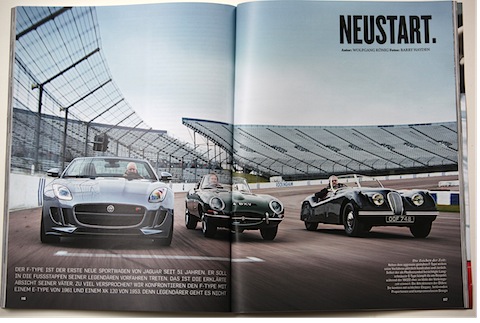
Of course, the authors have changed, but Wolfgang König, who at the time was working for Motor Presse Verlag, was already writing for Motor Revue in the 1980s. And that brings us to the surprise. The reborn Motor Revue is not published by Motor Presse Verlag, but by AutoBild, or Axel Springer, as you can clearly see from the title. It is doubtful whether the guys in Stuttgart will like this. Whether the lawyers are already thinking about it is unclear. In any case, the new Motor Revue looks like a well-made sequel to the classic. The fact that even the price has remained exactly at the 1985 level (if you take the 1:2 parity of Euro to DM as a basis) fits perfectly into the picture.
The low volume of advertising in the newly launched magazine is refreshing but hardly sustainable. Although this was also the case in the 1960s to 1980s, the world has changed a little since then and magazines are no longer primarily financed by readers, but by advertisers. Paper has lost weight - unfortunately, but also in line with the trend of the times.
And what happens next? The first edition, which is also labeled "premiere edition", must be seen as a market test and perhaps also as an active counter-attack to other recently launched media. The masthead is as silent about the circulation as it is about the frequency of publication, but the new Motor Revue certainly seems to be a clever move. We'll stay tuned.