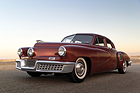
Looking 60 years into the future - how car experts in 1937 imagined the car of the year 2000

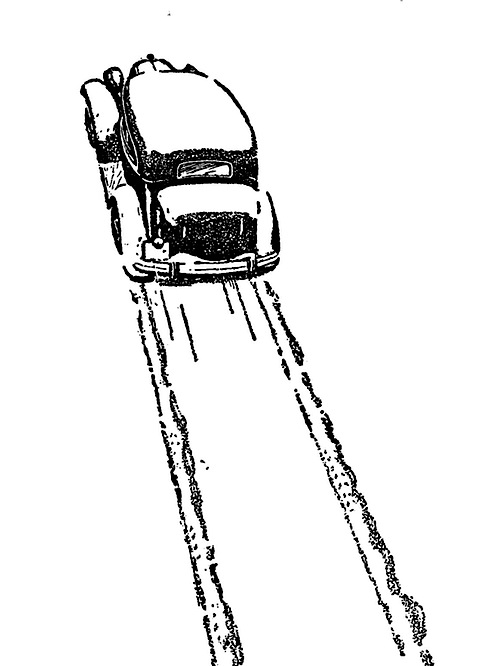
In a 1937 issue of Automobil-Revue, the opinions of French automobile experts on the future of the car were reproduced. It makes for amusing reading and shows once again how wrong you can be. At the same time, however, certain things apparently always remain the same. We reproduce the original wording here:
What will the car of the year 2000 look like? How will the development of automobile construction progress at all? - A well-known French weekly addressed these questions to a number of prominent figures in the French automotive industry and, as was to be expected, the answers were varied but interesting.
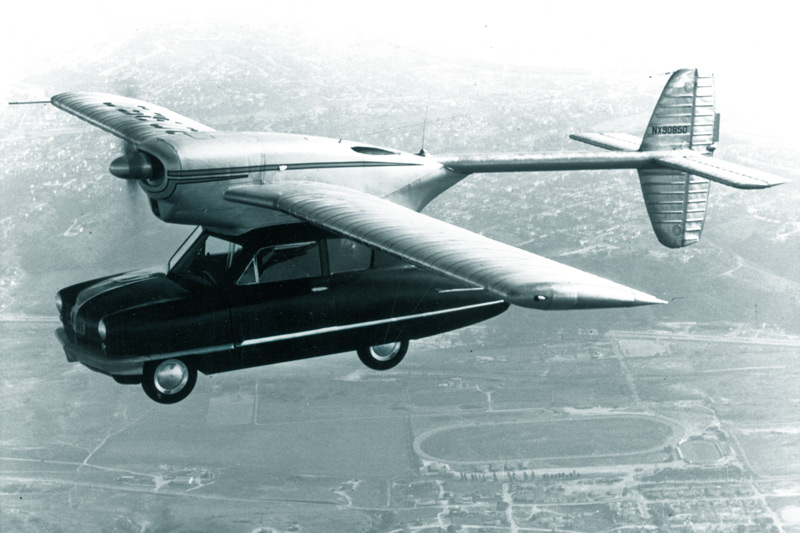
Lucien Rosengart was initially very surprised that anyone could come up with such an idea, given the fact that today 10 years means as much as a century used to. "I don't believe that the aerodynamic idea will develop much further, because today's roads don't allow the speeds at which the advantages of the aerodynamic principle can first become apparent." Rosengart is also of the opinion that petrol will soon be abandoned in favor of wood gas as a fuel. He also predicts that by the year 2000, the automobile in its current form will have disappeared. It will be replaced by a combination of airplane and car as soon as the helicopter has been technically perfected.
Georges de Lavalette, head of the technical testing service at Peugeot, on the other hand, does not believe that the car will be replaced by the airplane. However, today's car will have changes, especially tires that cannot be used on roads that cannot be used. In his opinion, the fuel will be either solid, liquid or, most likely, gaseous. Irrespective of other issues, the fuel problem will always play a very important role.
Robert Benoist, Head of Sales at Bugatti, does not believe in major changes because the car of all times must be adapted to people's needs and means. Neither gasoline nor electricity would be an option for the future, but rather a kind of pastilles, synthetic fuel in solid form.
Mr. Fenestre, from the Simca factories, is convinced that the shape of cars will increasingly resemble that of a drop of water as the final development of the aerodynamic principle. The helicopter/car combination also appears here; M. Fenestre is of the opinion that electricity will be used as a fuel by applying Hertzian waves.
Electricity is also the power of the future for the designer at Talbot, Chinetti. However, he envisioned a system similar to that already in use today in trolleybus operations: a power supply line in the road (not on an overhead line); from there, the trolleys would somehow take the energy and convert it into speed.
Louis Bréguet is inclined to believe that the automobile will in all probability one day grow wings. "The future potential of aviation," he adds, "is so great that sooner or later it will prevail, also from an economic point of view. Because one thing is certain: whatever improvements are made to the roads, the best means of transportation will always be the air. Nevertheless, the car will not have ceased to exist in the year 2000. But there will be two types of car: the small car, only slightly different from today's car and intended for city and local traffic, and the second type, the amphibious car, which will be realized as soon as the problem of the helicopter has been satisfactorily solved. This type of vehicle would be able to travel on the ground with its wings folded up, similar to a car of our day, would take off from outside the city and begin its flight. Bréguet was reluctant to answer the question of fuel. Synthetic materials are the main focus of interest, while the use of electricity is highly questionable.