More tolerance and transparency - replicas, recreations and modernizations

A hot topic in the classic car scene are "replicas", "recreations" and sometimes also "specials". The terms alone are not always entirely clear.

A replica is usually a vehicle that has been modeled on an original and should differ as little as possible from it. A recreation is the new creation of a classic vehicle, here there should normally only be minimal differences to the original (the English often refer to this as a "toolroom copy"). So-called "continuation cars" (i.e. the later continuation of a series) could also be counted as recreations. So far so good, let's try a few examples:
There are fascinatingly faithful copies of the Bugatti Type 35, for example from PurSang in Argentina. Even connoisseurs are not always able to identify the differences to the original straight away. One could therefore confidently speak of a recreation. But there are also Bugatti 35s based on the VW Beetle. There is hardly anything that matches the original, apart from the basic shape and a few design details. Here, even the term replica would be too big, replica would perhaps be an acceptable term.
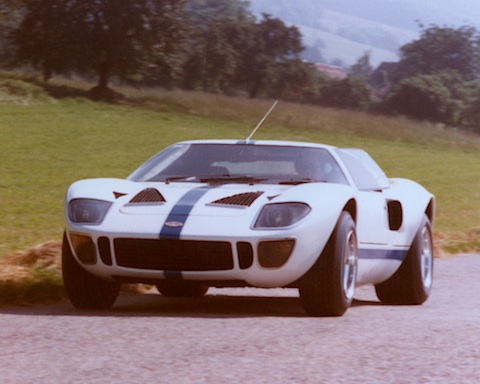
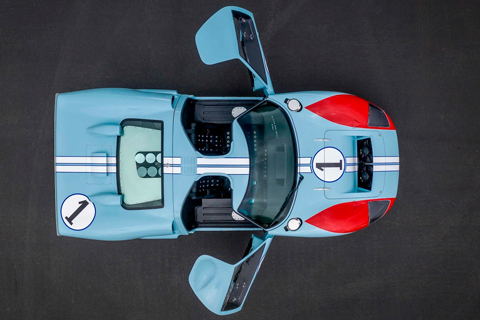
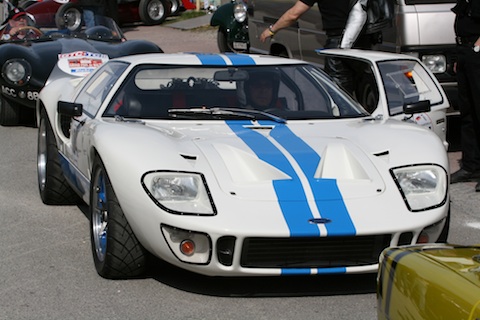
Or let's take the Ford GT40. Here there is the Sbarro GT40 Replica, which was based on the chassis of the de Tomaso Pantera. This meant that there were already differences in the design, with further differences in the dimensions, engine choice and interior. The Sbarro GT40 is therefore not a recreation, but perhaps a replica. However, there are also GT40 recreations, i.e. vehicles that are an almost identical copy of the original. And what about the racing cars that Franco Sbarro assembled from spare parts at the beginning of the 1980s?

Another good example of recreations and replicas are the Jaguar C-Types (and D-Types). There is a whole selection of more or less faithful replicas, the best of which are barely distinguishable from the original product. Many of these copies now take part in historic racing, especially since the FIA officially legalized recreations and continuation cars.
Some may turn up their noses at these copies, but in fact they are often a blessing for fans and spectators at classic car events. Because even if the prices for original Bugatti and Jaguar C-Types are rising almost beyond measure and the vehicles are safely stored in museums and underground garages, the replicas at least give an impression of what these cars used to look and sound like. And last but not least, replicas and recreations also give fans who don't have a multimillionaire's wallet the opportunity to own and drive a Ford GT40, C-Type or perhaps a Bugatti 35.
And, aren't these (well-made) recreations at least as close to the spirit of the old days as modernized Jaguar XK, Mercedes SL R113 or Ford Mustang, which with improved gearbox, optimized braking systems, retrofitted power steering and air conditioning systems are happily welcomed as classic cars at historic events?
From our point of view, the issue here is "tolerance" and "transparency". Rebuilt vehicles should also be declared as such and be tolerated and appreciated as such.
A special topic in this context is of course the H license plate, or rather the veteran registration in Switzerland, but this should not be discussed here. We will also talk about "specials" at another time.
However, we would be particularly interested in our readers' opinions on replicas and recreations...