The Ford GT 40 by Franco Sbarro

The story of the Ford GT 40 began in 1963, when the decision was made at Ford headquarters in Detroit-Dearborn to accomplish great deeds in the field of racing. In 1964, the English Lola designer Eric Broadley, who had already built a GT prototype with a Ford mid-engine, was engaged as a consultant. This basic vehicle was further developed in Dearborn and California with the help of electronic calculations. Ford founded Advanced Vehicles Limited in Slough (England) for the production. The former Aston Martin director (and later racing team owner) John Wyer and engineer Roy Lunn were put in charge of the company. Californian racing driver and tuner Carroll Shelby was responsible for race preparation from 1965 onwards.
With the Ford GT, which had the well-known 4.7-liter V8 installed behind the seats (later also 7-liter versions), great racing successes were achieved, such as victories in the endurance races of Daytona 1965 and Le Mans 1966 to 1969!
In 1966, thoughts were given to a street version, but the plans drawn up with coachbuilder Graber were never realized and the prototype was probably later converted back into a racing car.
Another chapter in the Ford GT 40 story has to do with Franco Sbarro. He had built two GT 40s for the Swiss Ecurie Filipinetti in England in 1965. They were used by numerous prominent drivers, most notably Herbert Müller, who later died in an accident. Eventually, Sbarro increasingly began to work on his own, buying, preparing and selling half a dozen Ford GT 40s by 1972.
In the early 1980s, Sbarro added to his stocks of this vehicle type (as well as the Mark II derivative) in order to create a dozen collector's items for enthusiasts in his workshops in Grandson. Sbarro differentiated between types 1 with authentic racing history and 2 without history. At the time, they cost 180,000 and 160,000 francs respectively - in retrospect, a ridiculous difference for a Palmares that is so valuable today.
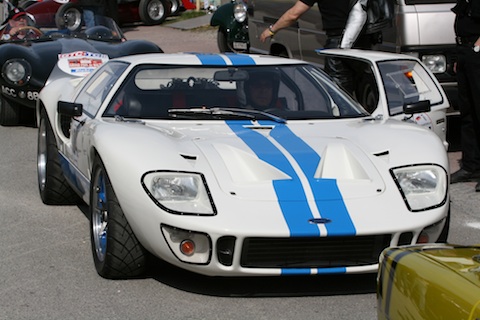
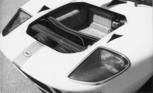
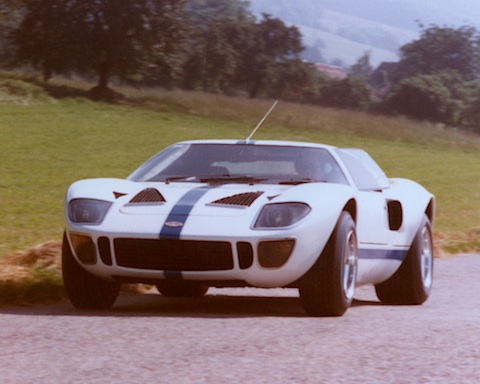
Sbarro also built the Type 3, which was called the Sbarro Replica GT 40 instead of the Ford GT 40. It did not have a half-shell construction like the original GT 40, but was based on the de Tomaso Pantera. This offered the advantage of problem-free road approval. Instead of the 4.7-liter engine with 340 SAE hp (optional Eagle 5-liter/470 hp or 7-liter engine), the car was delivered with a 5.8-liter Ford with around 300 DIN hp. The replica weighed around 1400 kg instead of the mere 1000 kg of the racing car and offered additional comfort features.
The conversion of a De Tomaso Pantera into the Sbarro Replica GT 40 cost around 90,000 francs in 1981, in addition to the price of a second-hand Pantera, which was estimated at around 20,000 francs at the time.
Such a replica, which incidentally also bore a Sbarro sign and not a Ford sign on the front, was available to Roger Gloor for a test drive in 1981. We have reworked this report and dug up the old photos. Not only worth reading for GT40 fans!