Sleeping at an average speed of 80 km/h

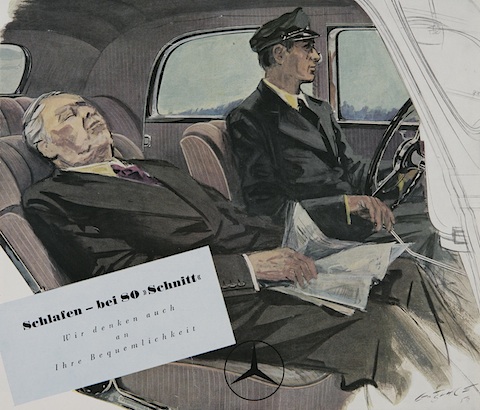
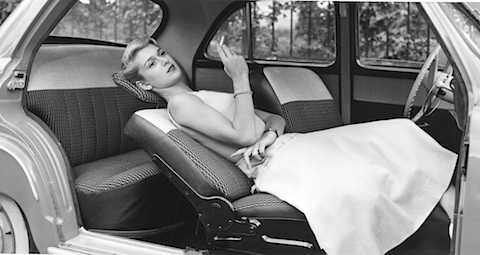
The technology of today's automotive industry tries everything possible, and almost the impossible, to prevent the driver from falling into a deep or even microsleep. In the 1950s, however, there was still advertising for unbuckled, healthy and deep sleep, at least for the front passenger.
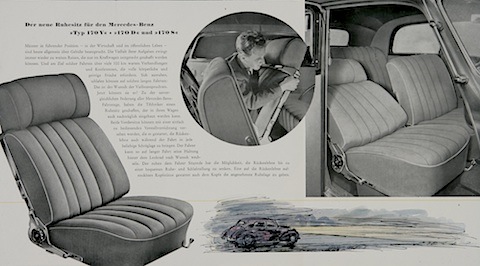
In the instructions for the Mercedes-Benz 170 V, Mercedes wrote: "Both front seats can be fitted with an easy-to-operate adjustment device that allows the backrest to be adjusted to any inclined position, even while driving. This allows the driver to change their position behind the steering wheel as required on long journeys. The person sitting next to the driver has the option of lowering the backrest to a comfortable resting and sleeping position. A headrest that can be attached to the backrest also allows the head to rest in a comfortable position."
But here's a little extra: "When not in use, the headrest can be removed, folded up, packed in a cover and stored in the trunk next to the spare wheel."