The Spirit of the Wind


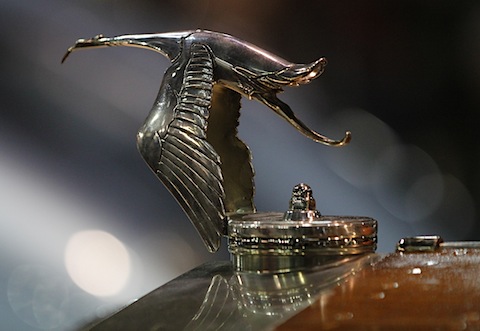
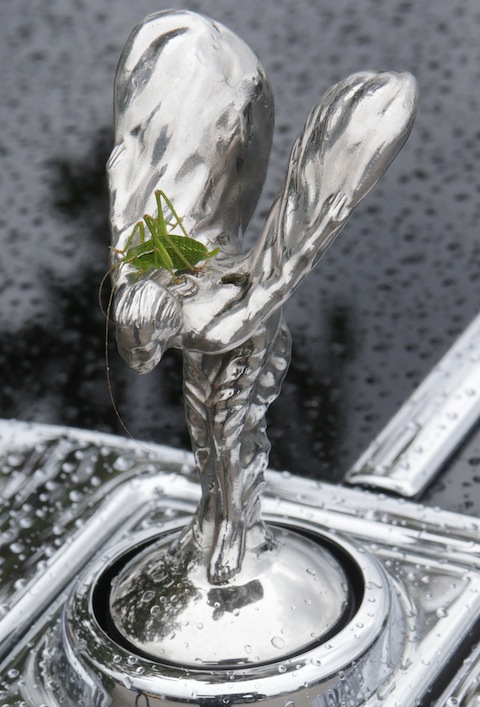
Radiator ornaments are a topic unto themselves. If you had to name some examples off the top of your head, what would come to mind? Perhaps Rolls-Royce’s “Emily,” Bentley’s “winged” or “flying B,” or Jaguar’s “Leaper,” if you’re picturing classic British cars. When it comes to French manufacturers, you might think of the elephant on the Bugatti Royale’s radiator, created by Rembrandt Bugatti, or the stylized bird on the Voisin. For American cars, it might be Packard’s “Pizza Delivery Man,” as it’s often somewhat disparagingly called. When it comes to German brands, one might recall the “1” that adorned early Audis, the “W” from Wanderer, and, of course, the Mercedes star.
But decorative hood ornaments are no longer found on today’s cars. This may be primarily for safety reasons. Yet the star mentioned above, for example, had long since ceased to be fixed in place; instead, it would tilt away in the event of a collision. The fact is: hood ornaments have simply gone out of style. And made from the plastic that’s so common today, it’s hard to even imagine them—so they’re a thing of the past.
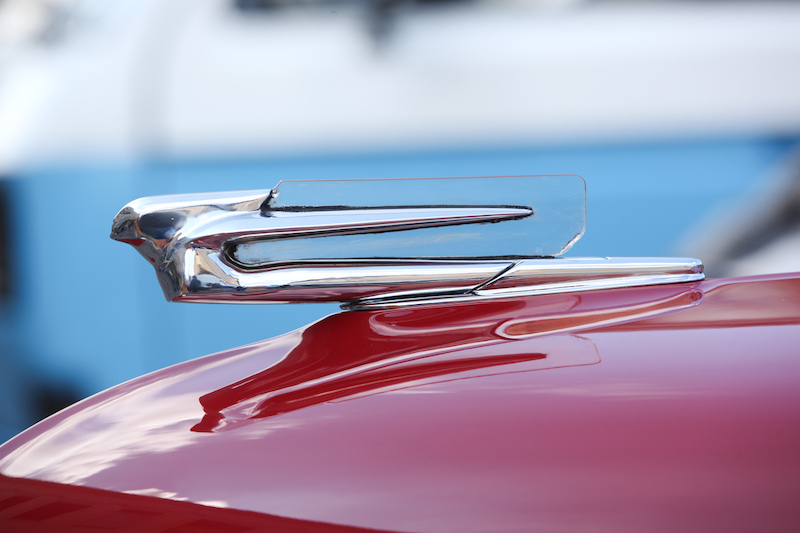
Now, the automobile wasn’t always an everyday object. About 90 or 100 years ago, hood ornaments were small works of art meant to symbolize something. Figures from mythology were just as common as animals, etc.

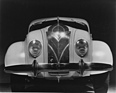
A photo by Daniel Reinhard gave me the idea to take a closer look at the hood ornament “Victoire,” or “spirit of the wind” in English. It was once a popular feature on the hoods of luxury cars—such as a Delage . The original figure is made of molded glass; for safety reasons alone, something like this would undoubtedly be unthinkable on today’s cars. The surface is frosted and appears frozen to the viewer. The creator of this widely copied work is René Lalique (1860–1945). However, anyone who associates this name solely with perfume does a disservice to Lalique, the company founder and artist. Born in Ay, a small town in the Champagne region, Lalique began his career as—as we would say today—a jewelry designer in Paris and soon turned his attention to precious materials such as gemstones and glass. In doing so, he often drew inspiration from natural forms, such as plants. He became a master of the Art Nouveau style, commonly referred to in Germany as “Jugendstil.” After 1908, he devoted himself exclusively to glass art, and from 1921 onward, to artisanal glass production.
For those interested in this subject, we highly recommend a visit to the impressive Musée Lalique in the northern Alsatian town of Wingen-sur-Moder. Lalique worked tirelessly and creatively. It was therefore no coincidence that he also played an important role in the subsequent Art Deco style (named after a landmark art exhibition in Paris in 1925).
And now we return to our hood ornament, which can certainly be described as typical of Art Deco. The artist created it in 1928. It depicts the face of a stylized, androgynous figure with hair blowing horizontally far back, which is clearly intended to symbolize speed. Hence the English name “Spirit of the Wind.” And now you might ask what the French name “Victoire”—meaning “Victory”—is all about. Well, the armistice ending World War I was signed in 1918. Lalique wanted to commemorate this with this radiator mascot on its tenth anniversary.

And today? Aside from its appearance on the radiator of a luxury car from a bygone era at modern beauty pageants, the “Victoire” figurine is probably used more often these days as a paperweight or bookend. Or—like the author—you might place it alongside your period-appropriate model cars. But please don’t say that we’ve “only” been writing about a hood ornament here.
P.S. We’ve compiled a large collection of hood ornaments in a separate photo gallery.