80 years since the end of petrol rationing in Switzerland

I recently came across this picture of the opening of the Sustenpasstrasse. This first modern alpine traverse was opened to traffic on September 7, 1946. According to chroniclers, around 15,000 cars and hundreds of company cars and motorcycles were counted on this connecting road between the Bernese Oberland and the Reuss Valley in Uri on that day. If you think about the circumstances at the time, you might be surprised. After all, September 1946 was just over a year after the end of the Second World War.
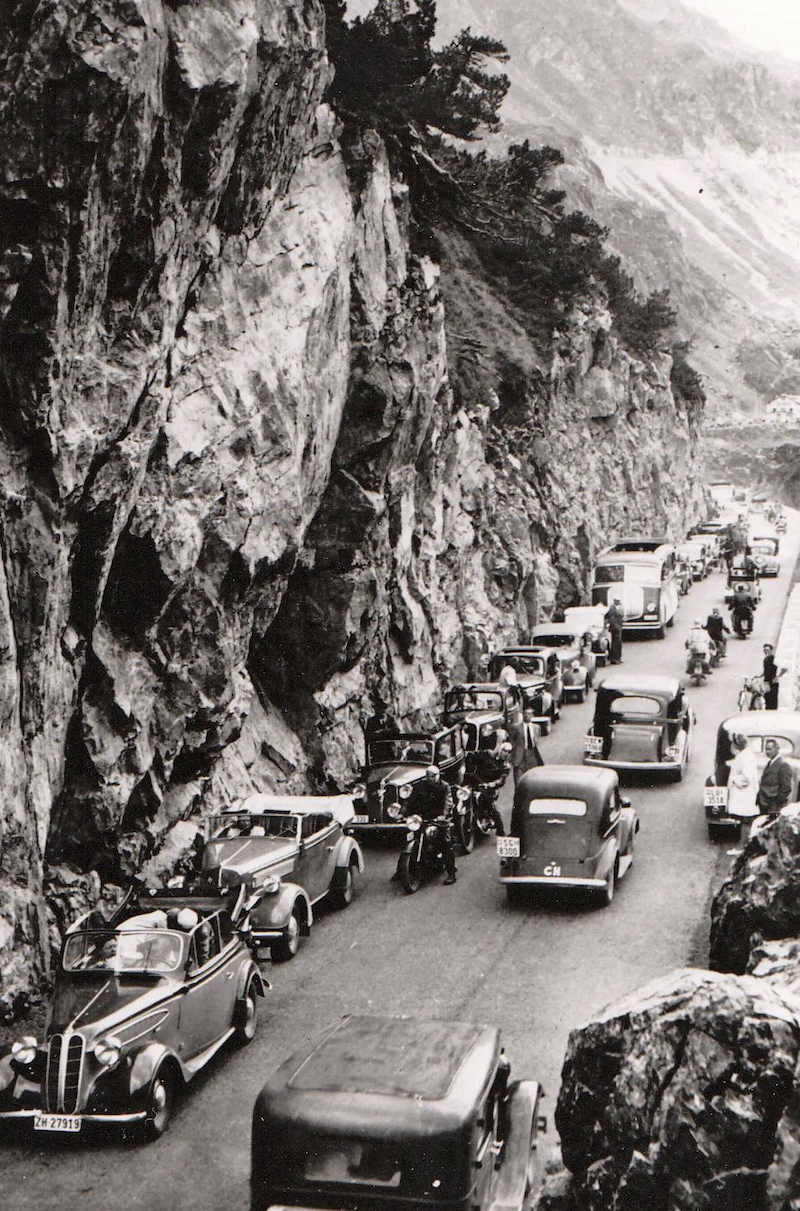
The opening of the Susten Pass road on September 7, 1946, Image: Archive Kulturverein Gadmen
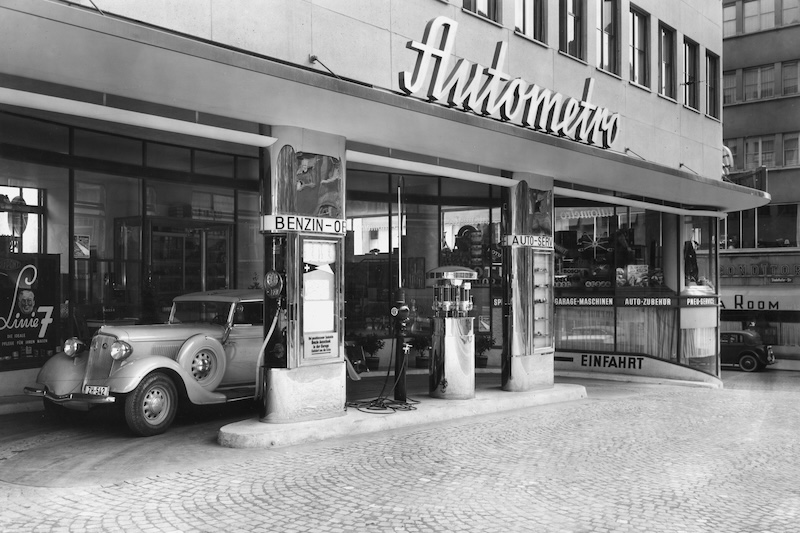
What was remarkable, however, was that as early as November 15, 1945, normal car owners in Switzerland were once again promised that they would receive petrol rations again, even without proof of need. At the end of the year, there was a significant increase in this supply quantity. And what had already been rumored at the end of the year, that rationing would soon be lifted completely, became reality on March 1, 1946. From this date, everyone was once again able to purchase as much fuel as they deemed appropriate or could afford. There was a not inconsiderable catch: the price per liter was a hefty 90 centimes by the standards of the time. That was twice as much as when rationing was introduced in the fall of 1939. (The top picture shows the "Autometro" petrol station on the corner of Rämistrasse and Stadelhoferstrasse in Zurich around 1936, source: ETH e-pics)
And one element that is often overlooked in retrospect was also removed from the list of rationed goods, even two weeks before fuel: tires! These were freely available to buy again from mid-February 1946. There was only a shortage of some formats, especially for commercial vehicles. Previously, even used tires had been subject to strict restrictions. These affected not only the cover, but also the permitted maximum speeds, tire pressures and axle loads - all in an effort to extend service life.
Well, all this was water under the bridge in Switzerland from March 1, 1946. And in fact, there were already a few new cars on sale again. Just before the turn of the year at the end of 1945, Emil Frey had managed to bring Austin from England to Switzerland, the first new cars on the European mainland that were freely available to buy. And at the beginning of 1946, Walter Haefner from AMAG drove a caravan of Standard Eight and Fourteen from the corresponding French seaport, where the ship from England had unloaded its cargo, across war-ravaged France to Switzerland.
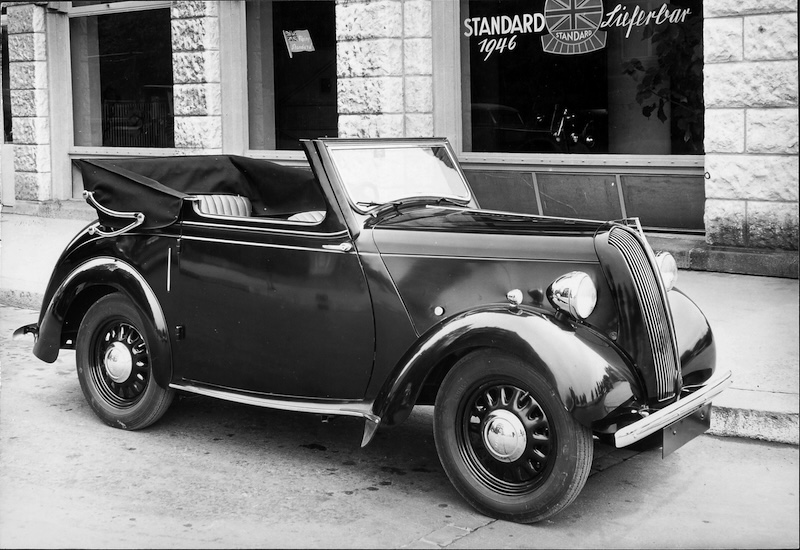
New Standard Eight Convertible in front of the AMAG branch in 1946, AR archive
And numerous car owners used the festive period at the turn of the year to get their cars "off the racks". It seems clear that most of the still well-off car owners at the time had stored their cars in a garage during the war, some even in an empty warehouse. What is surprising are the figures on how quickly these cars, some of which had not been moved for more than five years, were registered and back on the road. In the canton of Zurich, the number of cars registered between November 1945 and spring 1946 was already half of what it had been before the war, and the same was true in the canton of Baselstadt. The people of Bern were particularly confident - or car-crazy, or both - where as many as 60 percent of cars were put back on the road in this short period of time, in line with the pre-war figure.
The road traffic offices, in Switzerland the registration offices, sometimes had to work 14-hour shifts to issue deposited plates and stamp vehicle registration documents, because at that time, depending on the canton, the annual payment of road tax was still noted in them. In Switzerland, the number plate is issued to the owner, not to the vehicle, which means that the Meier, Hugentobler or Buchegger was issued with exactly the same plate as he had deposited with the office when the driving bans were introduced in 1939. In Switzerland, this is a not insignificant aspect and at that time, even in the cities, people generally knew the owner of every car in the street of their own residential area, even if they had bought a new car.
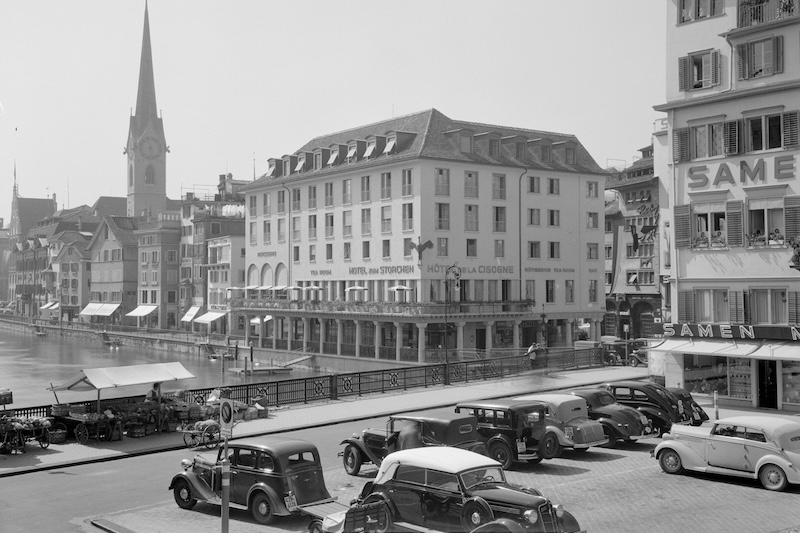
Zurich's Rathausbrücke in the summer of 1939. Soon after March 1, 1946, parked cars were once again part of everyday life in Swiss cities; by the time petrol rationing was lifted, half of the pre-war stock was already registered again. Picture: ETH e-pics
Since March 1, 1946, Switzerland has once again been driving cars in the way that was considered necessary, expedient or simply desirable for no particular reason. The excursion resorts rejoiced again, tourism also began to pick up again and the Haslital, where almost one in ten Swiss motorists - often together with family and relatives - had driven to on that very September 7, 1946, must have enjoyed this, probably the first major traffic jam in Swiss post-war history.