The second spring is coming - in spring

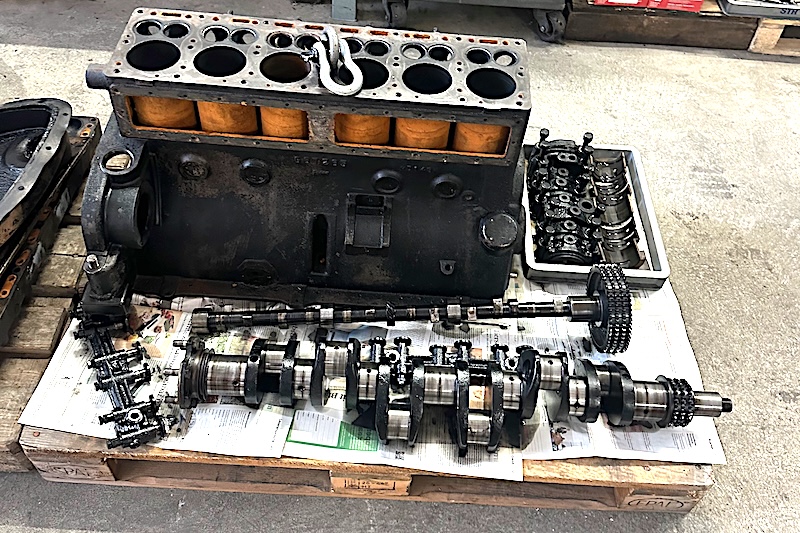
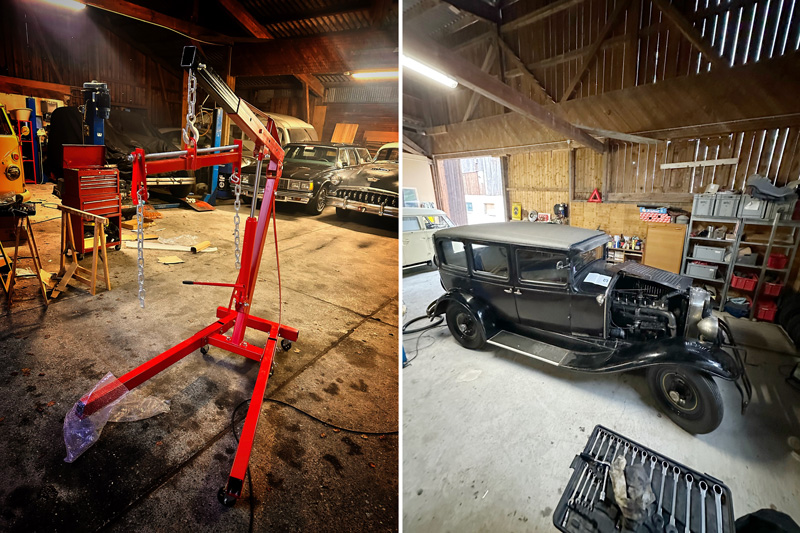
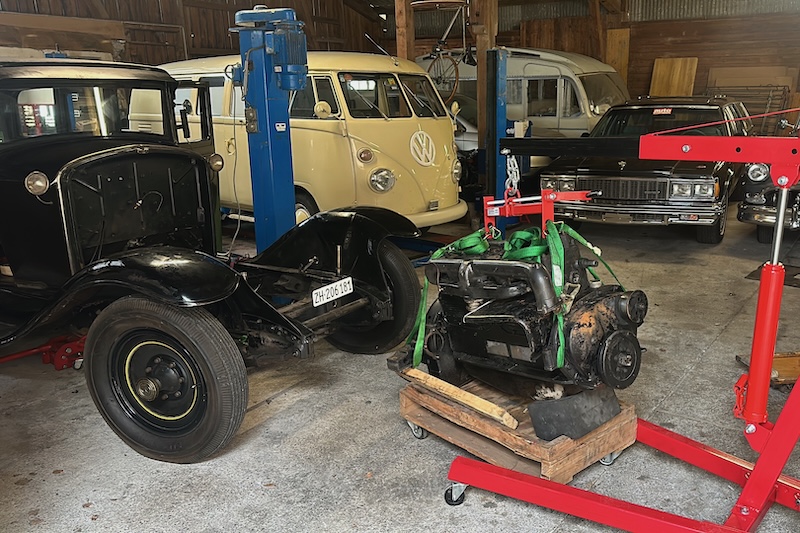
The engine manufacturer was honest right from the start and made no secret of the fact that I would probably not see my engine again in 2025. He kept his word. However, the 4.8-liter six-cylinder from my Graham-Paige 619 is still in the assembly phase, so the picture above, from the first inventory, is misleading.
The reason for removing the engine was a rattling noise that had started to become noticeable under load. My suspicion was that it was a connecting rod bearing, which was confirmed when the oil pan was dismantled with fine, silver shavings in the carter.
Well, many moons later, after the complete disassembly of the engine, its complete paint stripping (much to my displeasure, because originality would have been my top priority with this car) and the subsequent inspection of the cast iron block, it turned out that: There were no worrying findings to report, no cracks or other unusual marks, no chips in the oil lines and the like. Considering that the car had stood in an unheated barn from 1955 to 2006, this is all the more pleasing. But in this respect, there were also no inconsistencies to complain about beforehand. The car was running and registered.
The "bottom end", i.e. the crankshaft and its seven bearings, also showed no unusual damage, only normal wear. The crankshaft bearing surfaces and the crank journals were only slightly reground. In addition, there were new bearing shells; the Graham engine designed by Continental had already been blessed with these from 1928.
The same applies to the camshaft: used but far from worn out. There are also new valves, which sit directly in the material of the cast iron block in this side-valve engine; they are ground in cleanly, which was obvious. As a big surprise, an NOS timing chain could be found, so that no adjustments to the sprockets were necessary.
The connecting rods on the other hand, the cause of the whole problem, still had cast white metal bearings. These had literally crumbled due to age and material-related corrosion. We found no traces of overheating or lack of lubricant. The long things have now been milled from solid material and will also have bearing shells in future, the actual reason for replacing them.
The cylinder bores have never been bored to an oversize, which could confirm the low odometer reading of around 30,000 kilometers. From now on, Dodge pistons will do their work in it.
A new cylinder head gasket was made, using modern material instead of a simple copper gasket.
But we will leave the rest as it is: there will be no modern sealing rings, nor will the water pump be fitted with them. I am aware that this will not be completely trace-free, but with a car that is 98 percent original (the roof skin and its upholstery - but not the roof wooden slats - and small sections of the wooden frame under the torpedo sheet were renewed in 2006), this was simply not an option.
The overhauled machine should be ready for reinstallation in March. I am eagerly awaiting spring.