The Fiat that hardly anyone knows

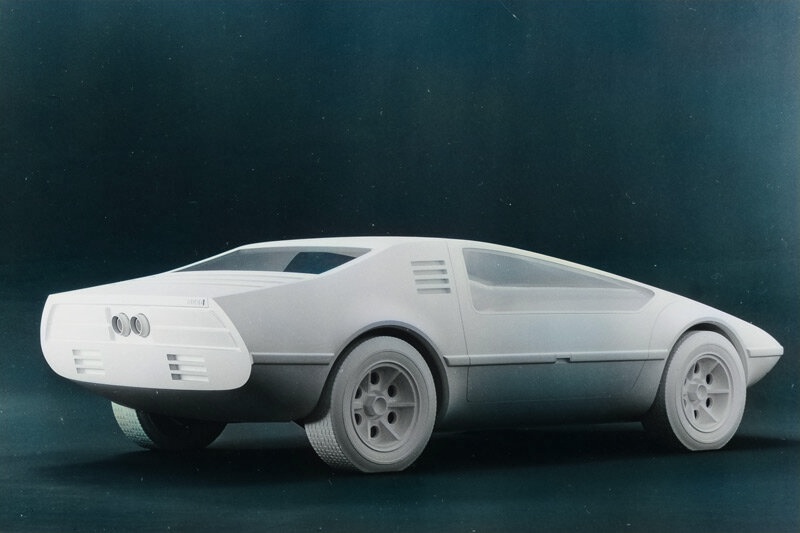
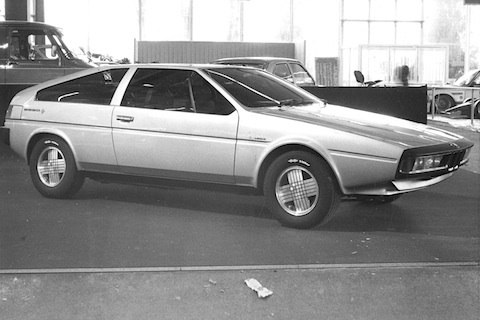
In 1970, Fiat built the models 850, 124, the Dino as a coupé and Spider, along with a few other vehicles. However, no Fiat had a mid-engine when this plaster model was shown at the 52nd Turin Motor Show.
However, Fiat was not interested in showing a near-production model study, but in presenting an approach to the development of new vehicles.
Automobil Revue wrote in its review of the show:
"On the Fiat stand, alongside the 1924 world record-breaking Mephisto car, in which Sir Eldridge had reached 234.98 km/h, was an illustrative model made of plaster, which was completed in just under 40 days. The model on display illustrates the shape of a mid-engined coupé and represents an interesting contribution to future body shapes, but has no relation to the Fiat production program. "
The magazine "Auto Motor und Sport" briefly noted:
"The contribution of the Fiat factory design was unconventional. It was made of plaster from the roof to the tire tread - a supreme feat of plasterer's art. A realization of the study is not planned. "
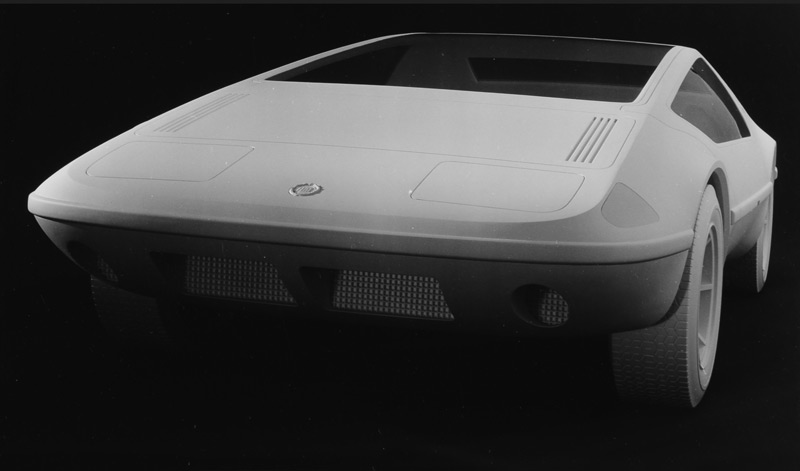
The car was never actually realized. In fact, the car shown only just resembles the later Fiat X 1/9 with mid-engine in terms of its wedge shape.
We quote here the press release from Fiat from 1970, which stated the following under the title "An illustrative model of the Fiat at the Turin Motor Show":
"On the Fiat stand at the Turin Motor Show, a display model of a prototype realized by the Fiat Styling Center will be shown.
This prototype, as is immediately apparent, is not intended to be a concrete proposal for a specific shape. Rather, it represents an example of the use of plaster in the realization of prototypes, and as such it will be of interest to technicians and other interested parties. Hence the name "illustrative prototype", as it illustrates the processing of plaster in model design.
The materials used in the shaping of models are primarily plaster, clay, epoxy resins and wood. The use of plaster has the advantage that the model retains its original shape indefinitely without any changes due to the high stability of the material. The paintwork can be applied in the usual way, as can external decorations and accessories. The model is therefore very similar to a real car. In the decisive phase of selecting a particular model for production, this is, as you can easily understand, of great importance, as you can assume that the model is true to the original.
However, the use of plaster also has other advantages: low material costs (normal stucco plaster), the ability to make unlimited changes and corrections, speed of execution. This prototype was completed in just under 40 days.
On the other hand, highly qualified specialists are required to work with plaster, as this specialty goes back to the traditional craft of plastering. Nevertheless, it should be noted that, in addition to its obvious advantages, gypsum has the disadvantage of being difficult to work with, unlike clay and epoxy resins, which are easier to work with.
The example shown here illustrates the shape of a sports car, with the mid-engine moved backwards, which is in no way related to the Fiat production program."
Whether the plaster model has survived is beyond our knowledge. There are more photos of the car, which can of course be found in our archive.