Sometimes it's the inner values that count ...

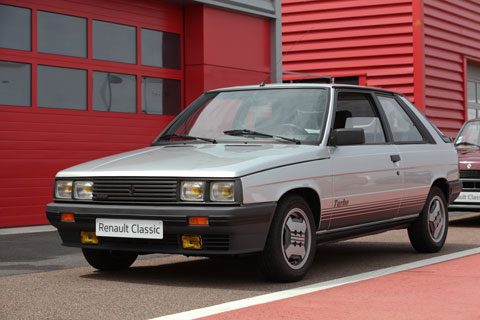
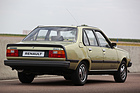
When the Renault 11 appeared in 1983, hardly anyone looked at it. It was neither elegant nor particularly bold, and with its truncated rear end - the R11 was derived from the R9 notchback saloon - it looked inconspicuous. Even when a turbo version followed in 1984, it did not cause much more of a stir.
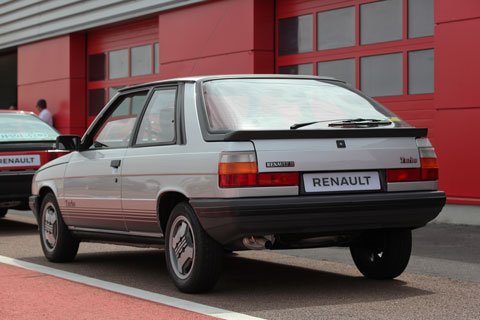
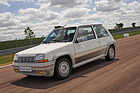
35 years later, the Renault 11 still doesn't arouse any great emotions and none of the journalists attending this week's "40 years of Turbo" event at the Circuit de la Ferté Gaucher near Paris had the R11 on their personal shortlist - after all, there was also a Renault 5 Turbo (with mid-engine) or an R5 Alpine Turbo.
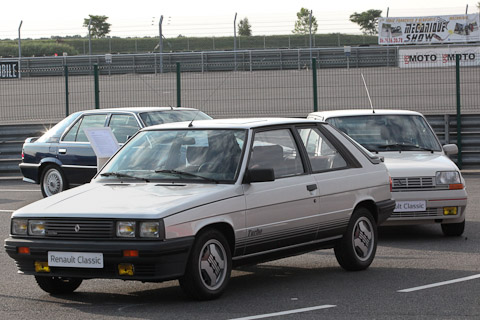
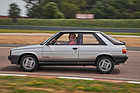
However, as all the turbo cars provided were allowed/must be driven in turn, the R11 Turbo also had its turn. And it was more than just a positive surprise. The handling was above average, the engine (105 hp) performed well and the Renault 11, which weighed around 920 kg, easily overtook many a nominally faster car.
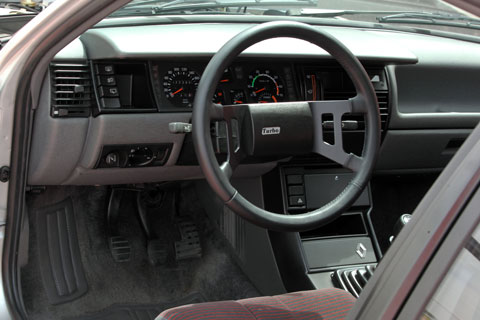
However, this is not a new finding, as journalists were already enthusiastic about the handling back in 1984/1985:
Auto Motor und Sport 10/1984 magazine wrote after the test: "Its agility is particularly pronounced in bends. Under load, the car is almost neutral around them, but when you take your foot off the accelerator, the rear end pushes outwards and almost makes you forget that the Renault 11 Turbo is front-wheel drive. However, reducing the steering angle is usually enough to keep the car on course."
The Automobil Revue added a few months later: "In return, the 11 Turbo offers above-average handling characteristics; its willingness to corner and its controllability at the limit deserve special recognition. The tendency to understeer that is typical of front-wheel drive cars when cornering at speed is minimal. During extreme load changes, the rear swings slightly to the outside of the bend, but this movement can be easily corrected with the precise rack-and-pinion steering, which is more direct than that of the other 11-series models. The fact that the drive wheels bring the power to the ground mostly slip-free even in tight bends is also evidence of a harmonious chassis design."
ADAC Motorwelt also praised the comfort: "The chassis not only offers problem-free cornering characteristics, but also good comfort."
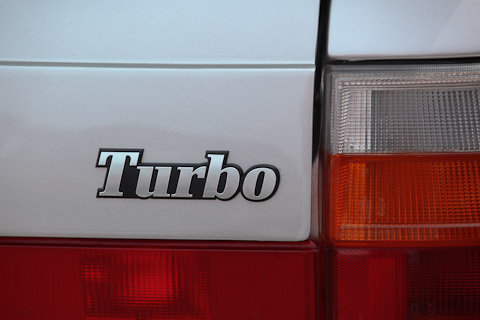
At DM 20,000 or CHF 19,375, the well-equipped French car was not even very expensive and its performance was competitive even against the Golf GTi and Escort XR3. Only the (turbo) thirst could lead to high costs if the car was driven with a lot of enthusiasm.
The Renault 11 Turbo was therefore already known as a very good car at the time, and it was also very successful in rallying. National championships (Switzerland, Portugal) were won with it and Jean Ragnotti achieved the feat of finishing on the podium several times in Group A World Rally Championship races with the R11 Turbo.
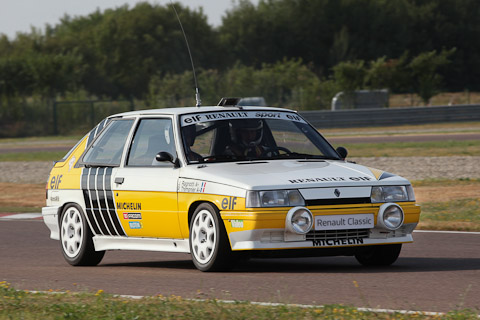
And this week, journalists were able to experience what this rally car felt like from the passenger seat alongside a professional driver. Impressive!
For a complete impression, you can also consult the driving report with Eric Ferreux's 173 hp Swiss championship-winning car from 1987, which appeared in Automobil Revue.