Dreams, far beyond reality!

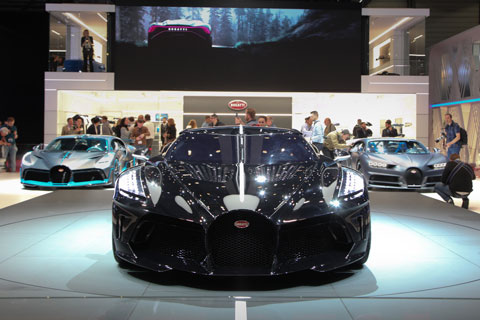
These are my thoughts on the past 89th Geneva Motor Show , where dream cars were on display, with 1000 and even more horsepower, with torque to the point of no return, at prices beyond any reality. Whether Aston Martin Valkyrie, Koenigsegg Jesko, or Bugatti "La Voiture Noir", on the one hand classic combustion engines with the smell of gasoline are still tempting, on the other hand electric super sports cars with the torque hammer are lurking around every corner. In between, there are still a few "sensible" models, such as the attractively shaped new generation from Peugeot.
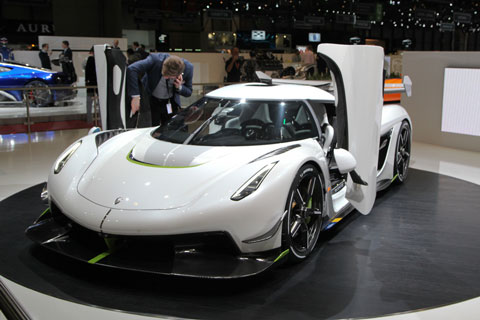
The fastest "production car" in the world at the moment is said to be the Königsegg Jesko, which puts even the Bugatti Chiron in the shade. The Swedes claim 1600 hp and a top speed of 480 km/h - at least in the company's own simulations, the hypercar is said to have reached this speed.
Volvo, on the other hand, wants to limit its cars to 180 km/h in the future, so the Jesko's speedometer needle will easily go 300 units further, of course with all its electronic driving aids, because apart from Walter Röhrl or Lewis Hamilton with their extremely slow sense of movement, there is hardly anyone who can keep such a thing on the road anyway.
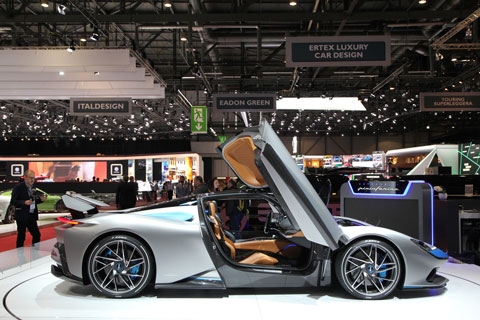
And the Italian electric sports car "Battista" from Pininfarina could actually pull ahead of the Swede, at least up to the 100 km/h mark. With its 1900 hp, it should accelerate to 100 km/h in 1.8 seconds and deliver 2300 Newton meters of torque to the axles. 150 of them are to be built in Turin and just as many drivers may then have to be sent to long-term care with irreparable brain damage as a result of positive G-forces. And all for a mere two million euros. Too much? For almost exactly half that amount, you can get the same car with identical performance in the form of the Rimac Concept Two, which forms the technical basis of the Italian beauty.
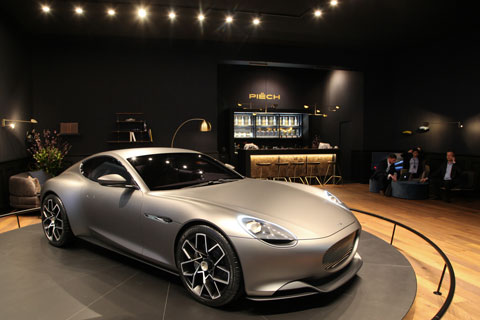
It is not yet clear how much a Piëch Mark Zero will cost - but the son of the automobile mogul of the same name would certainly be very grateful if you could make a small down payment. At the moment, potent investors are still being sought to make the electric sports car project a reality.
As a counterpoint to this, a few thoughts on the current traffic situation. With the exception of a few increasingly rare stretches of freeway in Germany, the rest of the world is leveled out between 30 and 130 km/h maximum speed. All these cars do this in the first of around seven gears, with an accelerator pedal position of perhaps 15%. Even the R4 with its 17 hp for 600 kg was capable of this back in 1961 and even with it you would not be spared speed traps today.
13.2 million euros for a Bugatti "La Voiture Noir", which you probably won't even be able to start in around 10 years' time, as its electronics will already be obsolete or have suffered irreparable damage. The Type 51 Grand Prix car from 1931, which is still sensational today, would probably have been a much better deal for half the money, as this purist mechanic will remain drivable until the very last drop of gasoline has run dry.
Politicians have long been in agreement: diesel must go, long live e-mobility! But hardly anyone is asking how clean the electricity is. And whether it is right to electrify the huge and heavy SUVs first also lacks sound logic. Lots of power, even more torque and plenty of luxury seem to be the order of the day. And this opulence comes at the price of a vehicle weight of two tons and more. All economy falls by the wayside.
Where are the small, lightweight sports cars with around one to three hundred horsepower that were once so popular? There used to be the Lotus Elan, the Fiat X1/9, the Renault Sport Spider and, in modern times, perhaps the Alfa-Romeo 4C or the Alpine A110. All sports cars with a huge fun factor and sensible technology, even for the average consumer. Finally, a very important factor is the power-to-weight ratio. The heavier a car, the more power is needed to equalize the performance of a much lighter car and also to slow it down again. Colin Chapman was an important pioneer of lightweight construction and he designed flyweight cars that were able to outperform much more powerful cars with comparatively little power. Perhaps it would also be much more interesting for engineers to achieve affordable progress and not build according to the goal: "It doesn't matter how much it costs in the end".
A father could say to his son again: "Look there, when you grow up, that would be a really great car for you", instead of "nobody can afford something like that anyway."
This year's Geneva Motor Show was criticized for offering too little apart from the many unaffordable cars. And the Geneva Motor Show is no longer as exciting as it was a few years ago. It lacks glamor.
Perhaps this is because there is too much focus on superlatives that hardly anyone can buy anymore. Dreams should be achievable, even for the average earner. Observers have called for more home cooking instead of haute cuisine, and that should be a goal for the future.
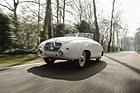
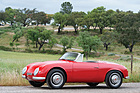
So let's not let ourselves be driven mad and simply enjoy our old cars contentedly, always with the thought that they are paid for and we can afford to maintain them, and even do it ourselves if necessary, even without a degree in computer science. You can actually drive them without getting into trouble with the law within the first few meters, because they are a lot of fun even at reasonable speeds!