Ten kilograms per horsepower

When I was finally able to get my driver's license, I was of course already well informed about which cars were available to buy. An important parameter when evaluating vehicles at that time was the so-called "power-to-weight ratio", measured in kilograms per horsepower. You simply divided the unladen weight of the car by the horsepower produced by the engine and you could compare the car with competitor models.
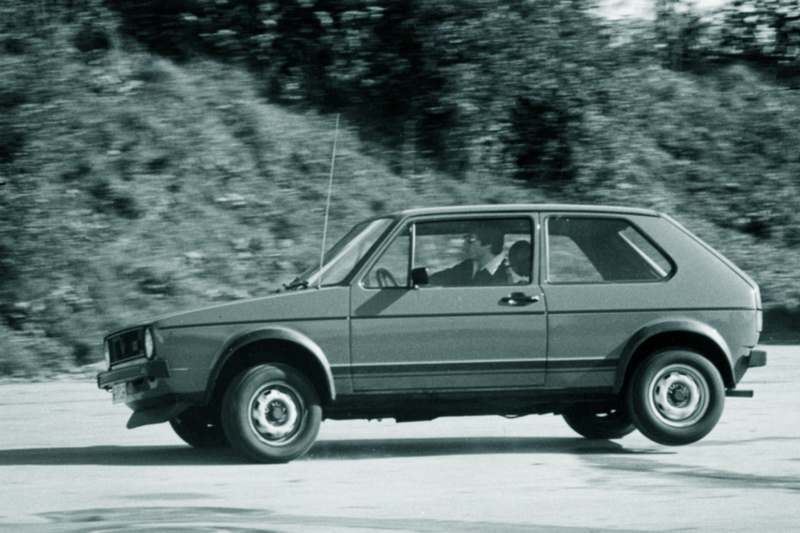
At the time, 10 kg/hp was considered the limit between more sporty and less dynamic cars. An Alfa Romeo Alfasud TI with 85 hp, for example, just managed the 10 kg/hp, a Sprint Veloce with reserves. The VW Golf GTI was, of course, a car with a very good power-to-weight ratio, 110 hp met around 750 kg in the first series, no wonder it managed the sprint from 0 to 100 km/h in less than 10 seconds. Cars with around 10 kg/hp usually achieved a standard sprint time of between 10 and 13 seconds.
That was all a long time ago and the limits have clearly shifted. Modern hypercars are moving towards 1 kg per hp, while 5 kg per hp is almost mediocre for a sports car; a Lotus Emira, for example, is currently at around 4 kg per hp. The true masters of power-to-weight ratio are the fast electric cars, but even weak models typically manage the 10 kg per hp easily. However, electric cars in particular seem much more spirited when accelerating from a standstill. Of course, this is where the high torque, which is available practically from a standstill, comes into play.
Even today, however, a really light car with a sporty power-to-weight ratio is hard to beat in terms of driving feel. Of course, modern hybrid or electric sports cars also whizz up hills quickly, but they require an incredible amount of technology, whereas a Lotus Super Seven from the sixties, for example, only relies on low weight and a simple off-the-shelf four-cylinder engine.
Over 40 years ago, I thought that 10 kg per horsepower was a reasonable entry threshold for me, but over the years I also bought a few cars that weighed considerably more per horsepower and were still a lot of fun. Examples were the Fiat 850 Spider or the Fiat Panda, but also the BMW 320i Cabriolet (E30).
What I can clearly say from my own experience, to come to a conclusion here, is that a better power-to-weight ratio does not automatically mean more driving pleasure ...