The small Principality of Liechtenstein and the big Formula 1

In the 1970s, 62 engine designers tried their luck in Formula 1. Only 19 of them succeeded in winning a GP. There were engines with 16, 12, 10, 8, 6 and 4 cylinders, sometimes in V-shape and sometimes in line, in W-shape, or as a boxer, with and without supercharger, or turbocharged, and as an absolute exotic, there was also a gas turbine.
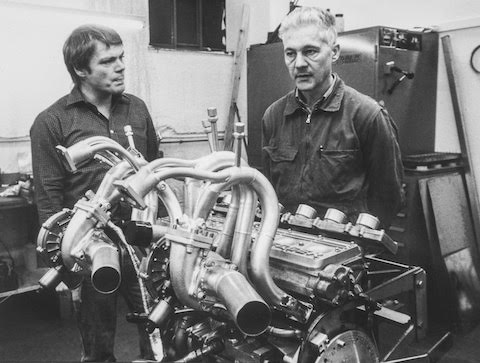
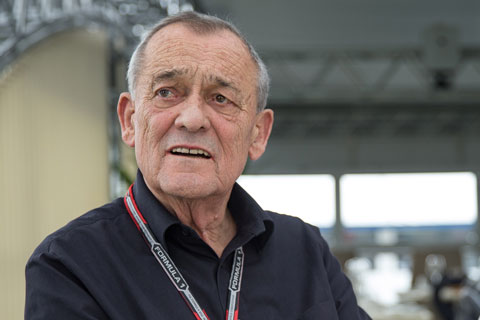
For a long time, Max Heidegger from Triesen in the Principality of Liechtenstein belonged to a small elite of internationally sought-after engine tuners. The technician, who was still successful himself in a BMW 2002 from 1968 to 1972, particularly in hill climbs, then turned his attention increasingly to engine tuning. He became really famous in the early 1970s thanks to countless race wins with his Formula Vee and Super Vee engines.
"Manfred Schurti was one of our first customers, I owe almost everything to him. His series of successes really put us on the map."
After Formula Vee came the BMW brand, which he also represented as an Alpina importer in his dealership in the "Ländle". Heidegger engines in touring cars, Formula 2 and the M1 Procar series became a byword for quality. Marc Surer won with the 320 and also in the M1 and Stefan Bellof also took his first two Formula 2 victories in 1982 with engines from Heidegger. Nevertheless, as with Heini Mader, great bitterness remained at the end. According to Heidegger: "The Maurer team didn't pay F2 engine bills for a quarter of a million and McLaren left me hanging despite a development order for a Formula 1 turbo engine that was unfortunately only verbal."
In their search for an engine partner who would build a turbo engine exclusively for them, the English also stopped off in Liechtenstein. The Swiss engine tuner Max Heidegger built a turbocharged six-cylinder in-line engine. Nice and narrow, just as McLaren chief designer John Barnard wanted. However, the project came to nothing because McLaren found a "better" solution with Porsche.
"It all cost us around 1.8 million Swiss francs and almost our existence." Heidegger ended all involvement in motor racing at the end of 1982. The same situation gave rise to Heini Mader's legendary saying: "If all the teams paid me their debts at once, I could buy a boat that wouldn't turn on Lake Geneva."
Today, Max Heidegger lives mainly in Ireland and has handed over the car dealership to his eldest two of five children, Jacob and Yasmin.
You can find more Formula 1 stories by Daniel Reinhard in the theme channel.