Environmental friendliness is definitely relevant when buying a classic/young car


Discussions about the effects of the WLTP measurement methodology and the current emissions standards such as Euro6d temp continue to flare up, and Diesel-Gate is far from being forgotten and processed. Environmental friendliness plays a major role when buying a modern car, if only because you have to assess whether you will still be able to drive your car into the city tomorrow.
But how important is environmental friendliness when buying a historic car? After all, catalytic converters have been in use in European cars for over 30 years. We wanted to find out again and asked a corresponding question of the week .
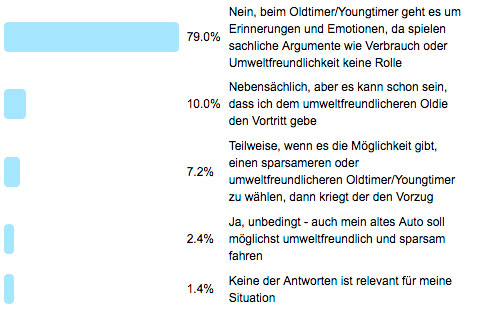
Almost 20 percent attach importance to the criterion of environmental friendliness, but 10 percent (absolute) see this as a secondary criterion, while 7.2 percent go for a cleaner/more economical car when the opportunity arises. 2.4 percent also want their old car to have the cleanest possible exhaust emissions.
The majority of respondents, however, insist that fuel consumption and environmental friendliness do not play a role in classic/young cars. These 79 percent are concerned with emotions and memories and not with factual arguments when buying a classic car. After all, they can argue, these cars are only driven a few kilometers a year and the purchase preserves a cultural asset and thus saves the energy needed to build it from being destroyed.
Incidentally, 1.4 percent of the 291 respondents did not find their opinion represented in any of the answers.
Here is the evaluation in graphic form:
We have already proposed a new question of the week. This time we want to know how important "matching numbers" are to classic car enthusiasts .
And, of course, you can still look up the results of all previous questions of the week in the dedicated topic channel.