The sports car of tomorrow?

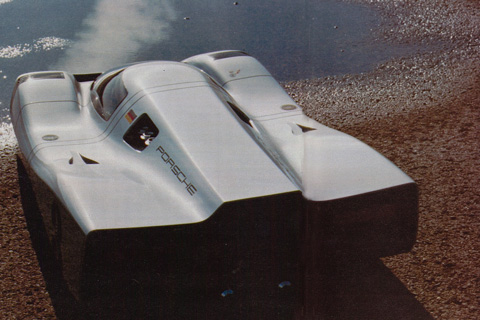
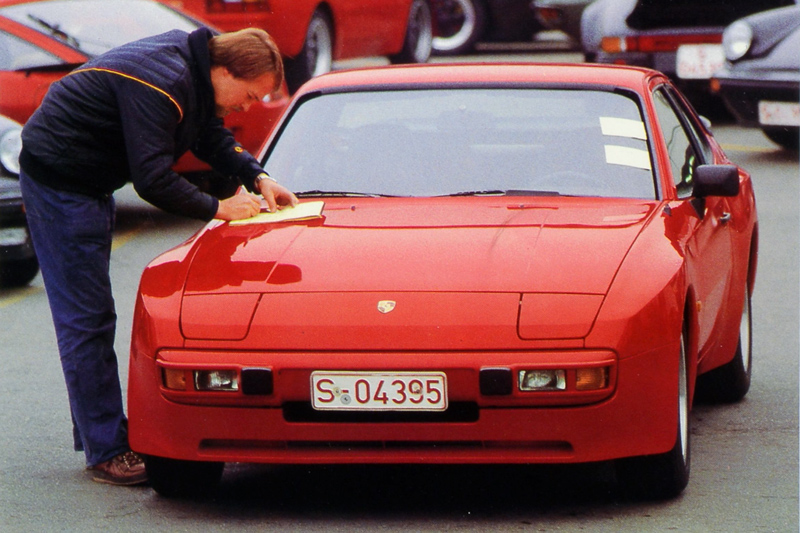
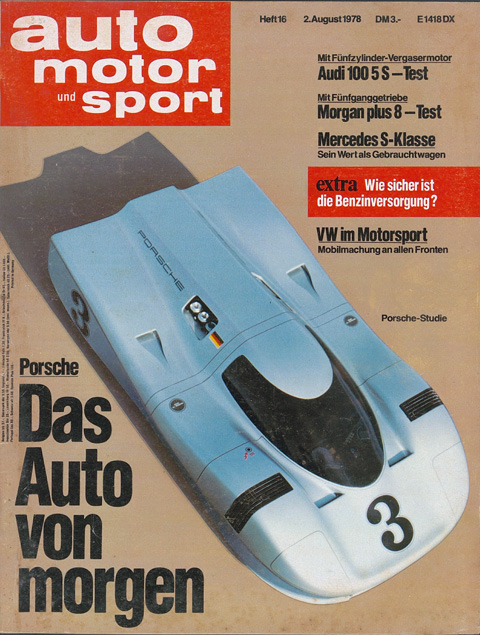
It was a somewhat gimmicky title that Auto Motor und Sport printed on issue 16/1978 : The car of tomorrow.
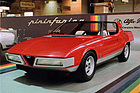
The editors were not quite able to keep their promise, but interesting aspects of Porsche 's research and development activities were revealed . For example, the engineers were working on the four-valve engine at the time, developing engine encapsulations to reduce noise and designing rescue vehicles, which, however, had little in common with the company's own model range. However, the aerodynamic study that graced the cover was barely mentioned in the article.
The fact that Porsche did indeed have a keen sense of the future was demonstrated by a number of statements made by Porsche's Head of Development Helmut Bott:
"However, it is quite possible that there will be certain shifts within this range, for example from the sporty area to the comfortable area. As a smaller producer, we see the opportunity here to be able to react more quickly to the special wishes of the public. Even if the sports car has a completely different character in ten years' time, it will still remain a vehicle that is clearly different from the mass of other cars."
When asked if he saw any alternatives to the gasoline engine, Bott said:
"We don't see any alternatives to the reciprocating piston engine, which offers us the possibility of still achieving a great deal in the future with lean-burn or stratified charging. It is also possible to convert the reciprocating engine to other fuels, such as methanol, without any problems. We should also not forget the development lead that the reciprocating piston engine has in cars. Of course, the development of the turbocharged diesel engine is also not uninteresting. However, the question of solid emissions and the proportion of nitrogen oxide in the exhaust gas still needs to be clarified."
However, he was able to reassure the "classic" sports car fans: "Of course, the Porsche of tomorrow will also be a sports car," Bott assured, and was probably not quite right, after all, the Zuffenhausen-based company now builds more four-door cars than two-door cars.