400 hp, 400 km/h, 400 and ...

Today, a power rating of 400 hp no longer pulls a fly off the plate; it seems that nowadays 400 hp is simply necessary to get the heavy cars moving properly at all. Nevertheless, we live in a time in which we can hardly use these power packs any more. The power-to-weight ratio as such is only marginally better than it was 60 years ago, when lightweight cars were powered by 130 horses. When General Motors was able to claim 400 hp for the 7-liter V8 engine with its three twin carburetors in the 1967 Corvette with a fighting weight of around 1430 kg, it was a real sensation. However, the speed figures of 200-230 km/h are almost ridiculous by today's standards. The power-to-weight ratio of that Corvette was exactly 3,575 kg/hp; in an extreme comparison, a Lotus Elan from 1965 was mentioned, which, with a third of the vehicle weight (584 kg) and a quarter of the power (106 hp), still had a power-to-weight ratio of 5.5 kg/hp.
The number 400 became world-famous for the first time in automotive engineering when Bernd Rosemeyer exceeded the 400 km/h mark in a record attempt with a "car" on a section of highway from Frankfurt to Darmstadt in October 1937. He was sitting in the Auto Union record-breaking racing car, in which he had a fatal accident six months later in the same place when he tried to beat Caracciola's other record in a Mercedes.
Le Mans used to have the longest straight in motorsport, a straight stretch of around six kilometers that ran along the public road "Ligne Droite des Hunaudières". Today it is interrupted by two chicanes. In 1988, a speed of just over 400 km/h was reached on this straight for the first time during the race. Roger Dorchy was clocked at 405 km/h in the Welter Racing Team's "Project 400" in the World Championship P88 with a 2.8-liter Peugeot V6 turbo engine. However, the car only lasted 53 laps and retired after around 4 hours with major turbo and electrical damage due to cooling problems.
The first commercially available road sports car in which "any (rich) man" could drive at 400 km/h was the Bugatti Veyron.
Bugatti test driver and ex-racing driver Pierre-Henri Raphanel commented in Spiegel-online: "You know, 400 km/h and more, that's a speed range in which cars really have no business. Yes, I was scared. And that's because you can hardly control the car at that speed. Basically, driving at full throttle is quite straightforward, you just have to put your right foot on the floor. Just don't try to interfere with the driving and never fight the car. You're much more of a passenger than a driver. I once skidded at around 360 km/h at Le Mans. The racing car only came to a halt after 400 meters. If something like that happened to the 1.8-ton Bugatti at 400 or more, the remains of the car would probably be found a kilometer away from the accident site."
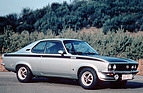
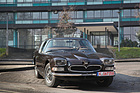
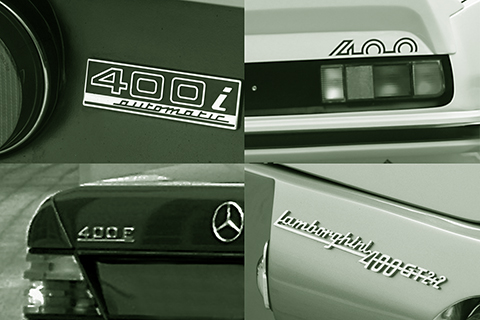
The "400" as a type designation (or part of it) can be found on a wide variety of vehicles, such as the Lloyd 400, the Bristol 400, the Ferrari 400, some Lamborghini types, the TVR Griffith 400, the Opel Ascona and Manta 400, through to the Mercedes-Benz 400E or Jaguar F-Type 400. The Staunau K 400 or the Champion 400, for example, have probably almost been forgotten. We have just dedicated a detailed article to the Ferrari 400i.
The 400th F1 GP in the long history since 1950 took place in Austria in 1984 and was won by local hero Niki Lauda in a McLaren-TAG-Porsche. It was the 23rd Grand Prix victory of his career and the first in his own country. We have written a report about it.
An F1 racing car has also broken through the 400 km/h barrier, although not during a race weekend, but in 2006 in Bonneville. There, Alan van der Merwe, today's F1 medical car driver, reached 413.205 km/h with the standard BAR Honda F1 from 2005 on the salt lake without a rear wing, but with a stabilizing fin!
Why all these considerations around the number "400"? Well, today (July 17, 2018, exactly at 06:20) the 400th newsletter was sent out since our launch in November 2010. Every week, on Tuesday morning, we report by email in "News from Zwischengas" about cars, events, people and everything there is to know and tell about the historic automobile.
If you don't yet receive our newsletter, it's easy to subscribe - over 56,000 readers have already done so.