The entire automotive history of Turin in a few square meters
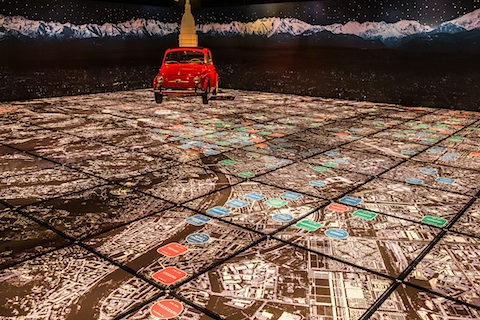
Hidden among all the wonderful photos by Daniel Reinhard in the article on the Automobile Museum of Turin( Museo dell'Automobile) is a treasure trove of information that testifies more than any book or history to the importance of Turin as a car city.
Of course, the first thing you notice is the cute Fiat 500 in the corner and the famous "Mole Antonelliana" in the background. It is only when you cross the area that you begin to understand what this installation is actually about - and you automatically start to inspect the floor.
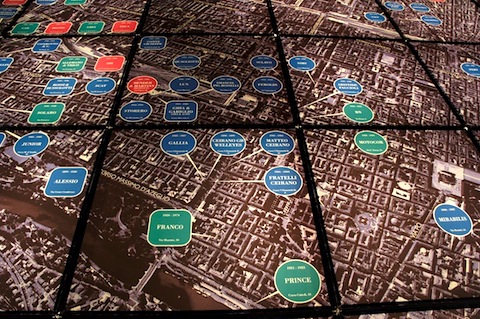
The entire surface, covered in glass, shows the city map of Turin. You can recognize the Po River that meanders through the city, the railroad lines that converge at the Statzione Porta Nuova. You can identify the typical square structures that make up the city center, the large entry and exit roads ...
But the most interesting thing is the many colorful stickers placed at various points on the city map. These illustrated the activities of the automotive industry in Turin from day one. In 1898, the first Welleyes two-seater was built, which led more or less directly to the creation of Fiat (1899).
This was the beginning of a steady development that never stopped, as the plan clearly shows. You can see, for example, how the early activities of Ceirano were concentrated right at Corso Massimo d'Azeglio. But when they founded Scat, they had to move south because they needed more space.
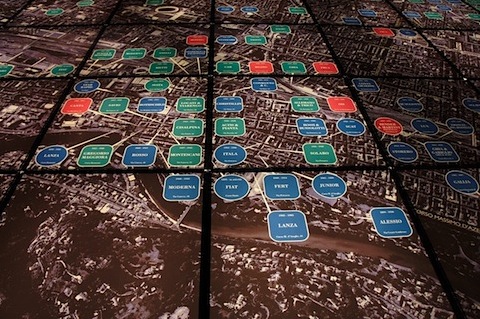
It is also interesting to see how many workshops Bertone used until the work could be consolidated outside the city. You can see that OSI was founded very close to where Ghia was, but Pietro Frua was also a close neighbor. This again confirmed for me that the flat yellow buildings you see as soon as you come out of the Porta Susa railroad tunnel were obviously part of the old Ghia factory, now obviously unused.
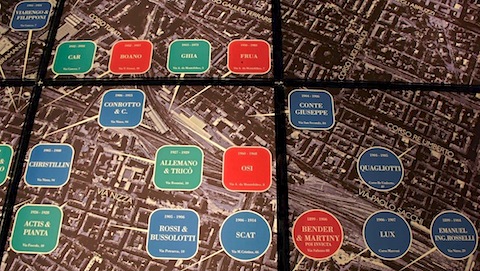
And then Viotti, which had pitched its tents just a stone's throw away from the second Itala factory. Exciting!
This city map helped me to find Abarth's first address in Turin. I wanted to celebrate the 204, a car that was both the last Cisitalia and the first Abarth. And I probably should have known: When Carlo Abarth moved from Bologna, where his company was originally based, to Turin, his path led him directly to Via Trecate 10, the address of the original Cisitalia workshops. So it was easy for me to organize my little celebration.
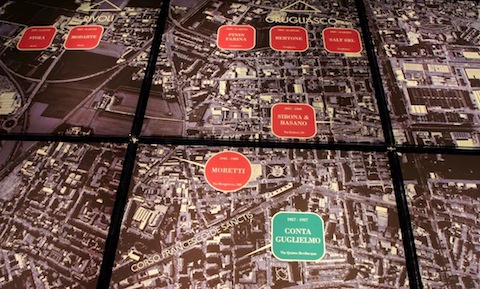
As I wandered across the glass floor of the Turin Museum, it was as if I was moving through a giant encyclopaedia. After a while, I completely forgot what I was actually looking for, I discovered so many new facts.
There's also a really good bookshop in the museum. I hope that I can buy a printed map there on my next visit, hopefully in a more manageable format, so that I can sweeten a few weekends with more "excavation work".